Site under construction — check back daily for updates
Fabrication Tooling
Compression Strap
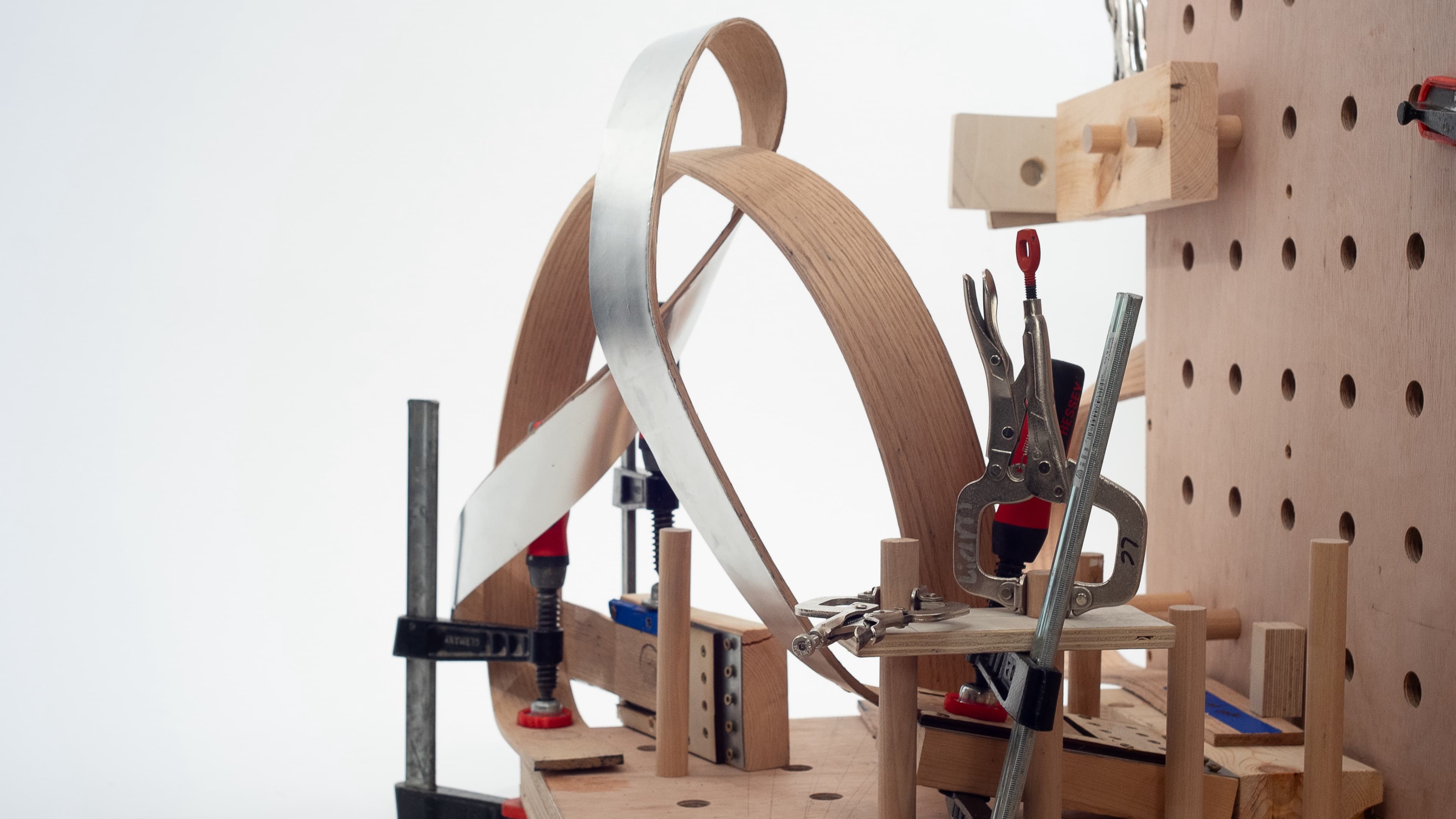
A compression system developed through hand testing and iterative prototyping, then redesigned as an integrated gripping interface for robotic steam bending.
Type
Fabrication Tool
Application
Steam Bending
Development
Prototype V1 / V2
Integration
Robotic Gripping
Research
Material Feedback
Robotic Fabrication
01
Tool Development
The compression strap evolved from a crude hand-testing prototype into a refined system designed specifically for robotic manipulation.
The first version was built quickly to test whether maintaining compression along the outer face of the timber could improve the steam-bending process. At this stage, the priority was validating the principle rather than producing a finished robotic tool.
Hand testing revealed limitations in alignment, handling, and the way the strap interacted with the timber. These observations directly informed a second version with improved geometry and a dedicated interface for the robotic gripper.
02
Design Problem
Steam bending makes timber flexible enough to form, but the material remains vulnerable to splitting and uncontrolled deformation during bending.
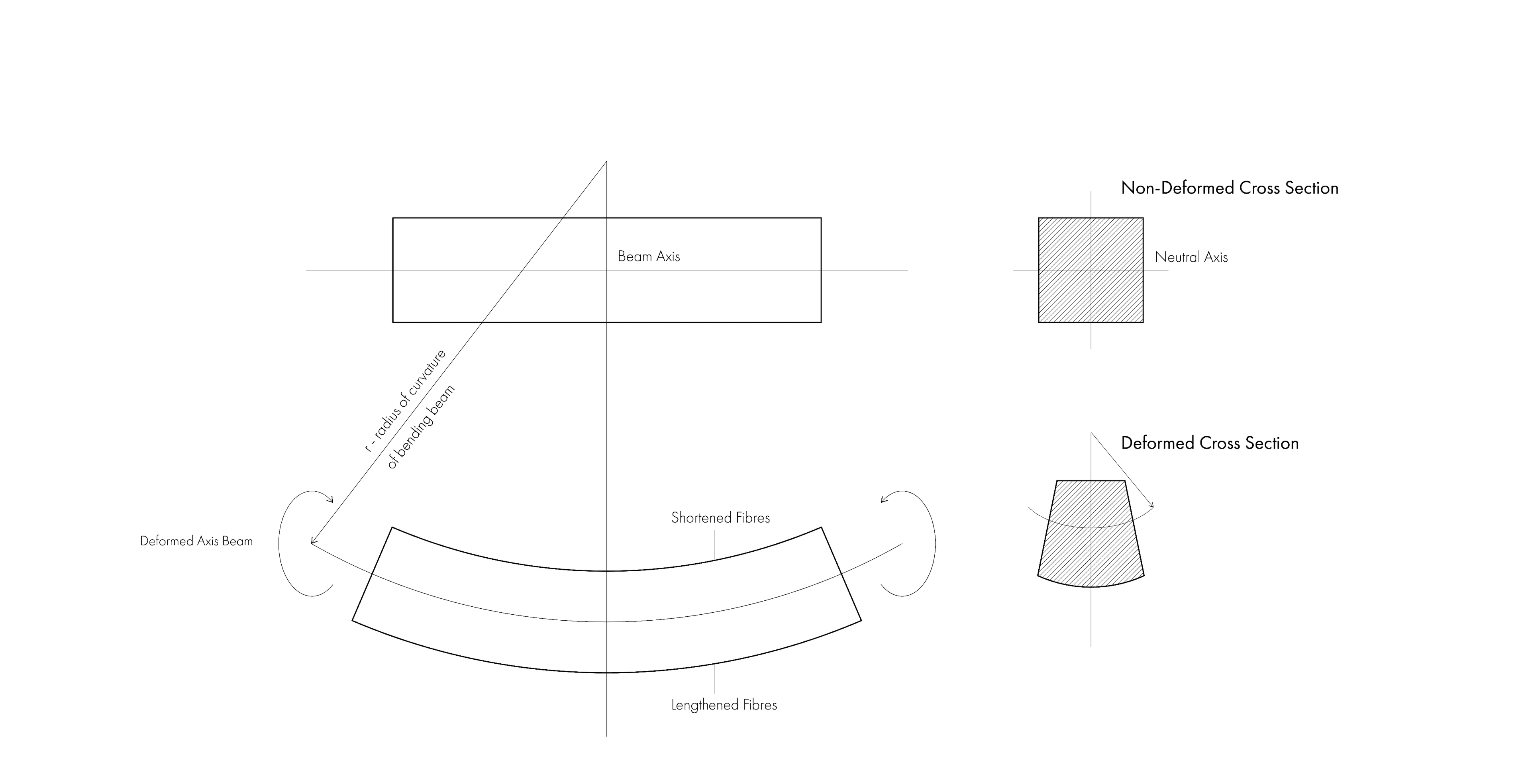
As the timber bends, the outside radius is placed in tension while the inside radius is compressed. Excessive tension on the outer fibres can cause the material to crack or fail before the desired curvature is reached.
The strap was introduced to support the outside face of the timber and maintain compression through the bending process, allowing the material to form under more controlled conditions.
03
Failure Modes
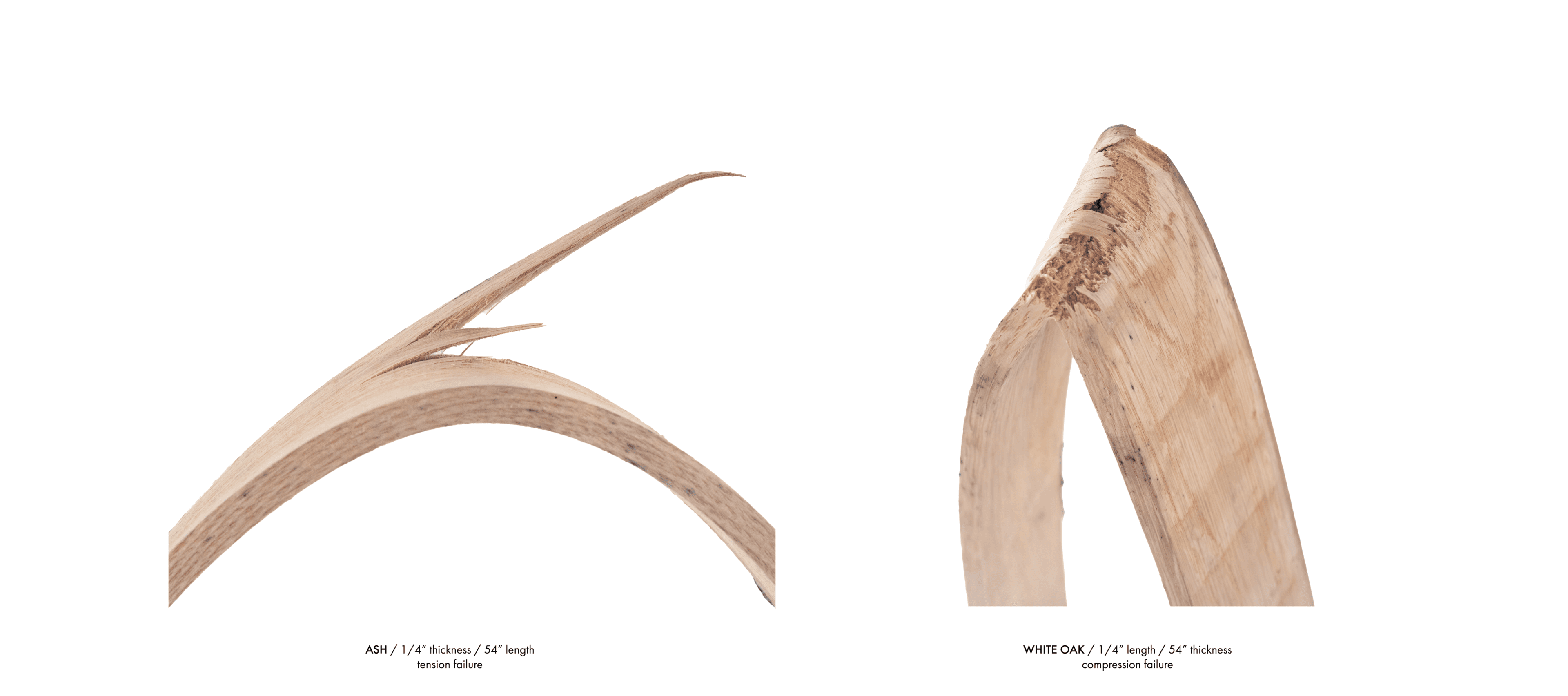
Early bending tests exposed two distinct modes of material failure: tension failure along the outside radius and compression failure along the inside radius.
On the outside of the bend, fibres are forced to lengthen. Once the tensile capacity of the timber is exceeded, the outer fibres separate and the member begins to split.
Along the inside radius, fibres shorten as the material is compressed. Excessive compression can cause local buckling, crushing, and wrinkling of the timber.
04
Version 1
Hand-Testing Prototype
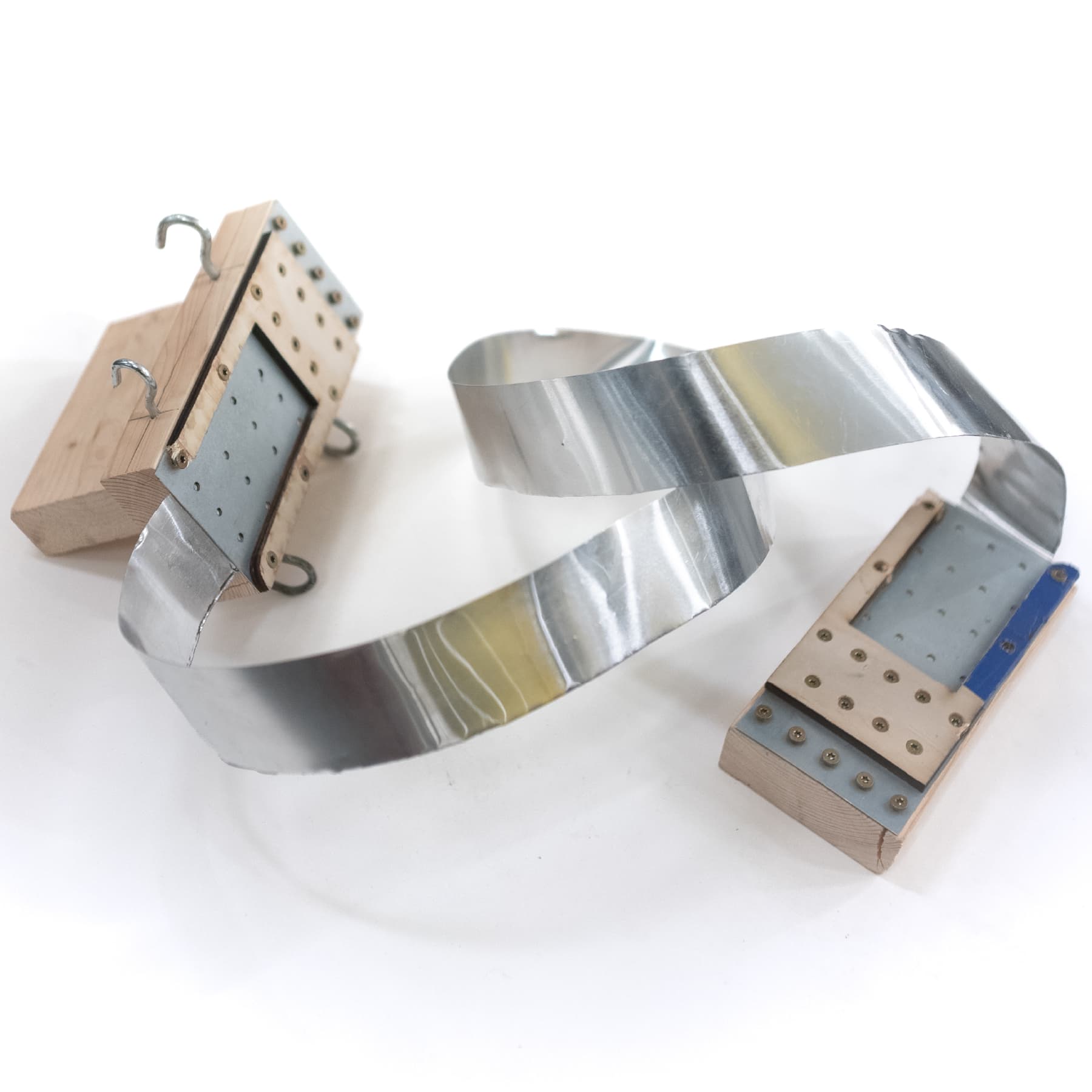
The first compression strap was developed as a rapid prototype for hand testing before robotic integration was considered.
Version 1 focused on establishing the basic compression principle. It allowed the strap geometry, end restraints, and relationship between the steel strap and timber to be evaluated through repeated manual bending tests.
Testing exposed problems with positioning, alignment, and handling. The prototype also lacked a reliable interface through which the robotic end-effector could grip the complete assembly.
05
Version 2
Refined Robotic System
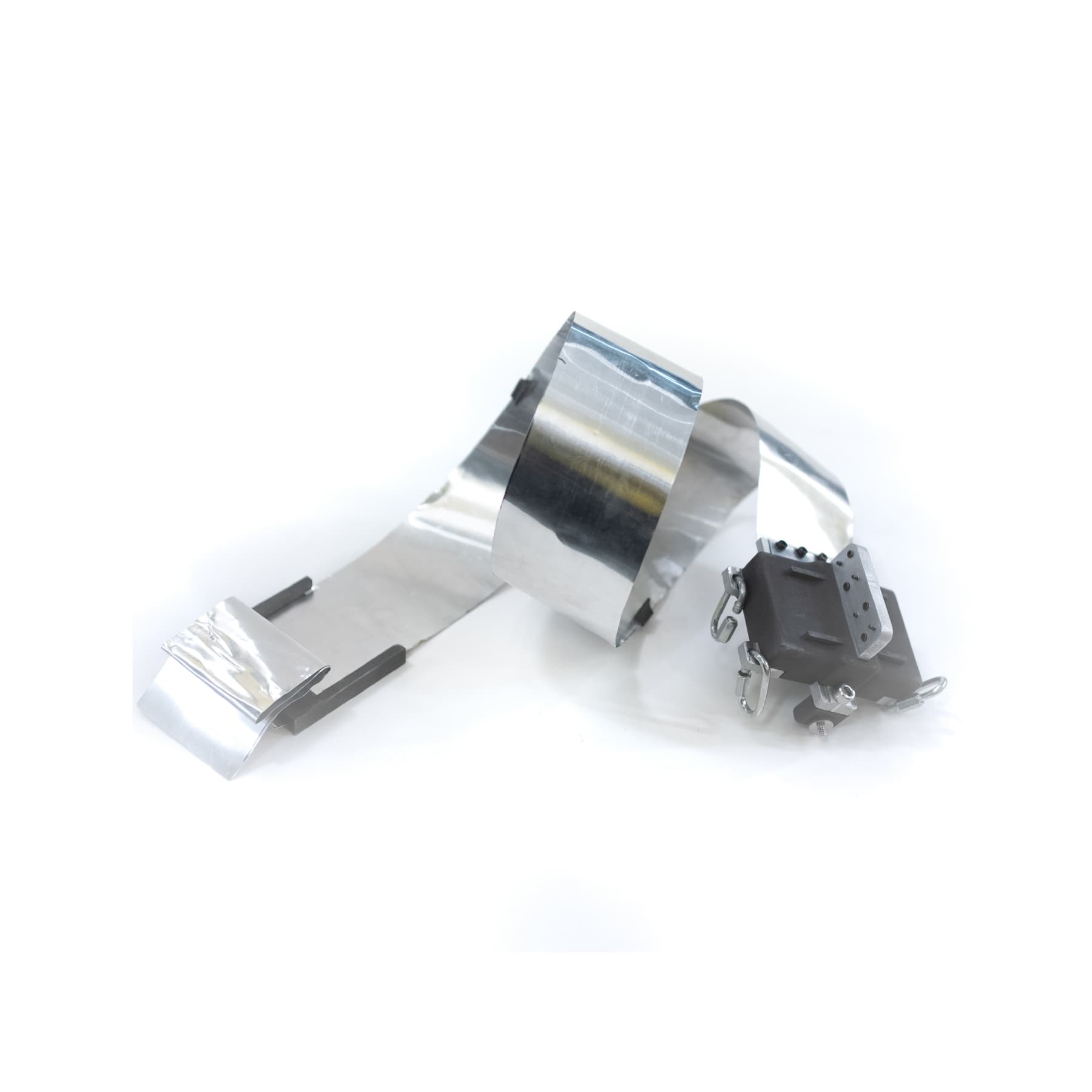
A second version was rebuilt around the problems identified during hand testing and the requirements of the robotic bending workflow.
The assembly was refined to improve alignment, repeatability, and handling while maintaining the compression strategy established with the first prototype.
The geometry also introduced a predictable central gripping region, turning the strap itself into a controlled mechanical interface for the robotic end-effector.
06
Robotic Integration
Version 2 allowed the robot to grip the compression strap directly and manipulate the timber and strap as a single assembly.
The original gripper was developed around direct contact with the flat face of the timber. Once the compression strap was introduced, that surface was no longer available as the primary gripping interface.
Version 2 incorporated a region specifically shaped around the gripper. The robot could clamp onto the strap, transfer motion through the complete assembly, and keep the timber constrained throughout bending.
View Robotic Bending Gripper ↗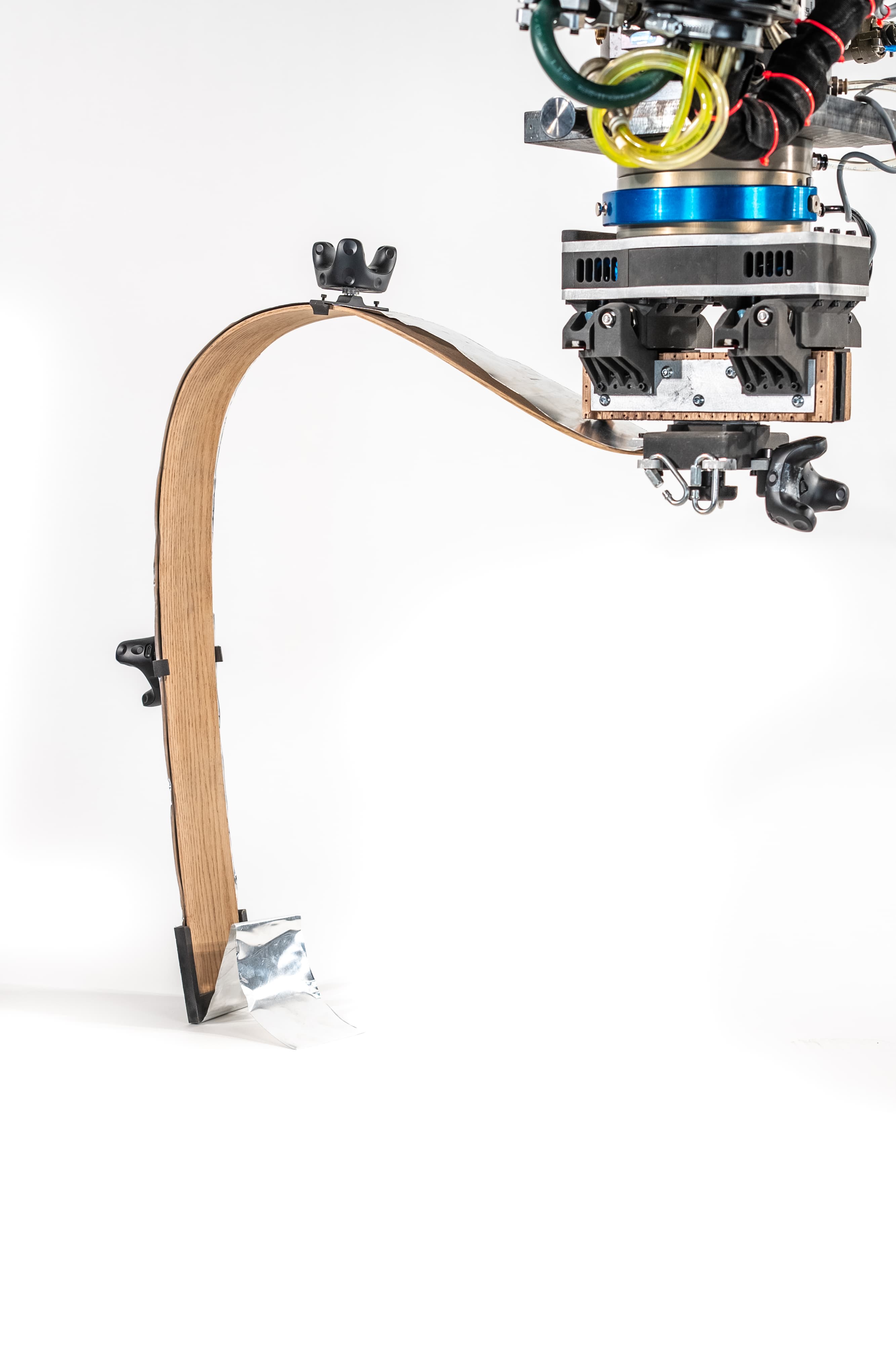
07
Workflow Integration
The compression strap ultimately became part of the robotic steam-bending workflow rather than remaining an independent material fixture.
The strap was installed with the timber before bending and remained with the material throughout robotic manipulation. This reduced additional handling during the limited working window after steaming.
Developing the strap alongside the gripper demonstrated how tooling, material behaviour, and robotic motion had to evolve together rather than being designed as independent parts of the fabrication process.
Main Research Project