Site under construction — check back daily for updates
Research + Development
Water Quality Sensing Platform
A catamaran-style water quality sensing vessel developed to support environmental data collection across large bodies of water.
Type
Research Project
Period
Jun 2020 - Aug 2020
Organization
CAROBOT Learning and
Research Organization / MannLab
Research Lead
Prof. Steve Mann
Development
Design + Fabrication
Electronics + Integration
Project Context
Research conducted with CAROBOT Learning and Research Organization / MannLab under Professor Steve Mann. My work focused on the design, fabrication, and integration of the hull and motion systems for a mobile water quality sensing vessel.
References
01
Project Overview
The research explored a mobile approach to water quality testing by combining a sensor platform with a purpose-built watercraft capable of moving through a defined testing area.
The project investigated limitations associated with conventional water quality testing, including long wait times, inefficient data collection, and the potential for human error.
A mobile platform was developed around a sensor pod that could be moved through the water by the vessel or towed by a swimmer. The watercraft provided the physical platform required to transport the sensing system across larger testing areas.
02
Watercraft Development
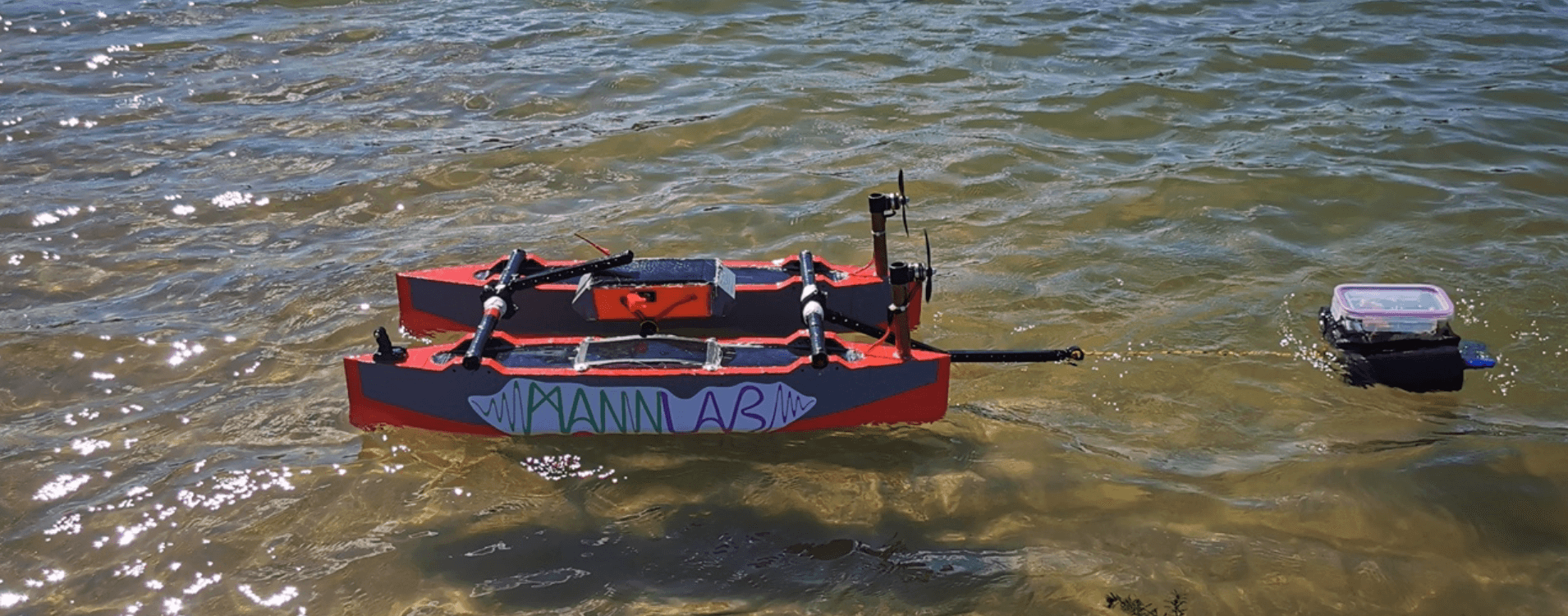
A catamaran-style watercraft was developed to provide a stable platform for propulsion, control electronics, and the towed sensing system.
01 / Hull Design
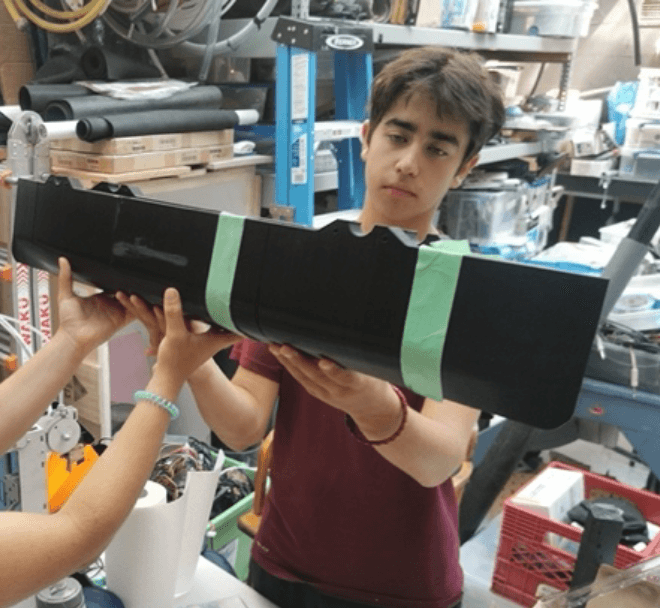
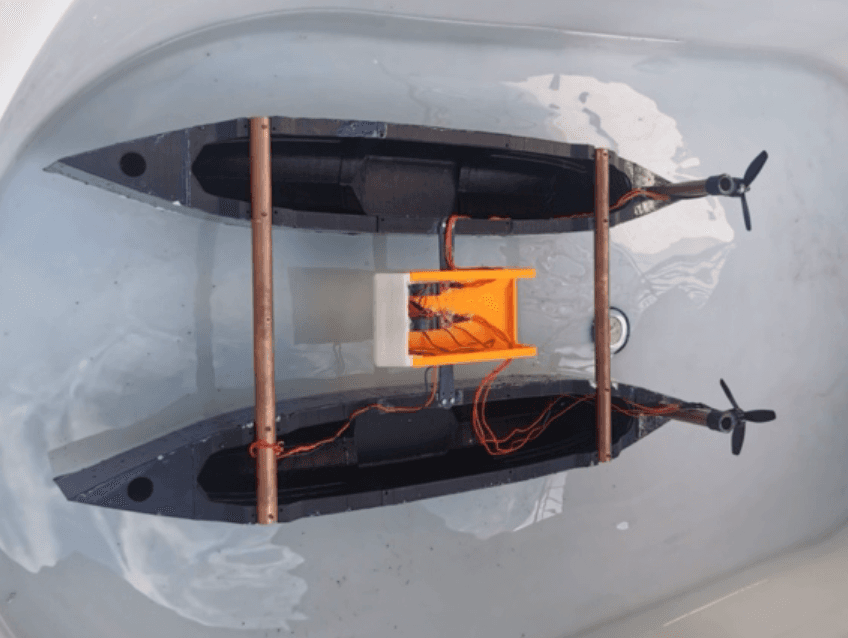
The watercraft used two pontoon-style hulls connected by copper rods. The arrangement provided a broad base for the vessel while creating a central area for the electronics and motion systems.
02 / Fabrication
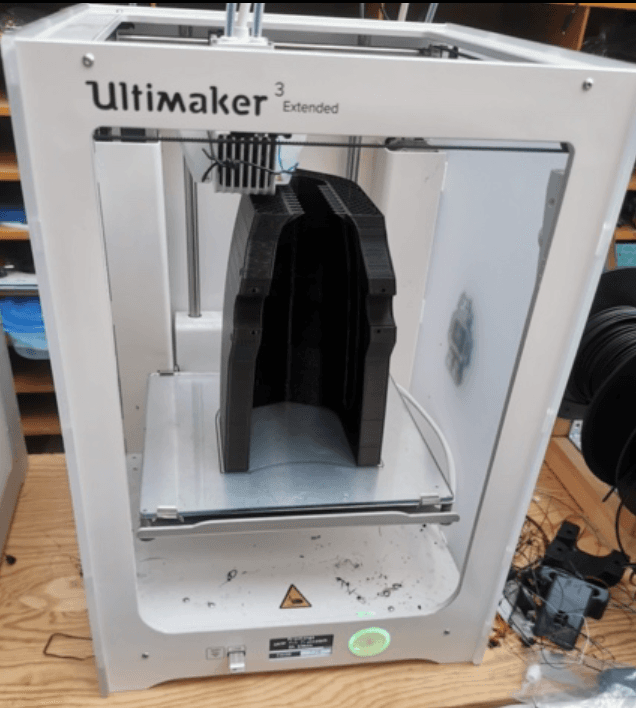
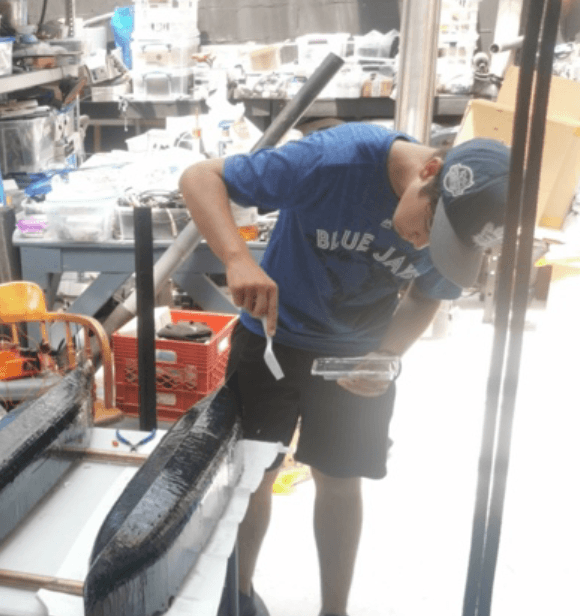
The vessel was modeled in Fusion 360 and divided into 16 sections for fabrication on an Ultimaker 3 Extended. The printed hull sections were assembled and reinforced with epoxy and carbon fibre to improve strength and waterproofing.
03 / Float Testing
Initial float testing left the vessel in a test pool for 48 hours with no detected leaks. Wave testing identified a top-heavy configuration, leading to the batteries being repositioned lower in the vessel before further testing.
System Components
Qty.
Teensy 3.6
1
Fluke 28II
1
LDR
1
Laser Module
1
Conductivity Module
1
GPS Breakout Board
1
Micro SD Card Breakout
1
250kv Brushless Motors
2
30A ESC
2
4S Battery + Charger
1
12V Exhaust Fans
2
100W RGB LEDs
3
18650 Batteries
4
Prototype Board
Assorted Wiring
03
Propulsion + Motion
The hull and propulsion systems were developed together to create a mobile platform capable of carrying the research hardware across the water.
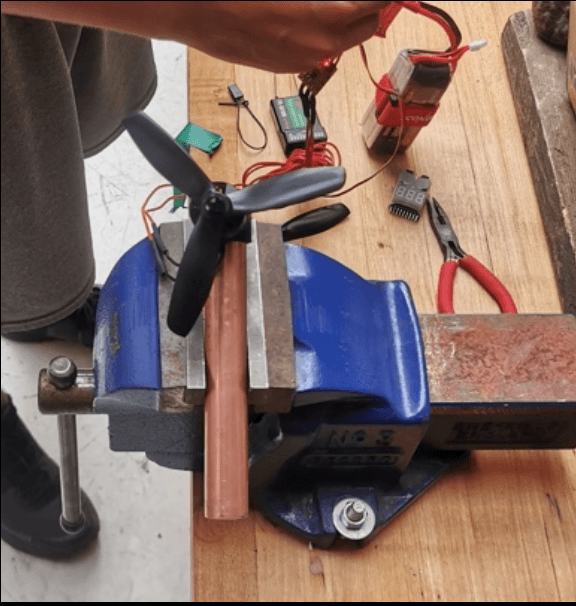
Two 250kv brushless motors provided propulsion, each controlled through a 30A electronic speed controller. The motors were integrated into the catamaran-style platform alongside the battery and control electronics.
The development process included hull construction, waterproofing, propulsion testing, and revisions to the vessel's weight distribution before field deployment.
04
Sensing System
The watercraft was developed as the mobile component of a larger sensing system designed to collect environmental data across a testing area.
Sensor Pod
The project incorporated a separate sensor pod designed to move through the water with the vessel. The pod provided the physical interface between the sensing hardware and the surrounding water.
Environmental Measurements
The sensing system was developed to collect environmental measurements including temperature, conductivity, and optical water-quality information.
Position
GPS positioning allowed measurements to be associated with locations across the testing area, supporting the spatial mapping of recorded environmental conditions.
Data
The electronics architecture incorporated data logging alongside the environmental sensors, allowing measurements collected during testing to be recorded for later analysis.
05
Field Testing
The platform progressed from controlled float testing to field deployment at Woodbine Beach and Kelso Reservoir.
Field Test 01
Woodbine Beach
The first field test took place at Woodbine Beach with the City of Toronto. The platform was tested alongside the City's conventional process for collecting and testing water quality in Lake Ontario.
Field Test 02
Kelso Reservoir
A second field test was completed at Kelso Reservoir with Conservation Halton. The platform was used to collect measurements across a waypoint-based testing area.
Final watercraft and sensor platform during field testing
06
Data Mapping
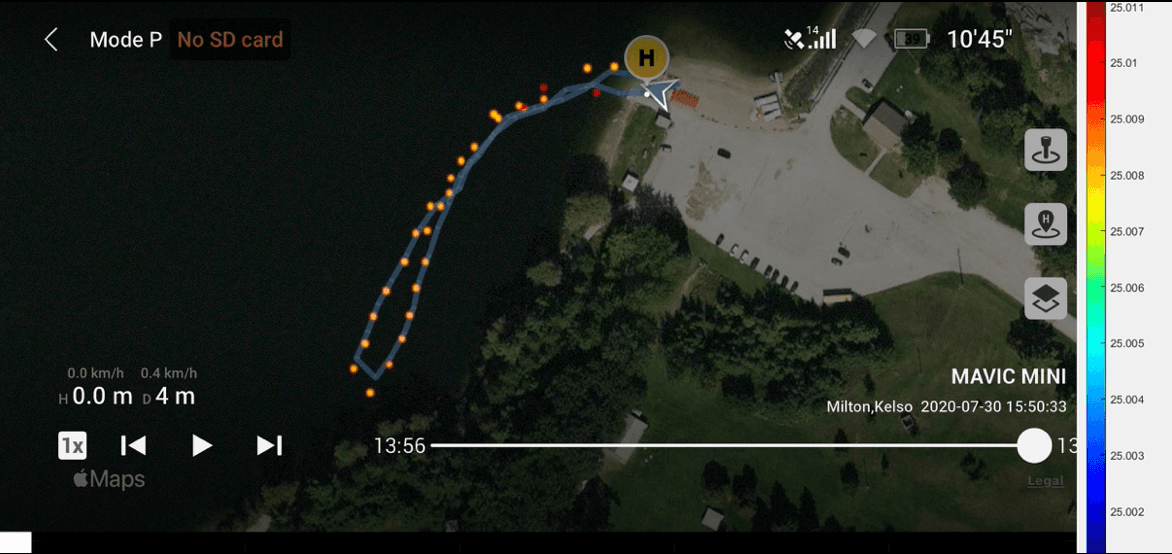
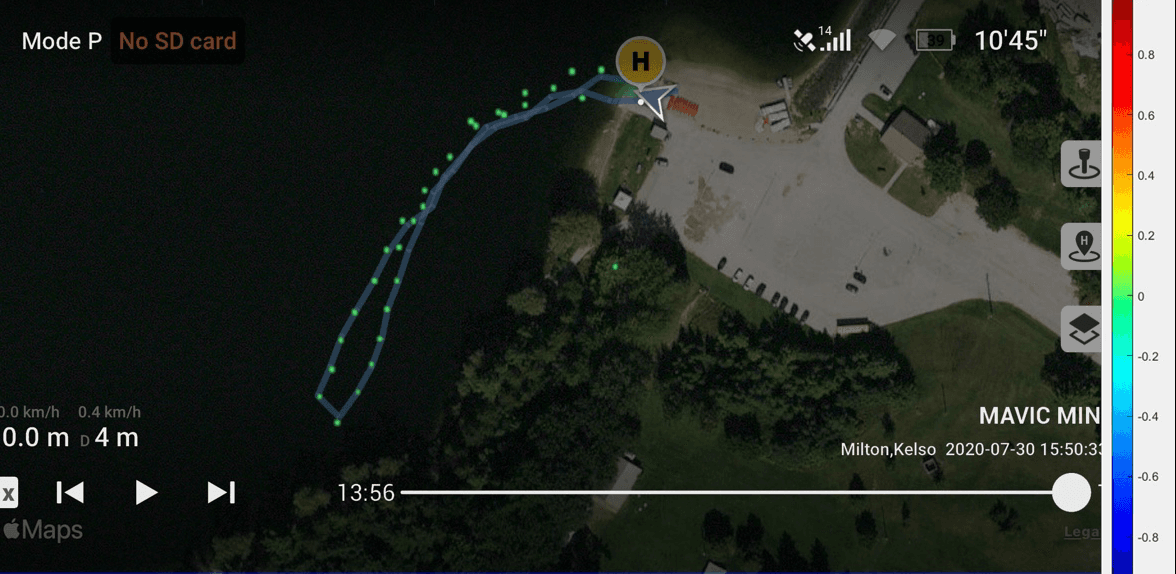
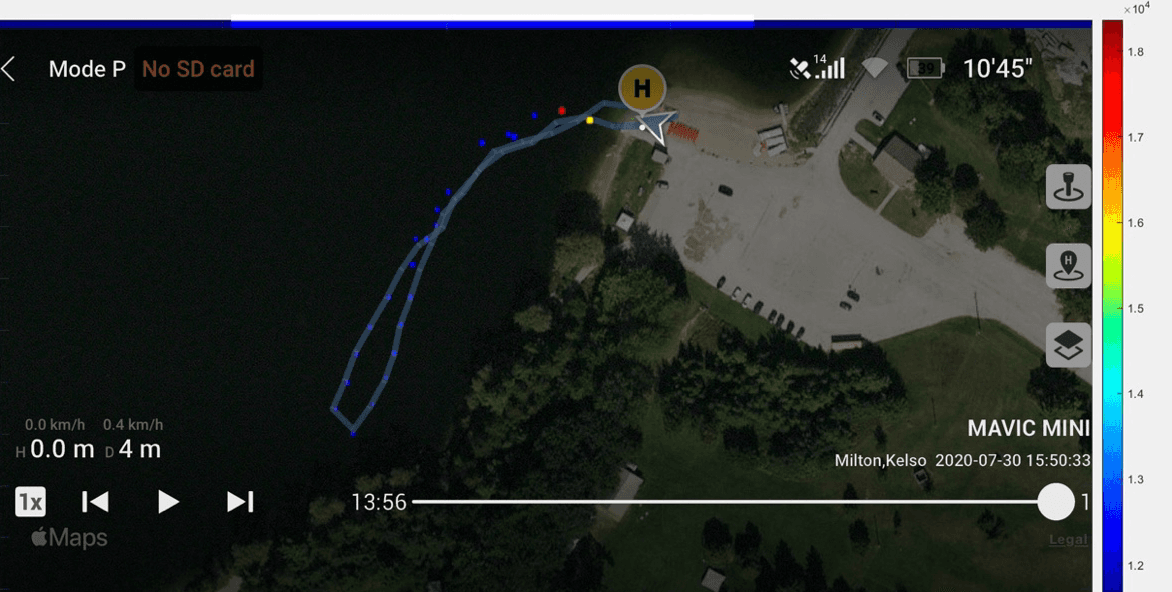
Field measurements were connected with position to visualize changing environmental conditions across the reservoir.
At Kelso Reservoir, the platform completed a 4 × 4 metre waypoint grid in under one hour. The test allowed measurements to be collected across a defined spatial area rather than at a single point.
The resulting dataset included temperature, optical clarity, and conductivity information associated with locations across the reservoir.
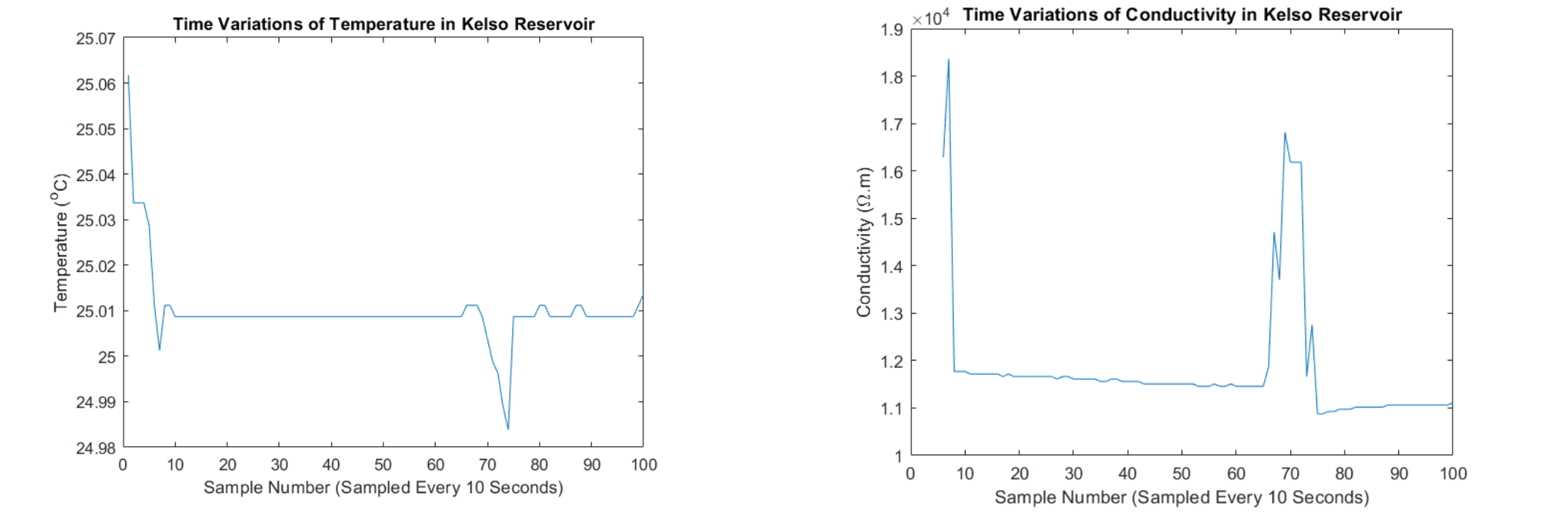
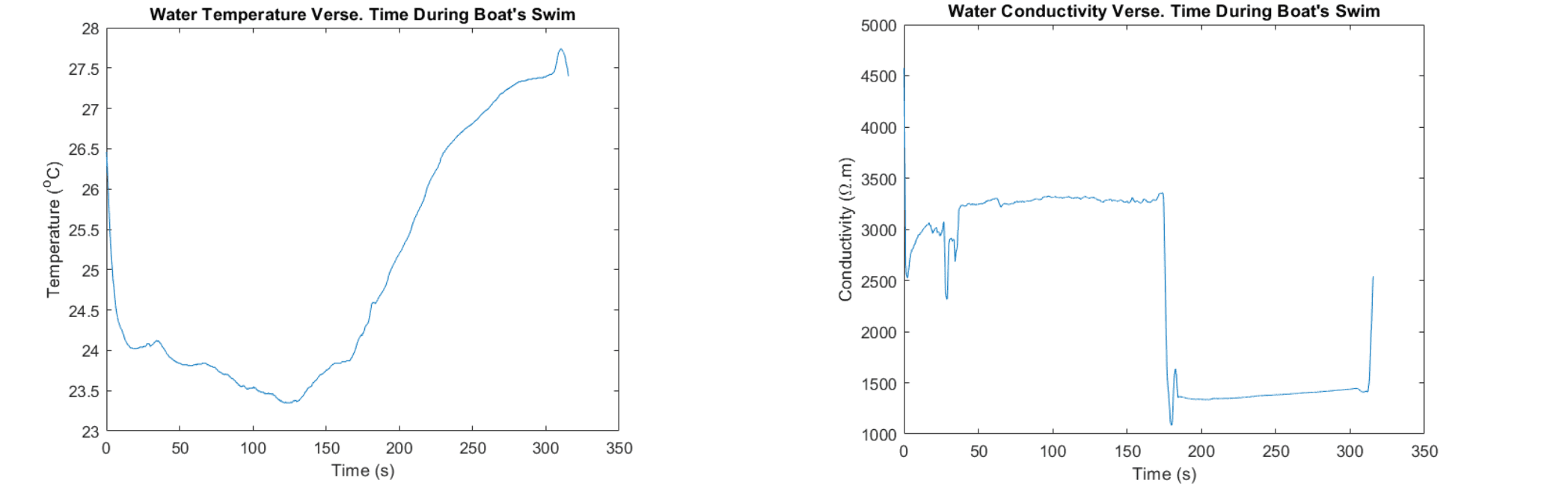
Temperature, Optical Clarity and Conductivity Data
Kelso Reservoir