Site under construction — check back daily for updates
Furniture + Material Fabrication
Steam Bent
Wood Lamp
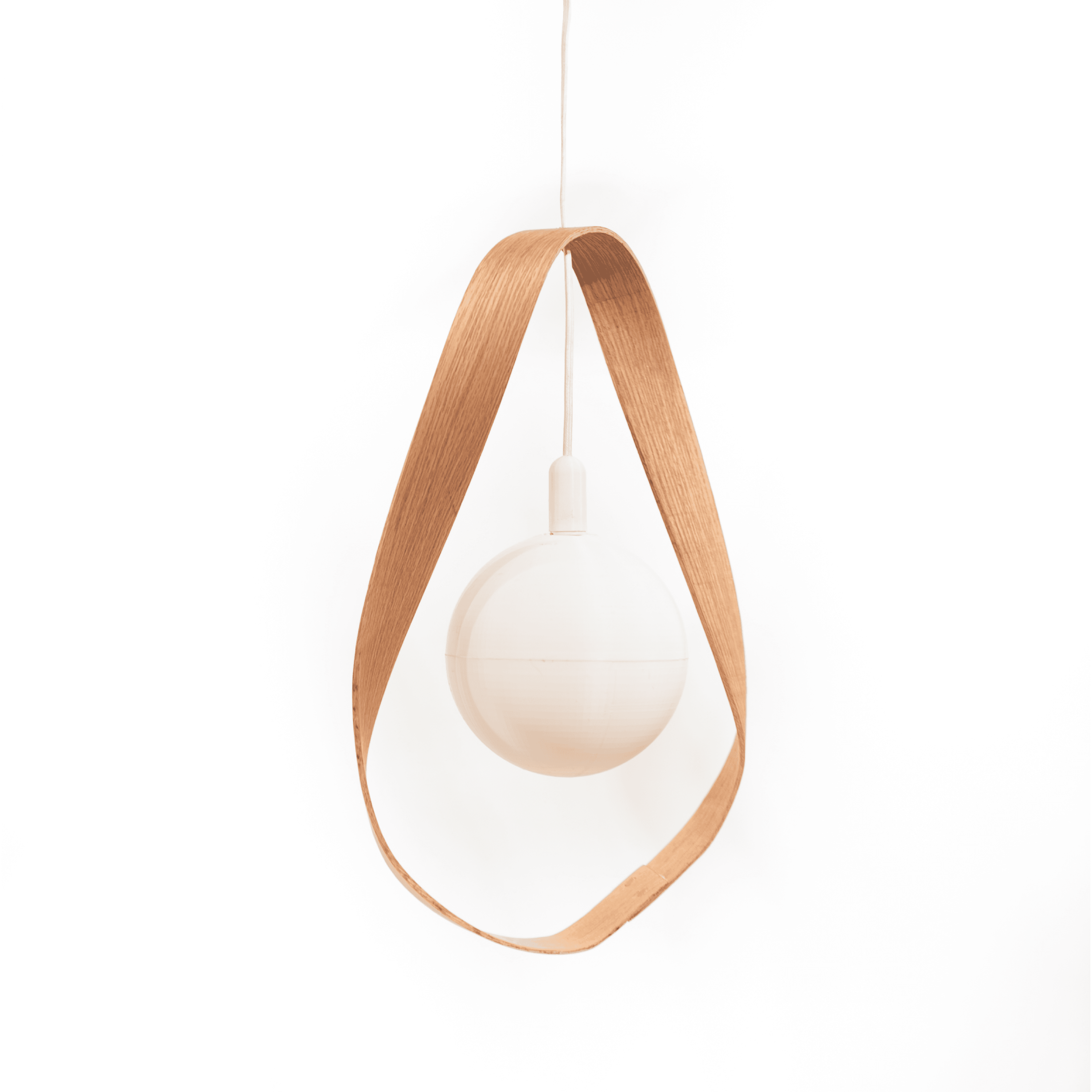
A suspended lamp developed through steam bending, laminated timber fabrication, and the adaptation of a commercially available lighting system.
Type
Lighting
Process
Steam Bending
Material
Hardwood
Lighting
IKEA STRÅLA
Development
Wood Fabrication
Prototyping
Product Design
01
Design Development
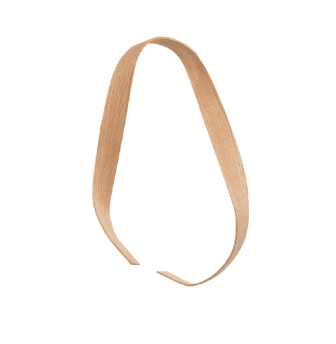
The lamp began with a simple continuous timber loop, using bending to create both the structure and the visual identity of the object.
Rather than assembling the frame from a series of rigid components, the design uses the flexibility of thin timber sections to establish a continuous curved profile around the suspended light source.
02
Steam Bending
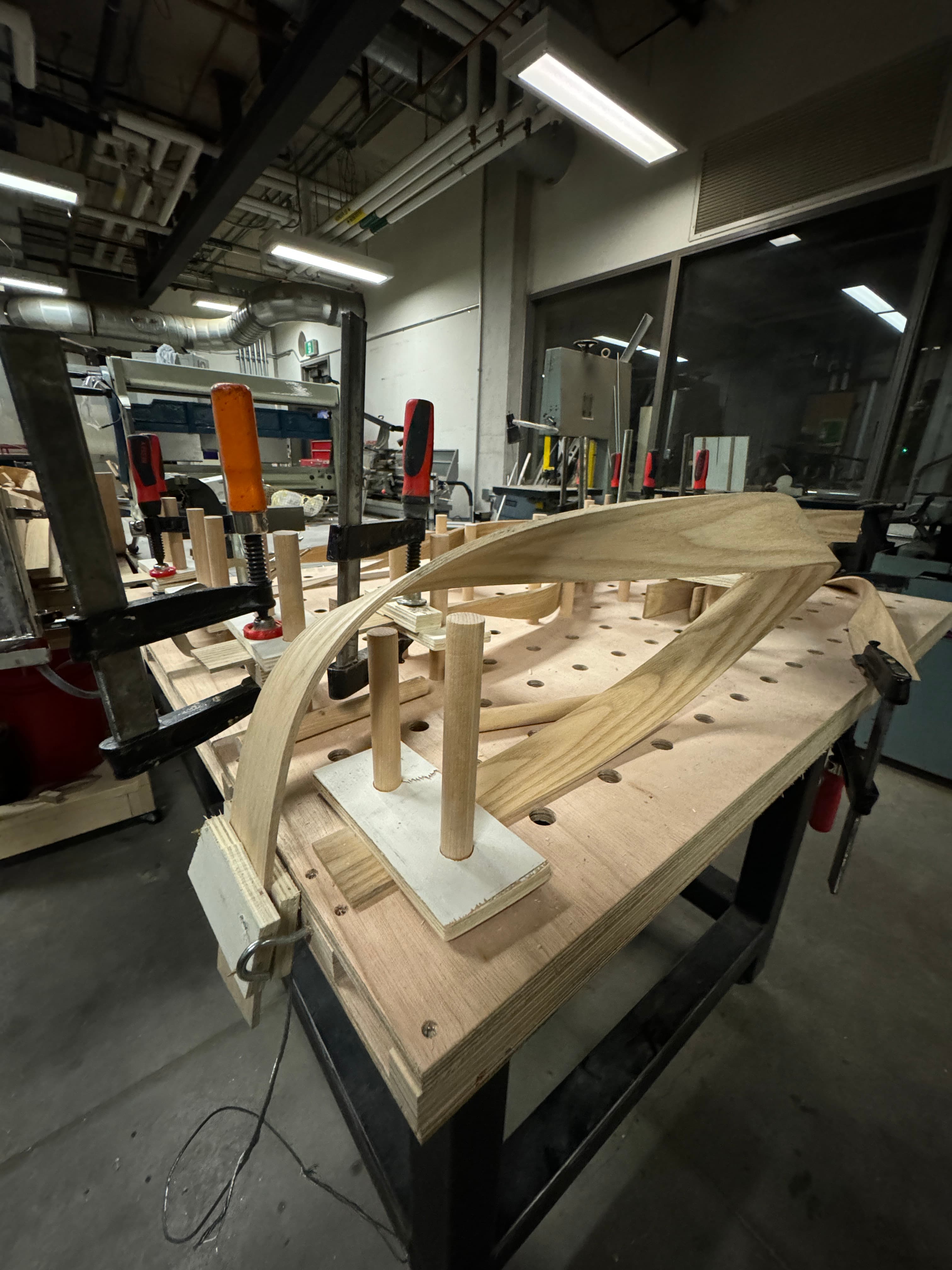
Thin timber sections were formed around a custom jig, allowing the material to establish the continuous curved geometry of the lamp.
The bending jig defines the final profile while a series of locating points and clamps control the timber as it is brought into shape. The geometry transitions from a broad lower curve into a tighter upper radius.
Forming the component as a continuous curve reduces the number of visible connections and allows the grain of the wood to follow the overall geometry of the object.
03
Form + Lamination
The bent timber layers work together as a thin structural shell, allowing the finished loop to retain its geometry after removal from the forming jig.
Multiple thin sections allow the wood to negotiate a much tighter curvature than a single thick member. The layers are formed together around the jig to establish a consistent profile.
Once set, the laminated assembly becomes substantially stiffer while preserving the visual lightness of the individual timber strips.

04
Lighting Integration
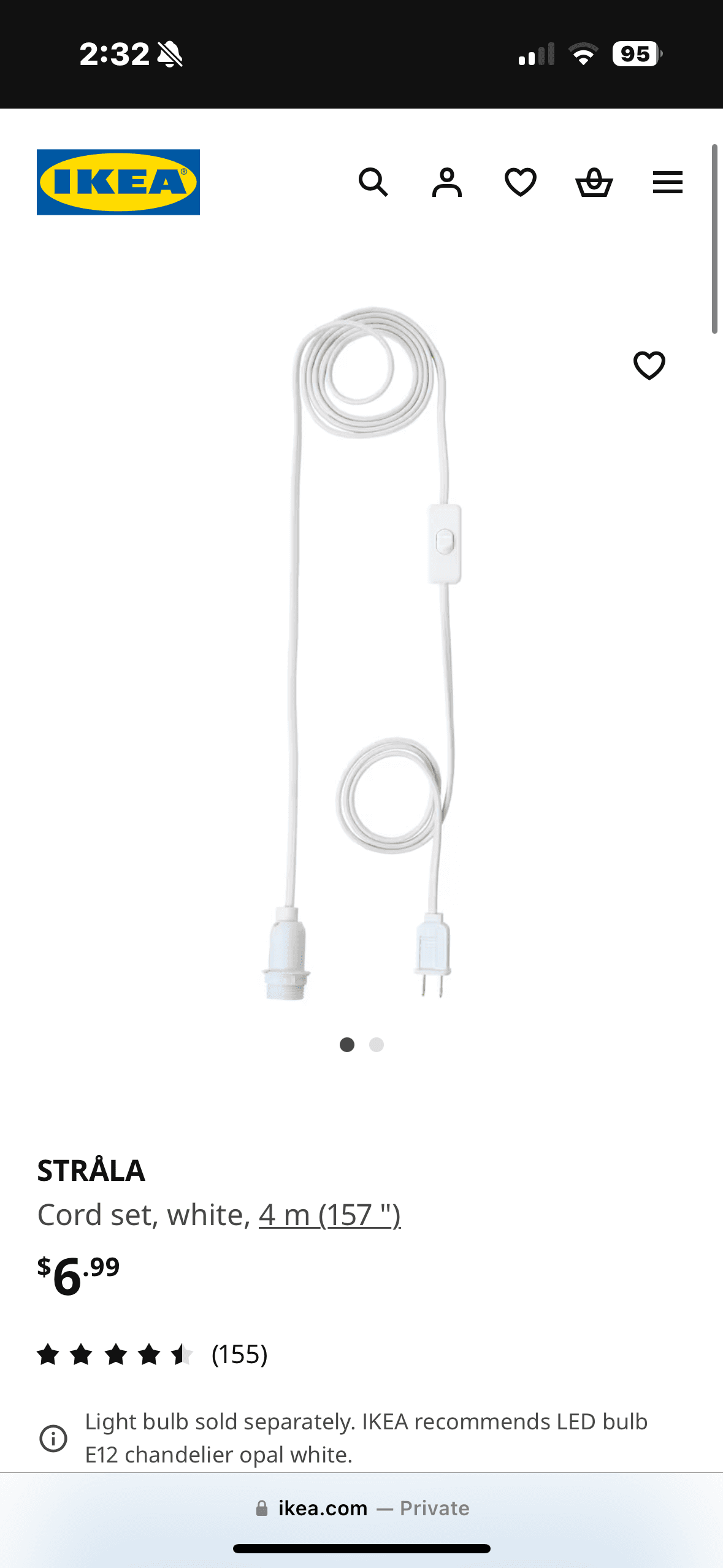
A commercially available IKEA STRÅLA cord set was adapted as the electrical core of the lamp.
Using an existing cord set allowed the design development to focus on the timber structure, suspension, and light diffusion rather than recreating the mains-voltage electrical hardware.
The cable passes through the upper portion of the timber frame and suspends the light source within the centre of the loop, keeping the electrical system visually separate from the wooden structure.
05
Cord Modification
The existing inline switch was opened to understand how the cord assembly could be incorporated into the finished lamp.
Working from an existing lighting assembly provided a compact electrical system that could be integrated with the custom timber and diffuser components while retaining the original cord and switching hardware.

06
Light Diffuser
A spherical diffuser surrounds the bulb and creates a simple geometric counterpoint to the elongated timber loop.
The diffuser is suspended independently within the wooden frame, allowing the light source to remain visually centred while the surrounding timber establishes the larger silhouette of the lamp.
The translucent shell softens the point light source and produces a more uniform glow while concealing the bulb and socket within the centre of the assembly.
07
Final Prototype
The prototype combines the bent timber frame, suspended spherical diffuser, and modified cord set into a single hanging light.
The final assembly uses the timber loop as the dominant structural and visual element, framing the light source while keeping the overall object materially simple.
The project served as a physical study in bending, lamination, fixture design, component integration, and the translation of a material process into a finished object.