Site under construction — check back daily for updates
Robotic Fabrication
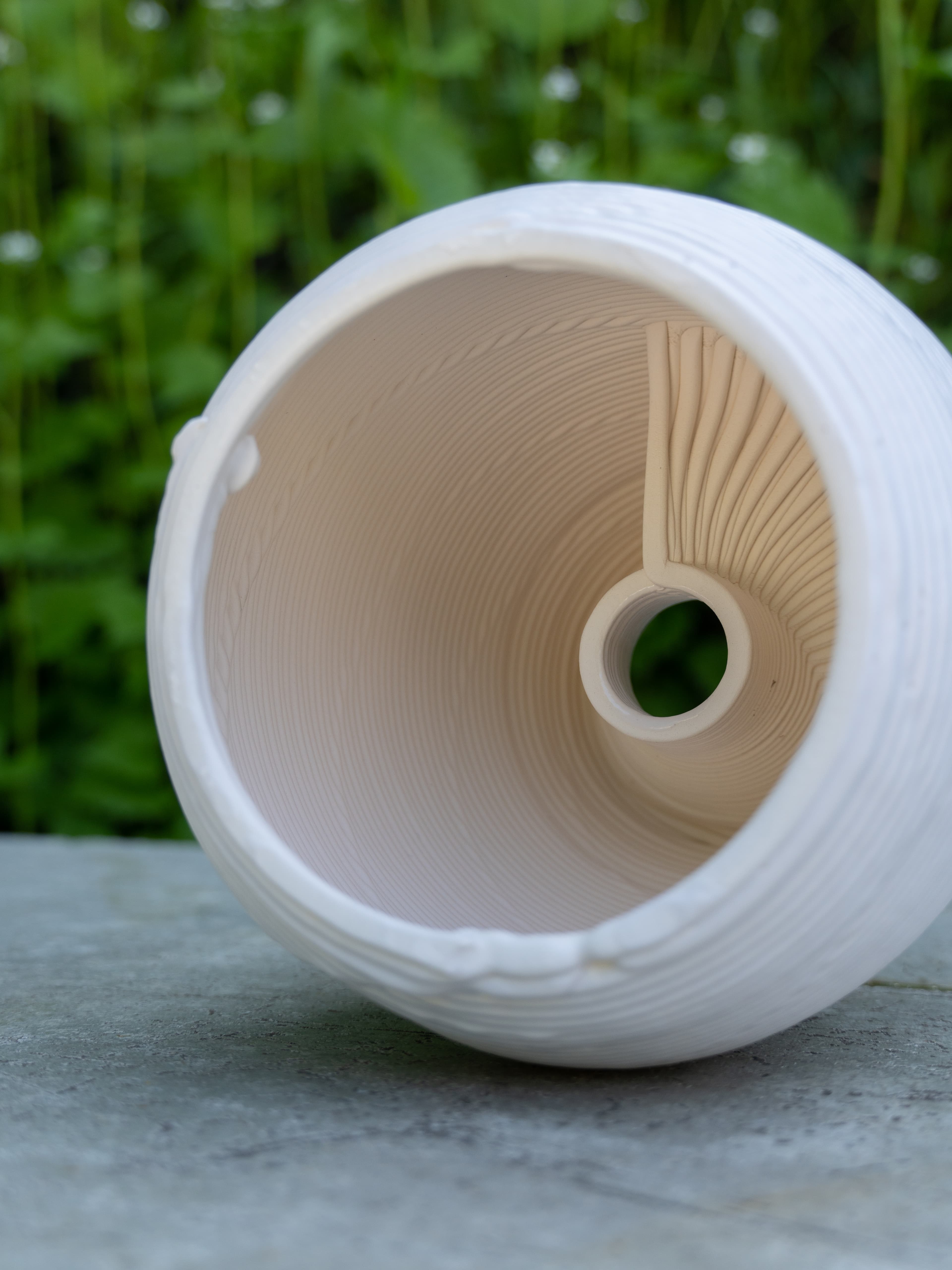
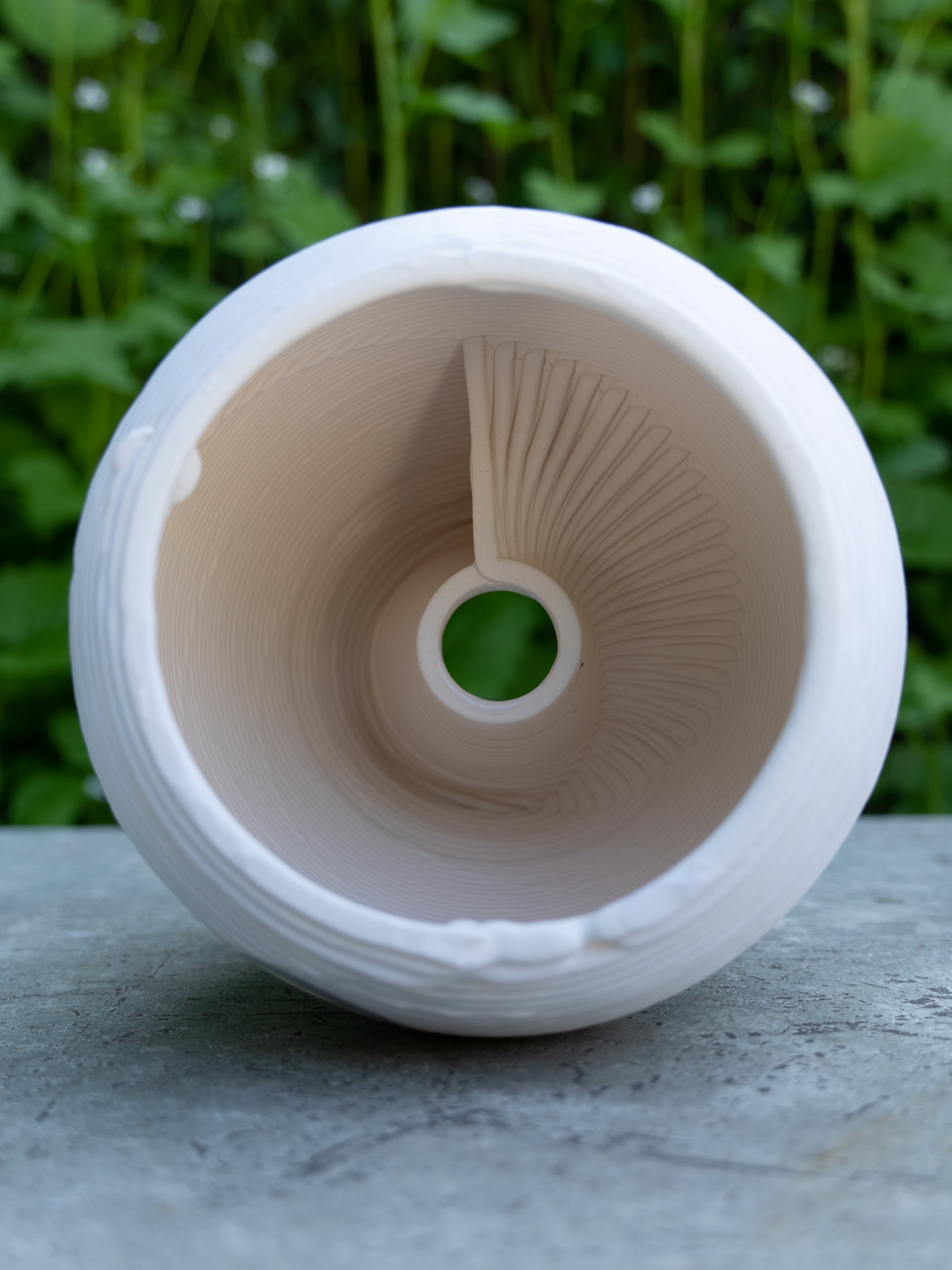
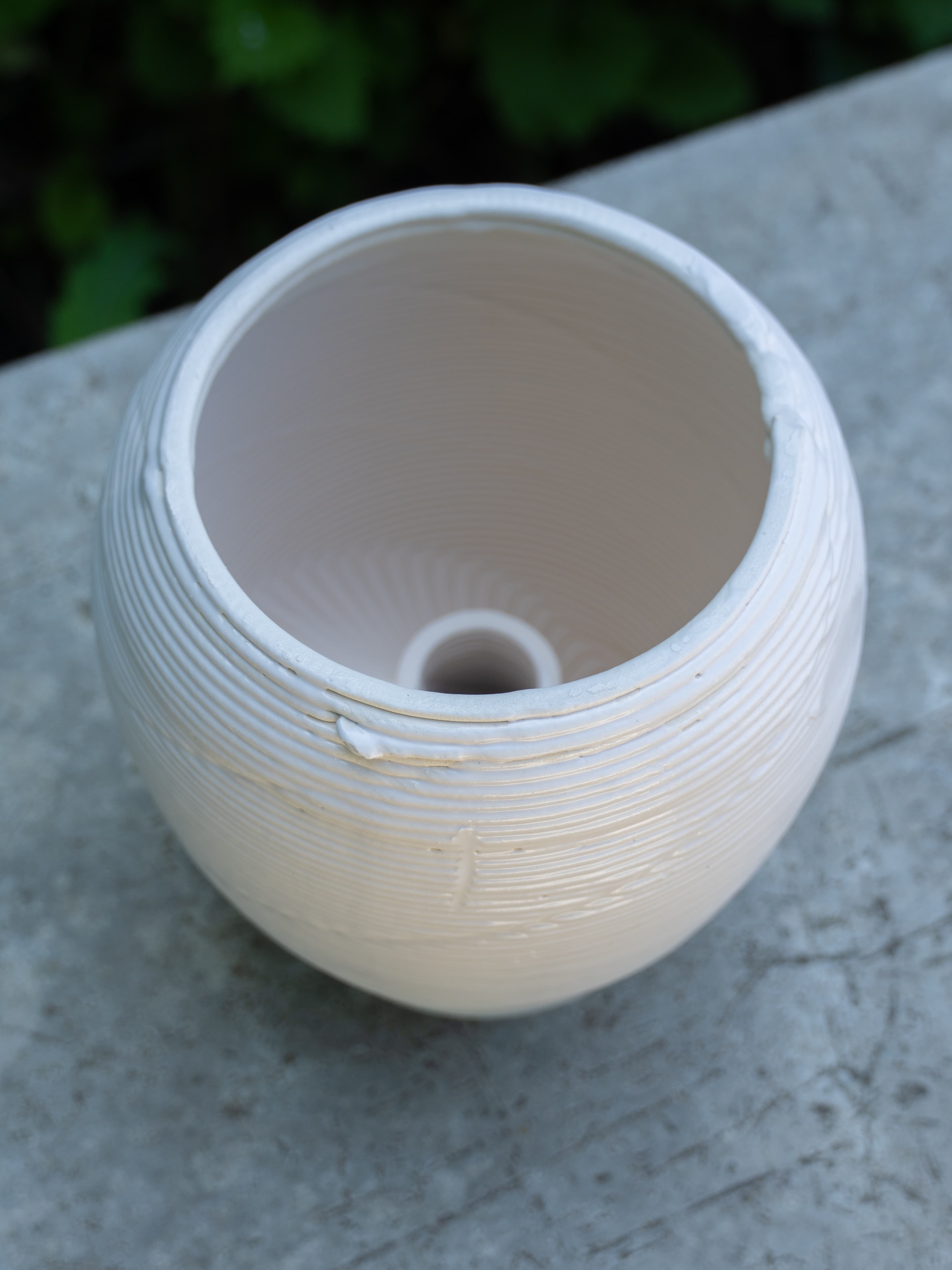
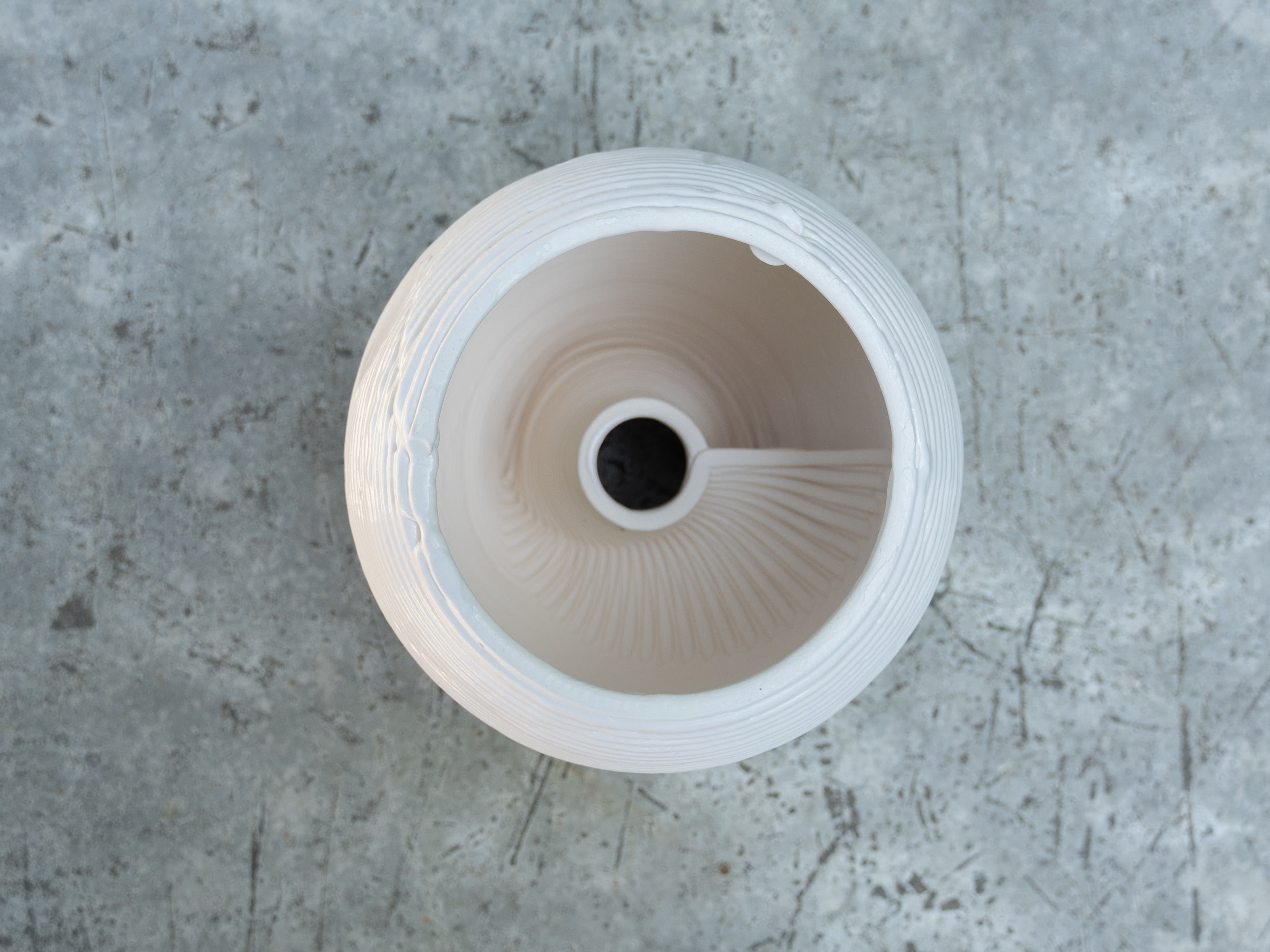
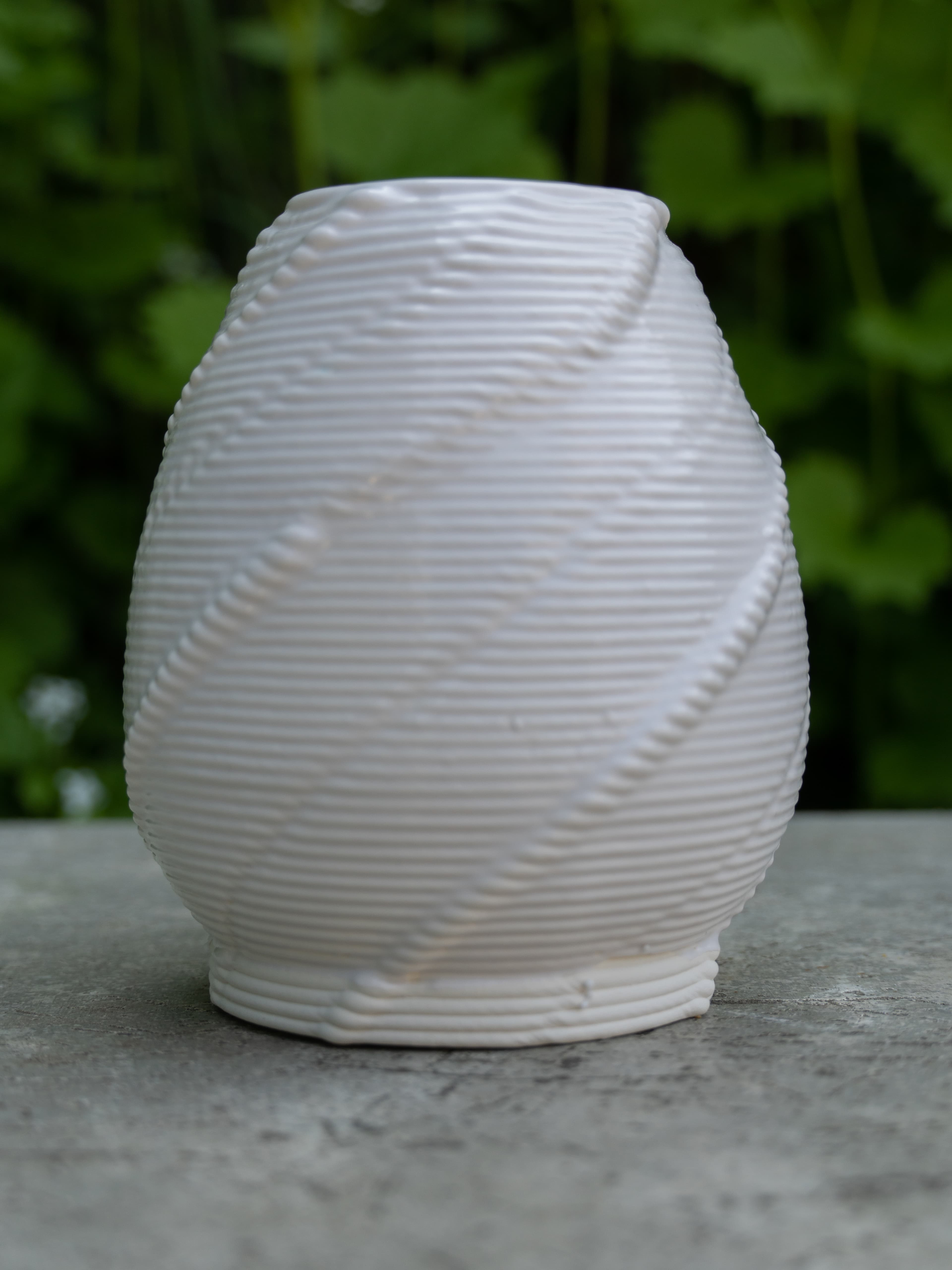
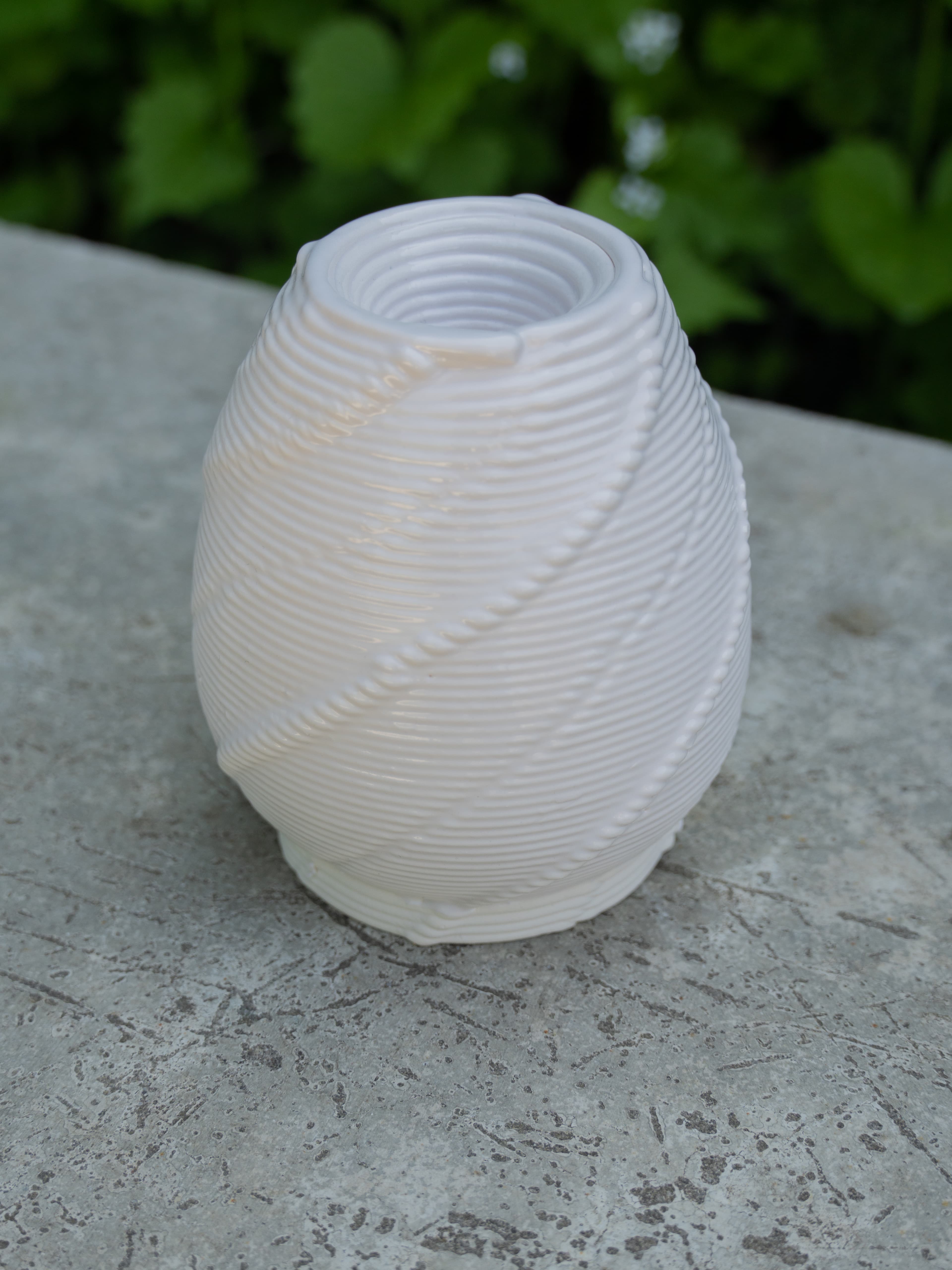
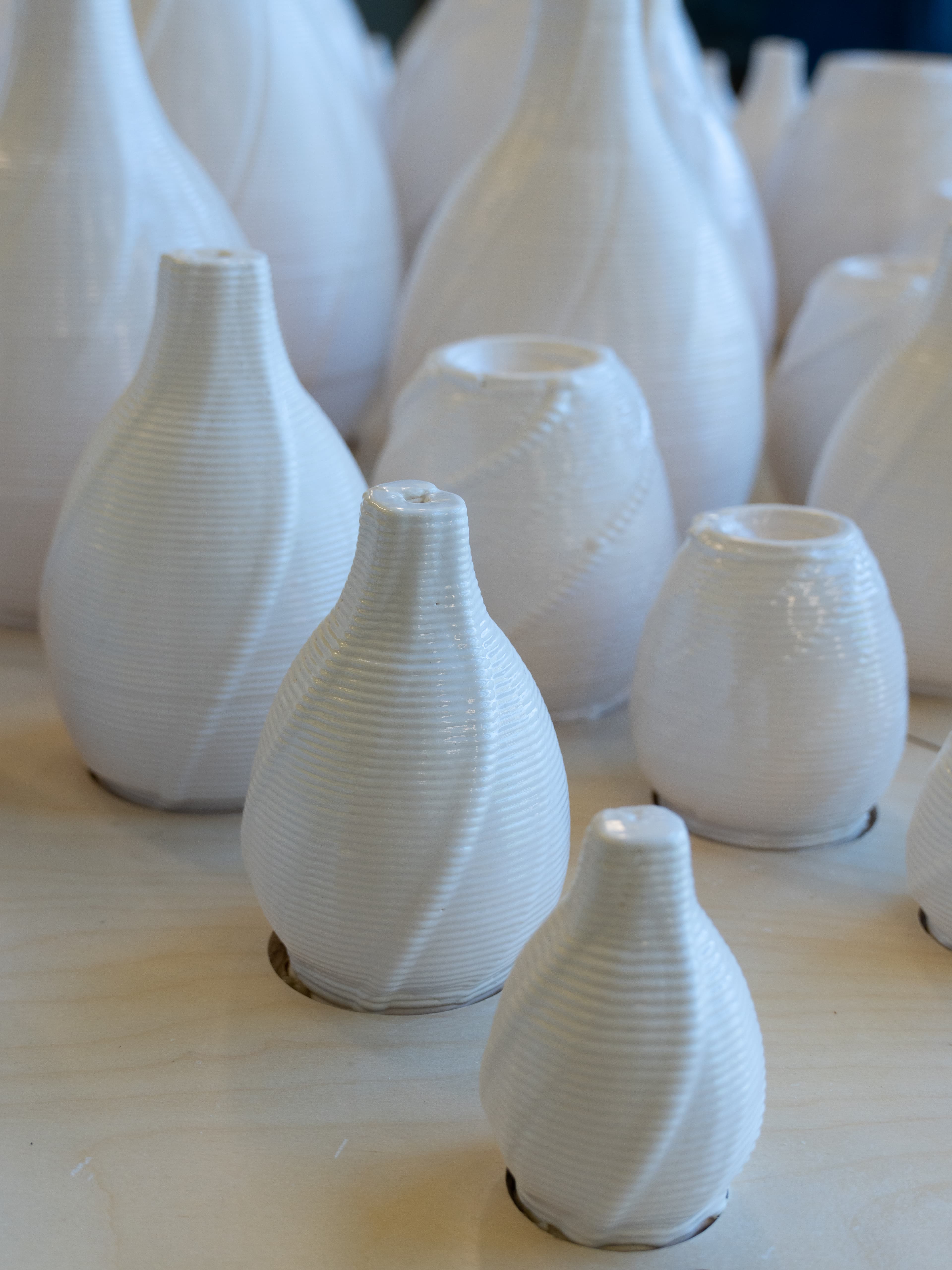
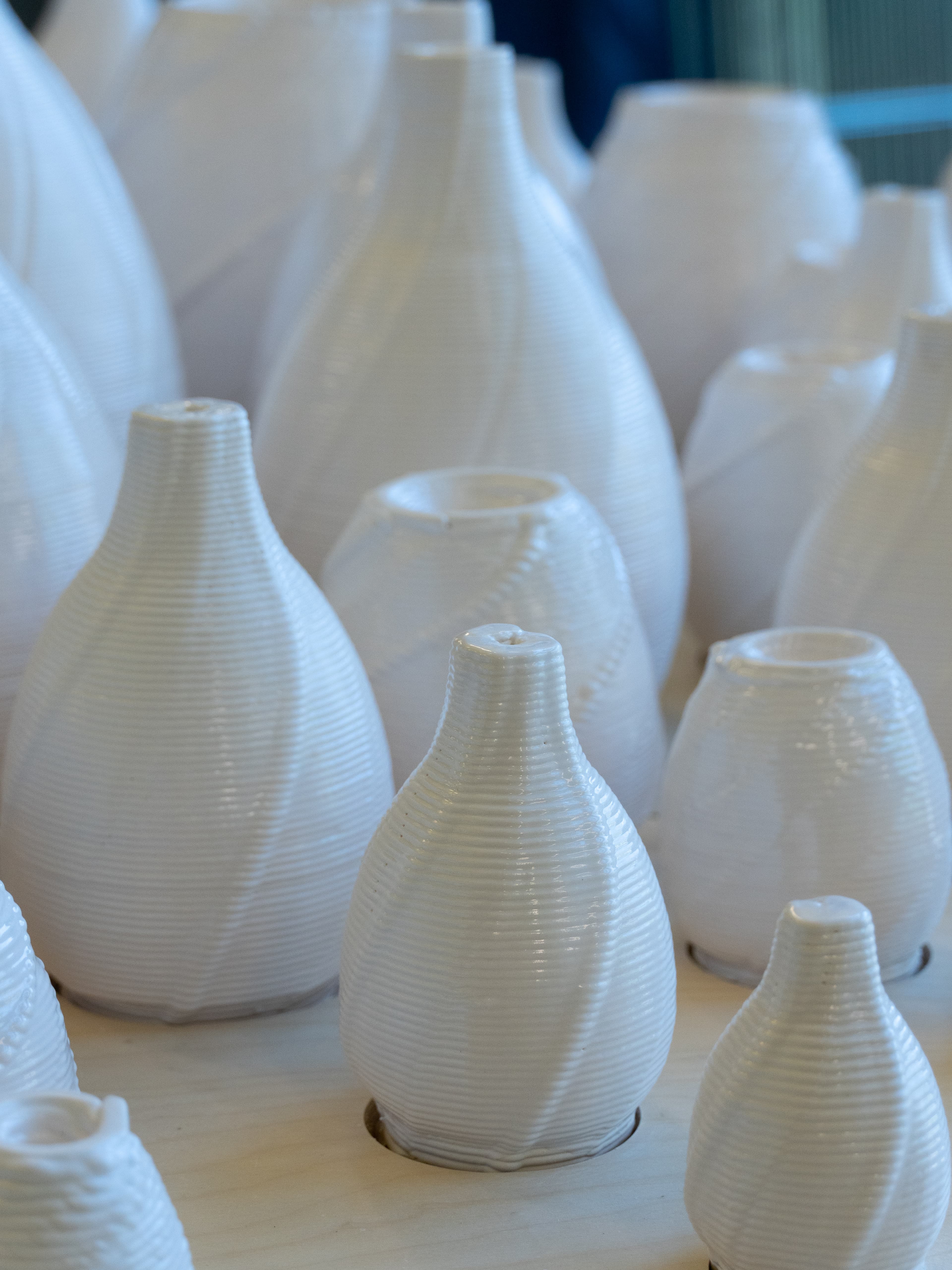
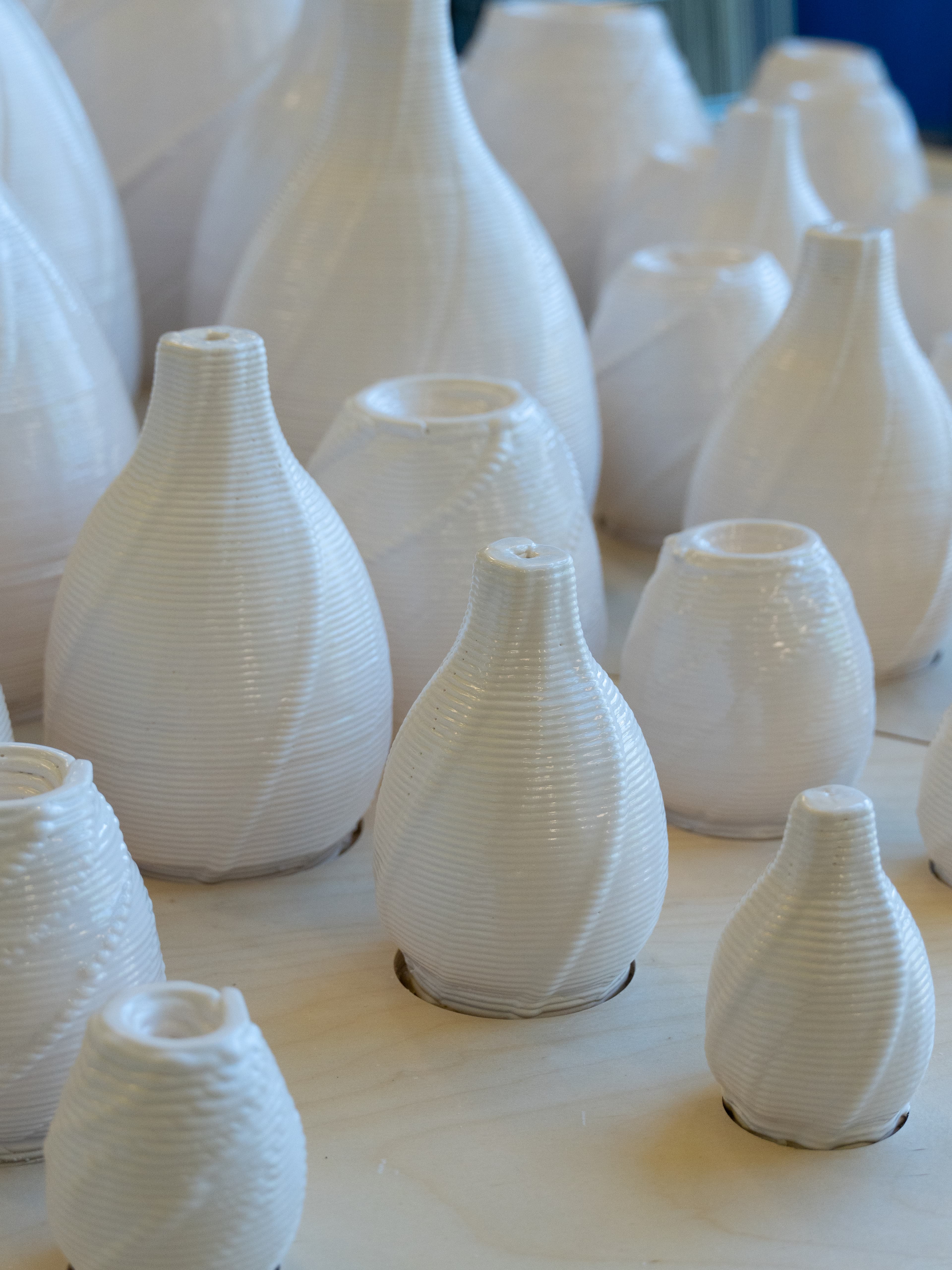
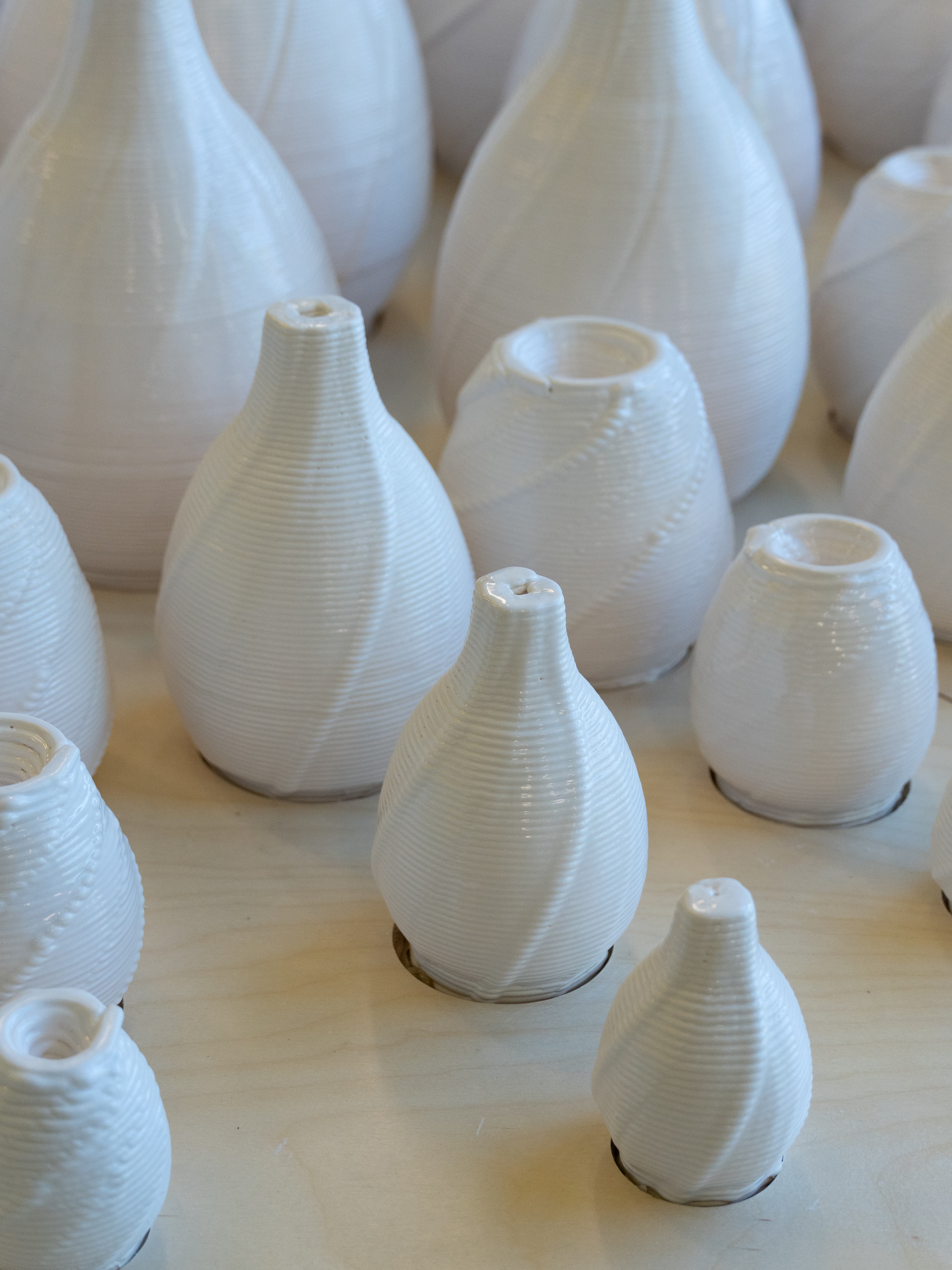
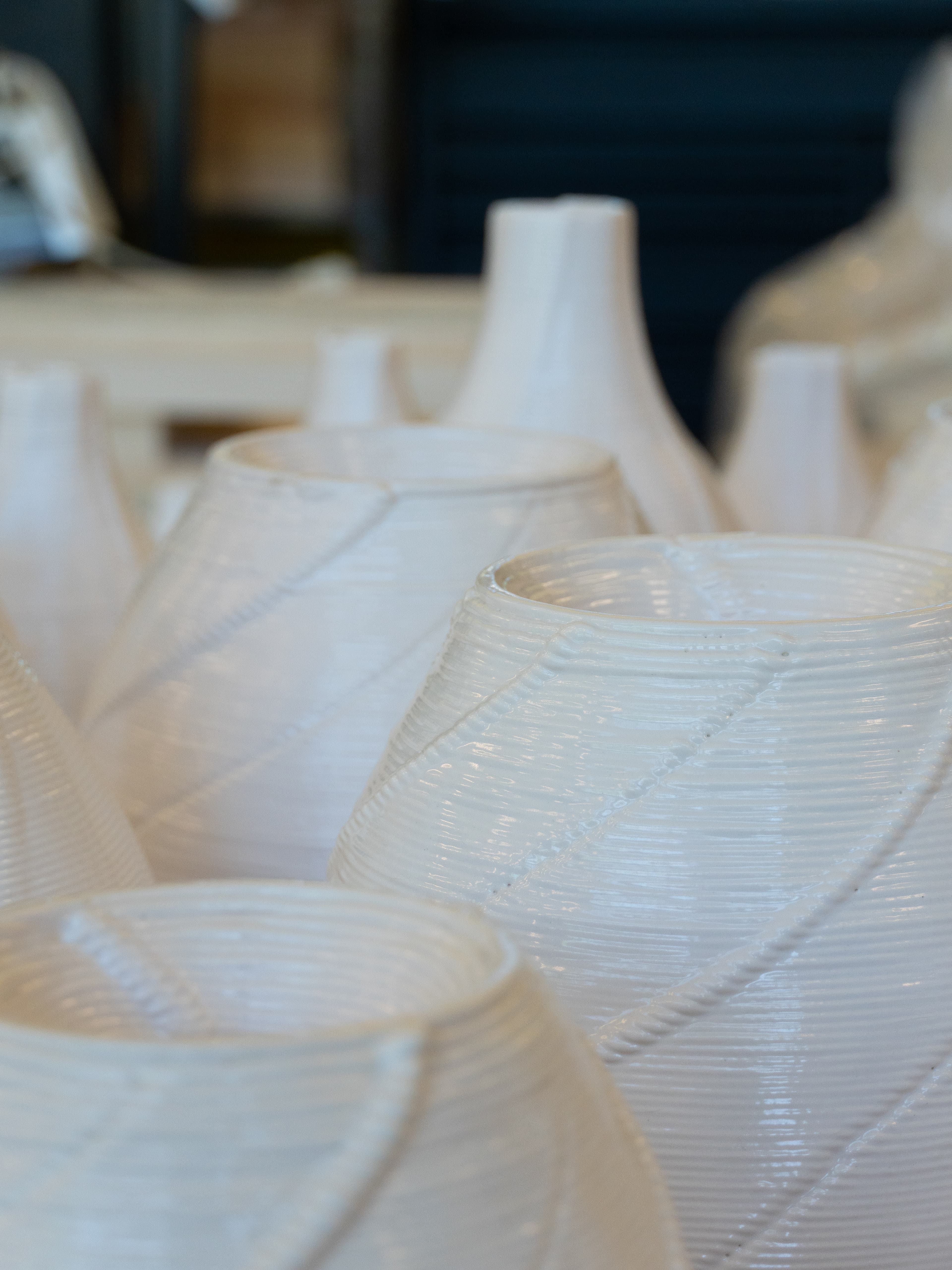
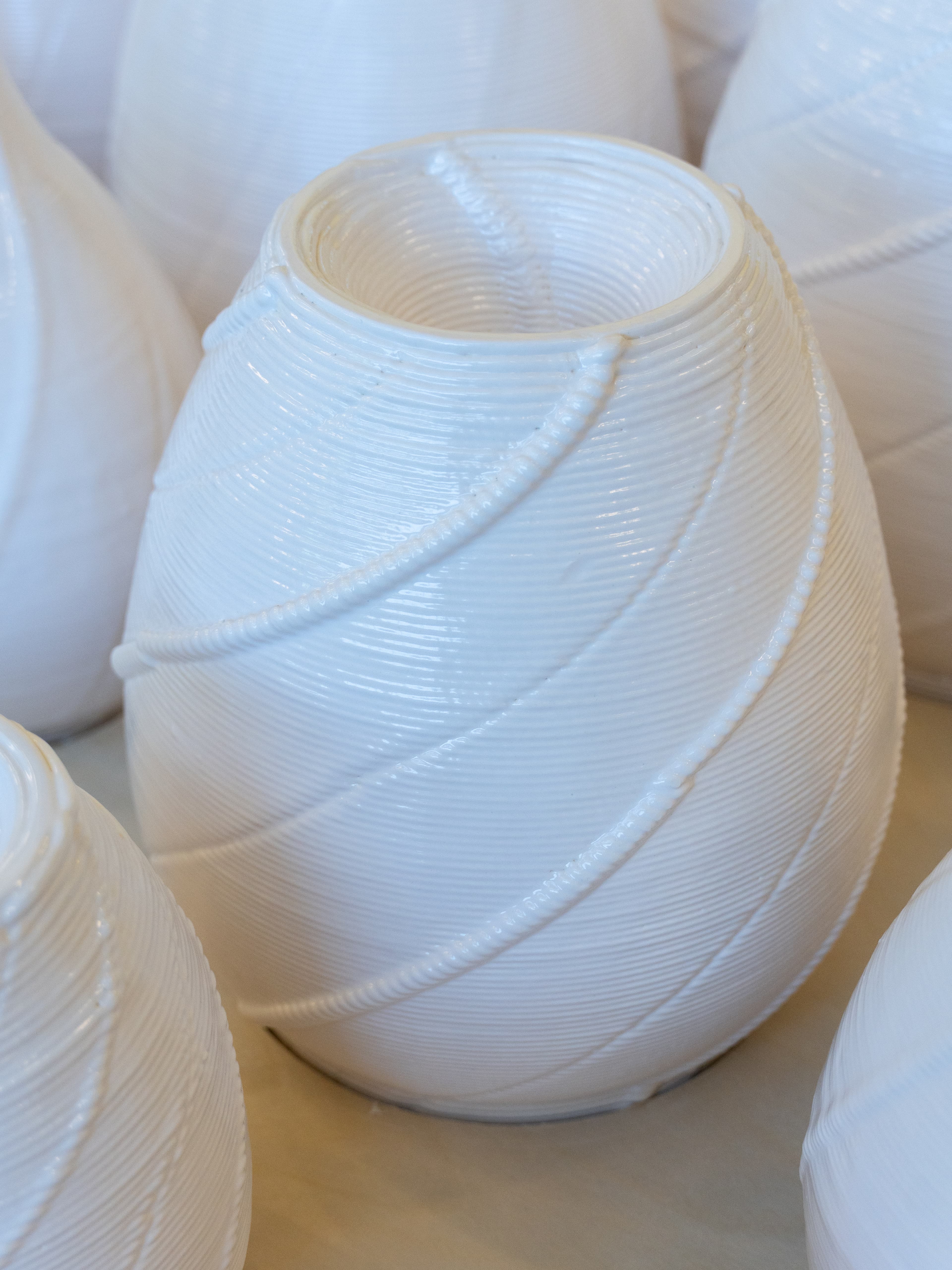
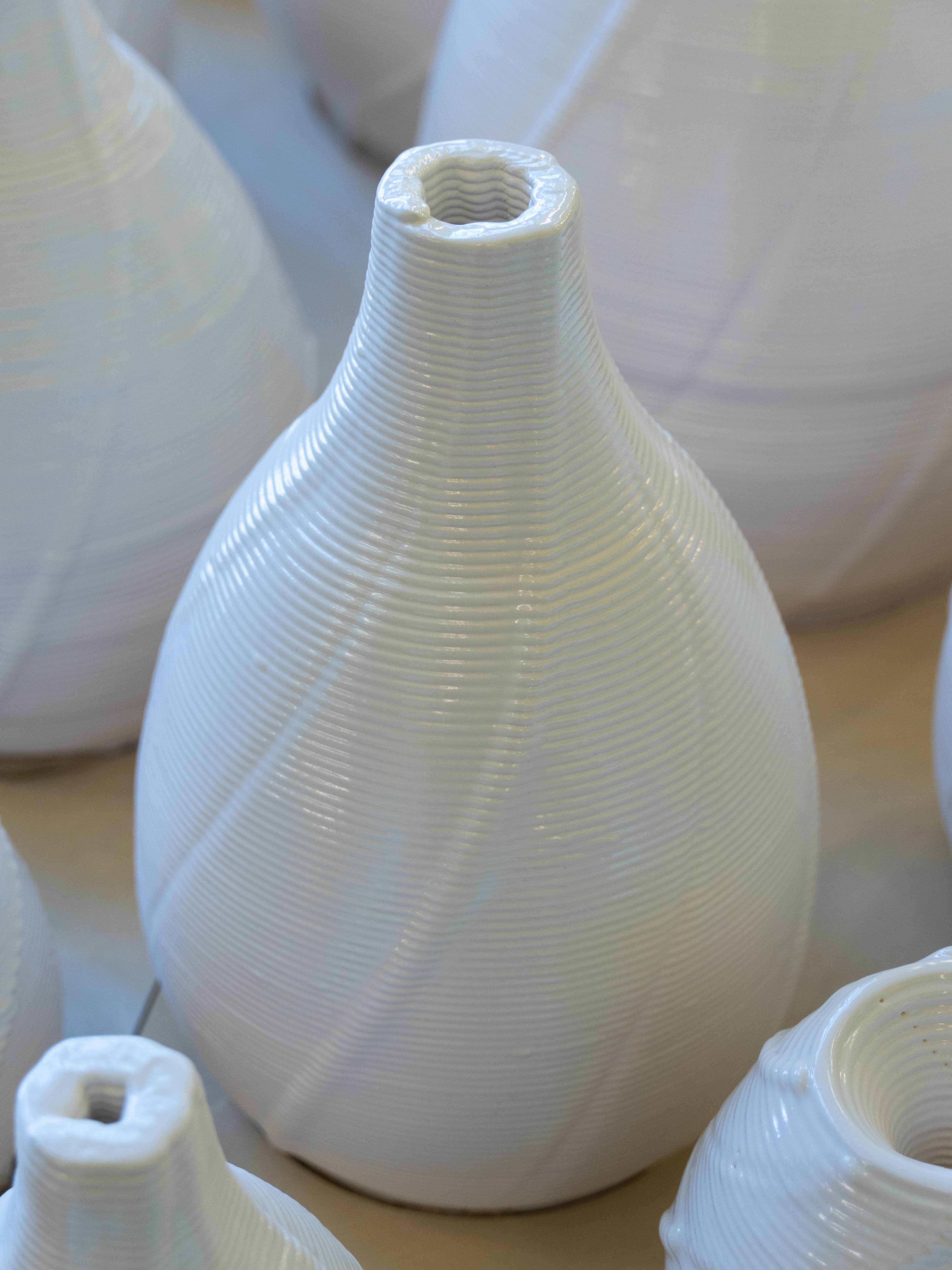
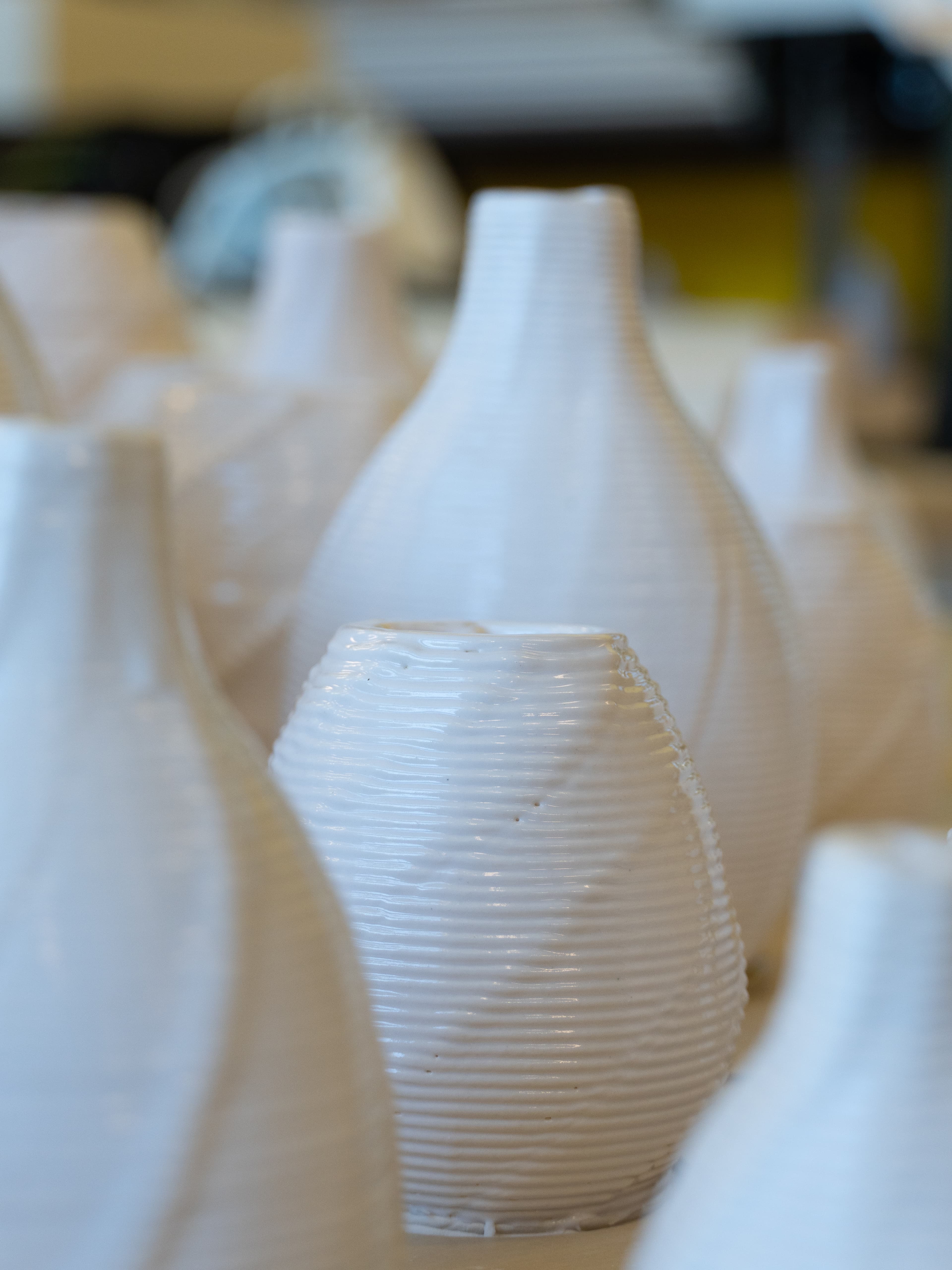
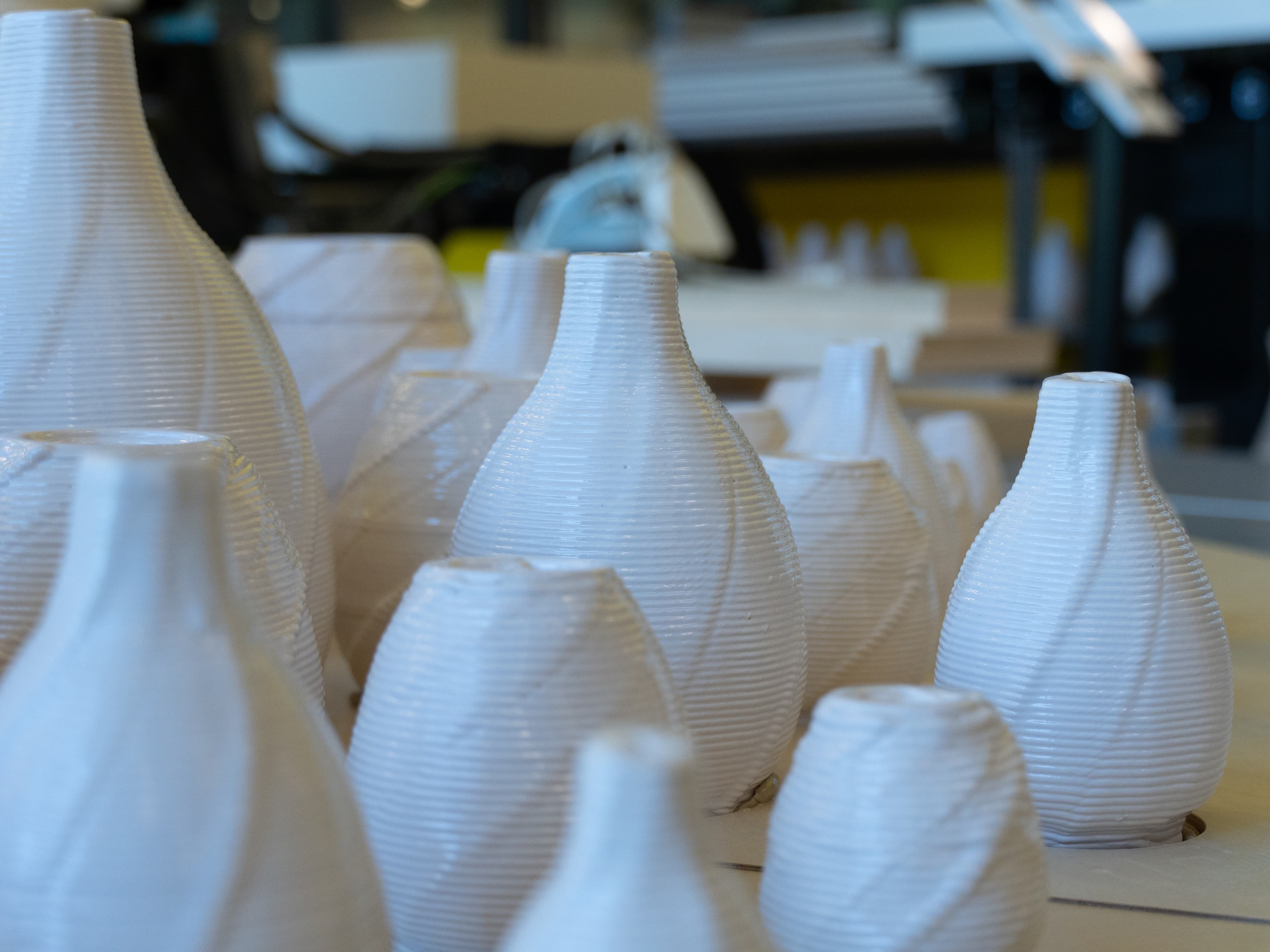
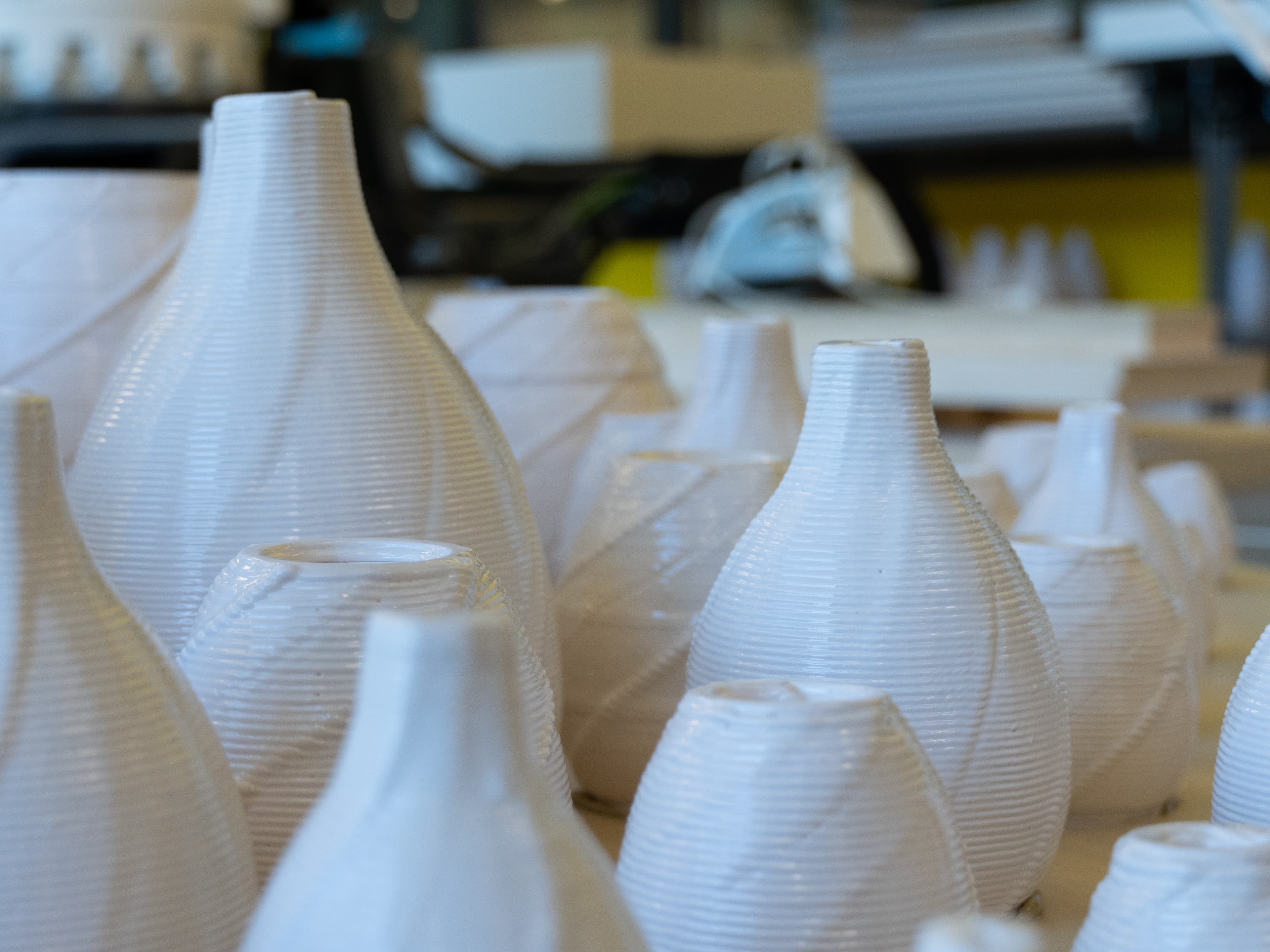
Resonance in Pottery: Acoustic Clay Vases
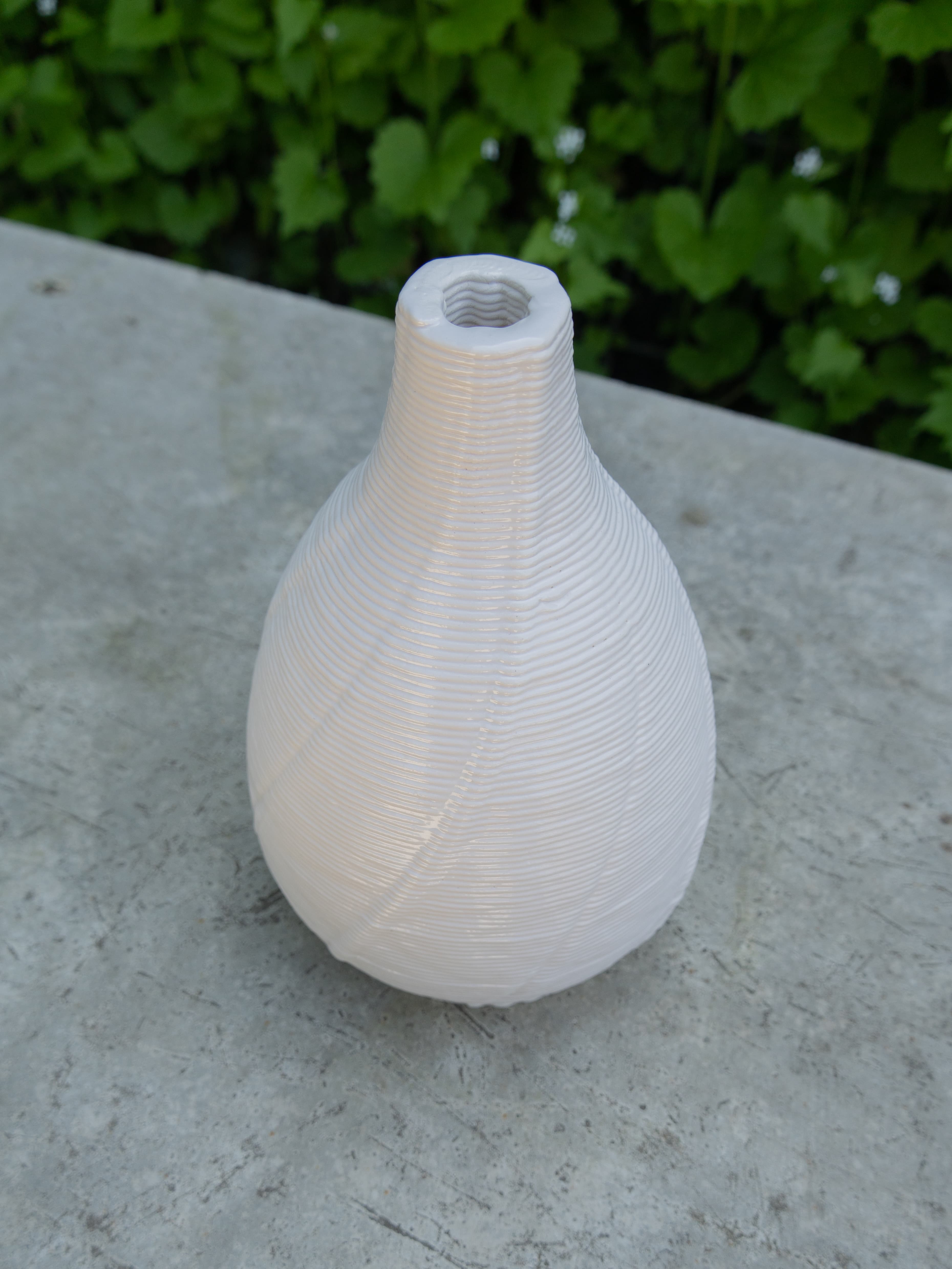
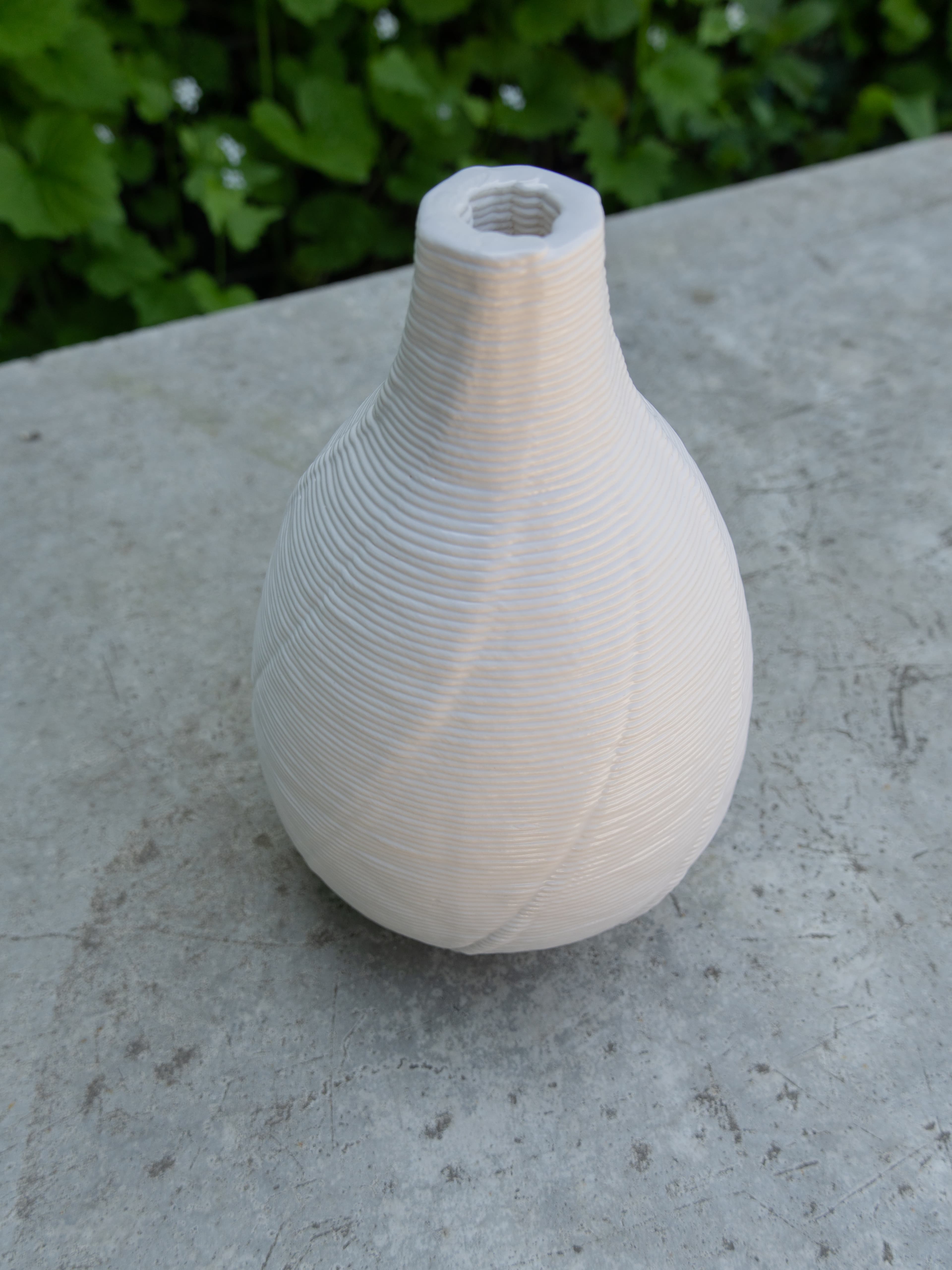
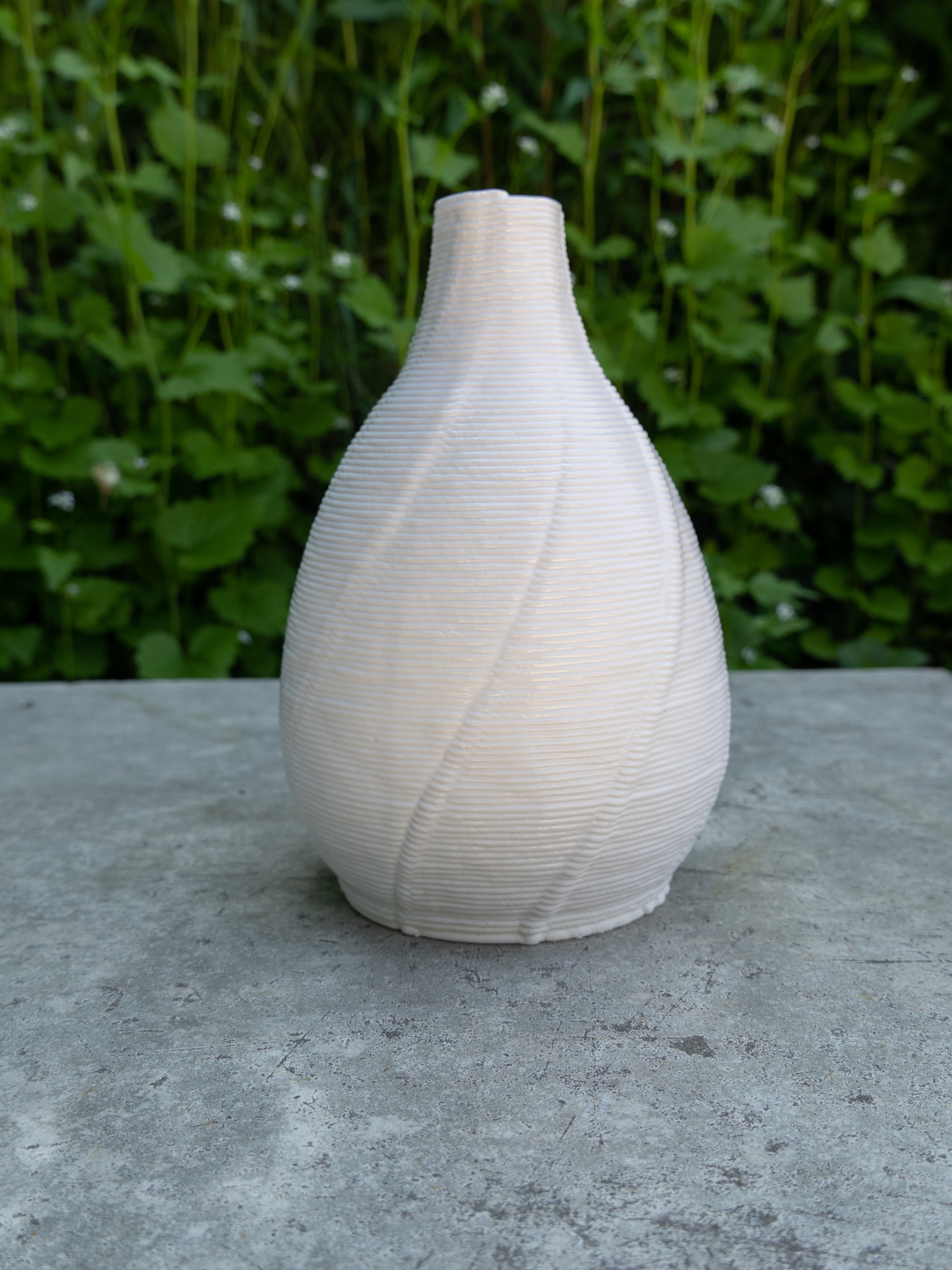
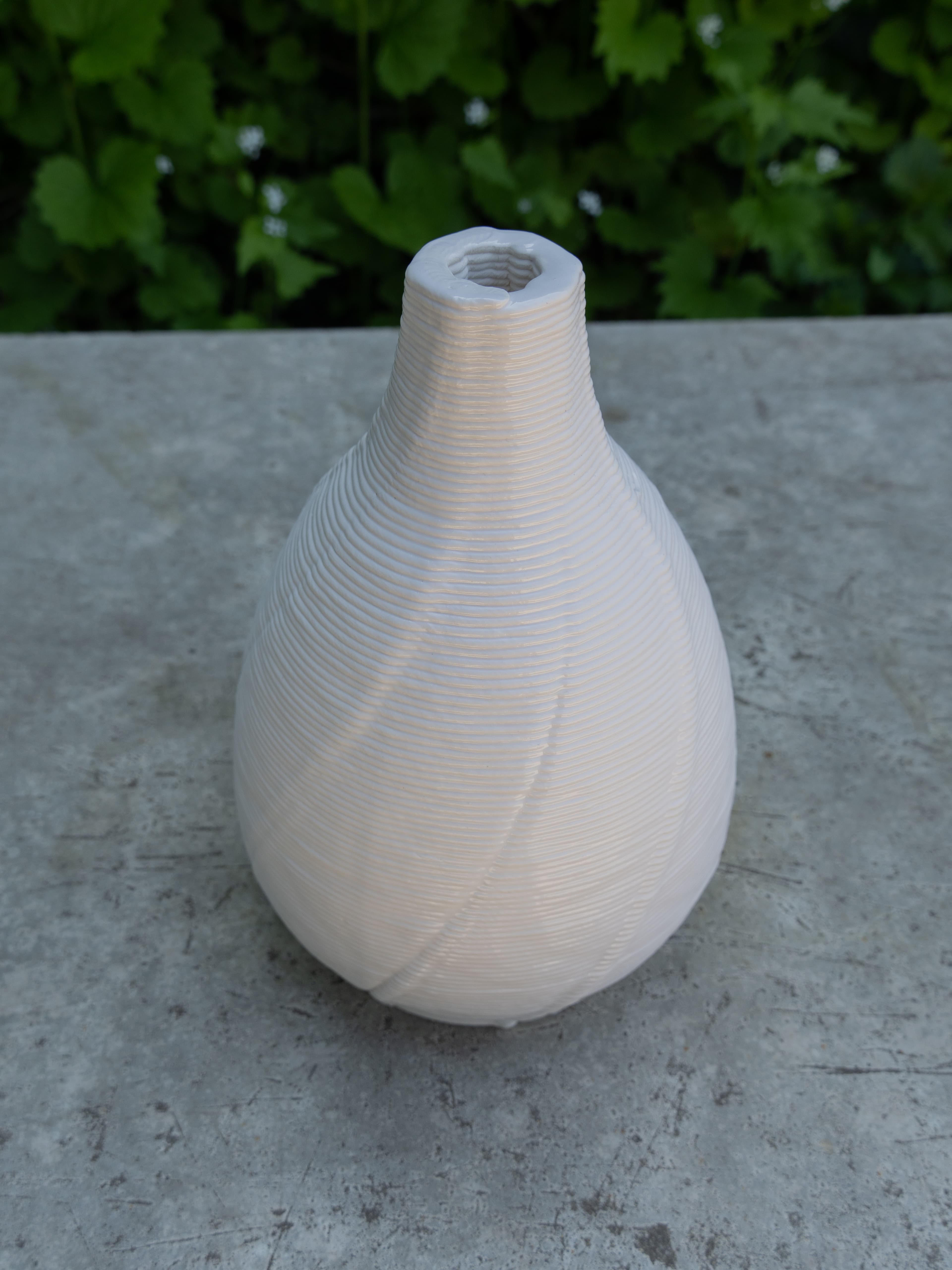
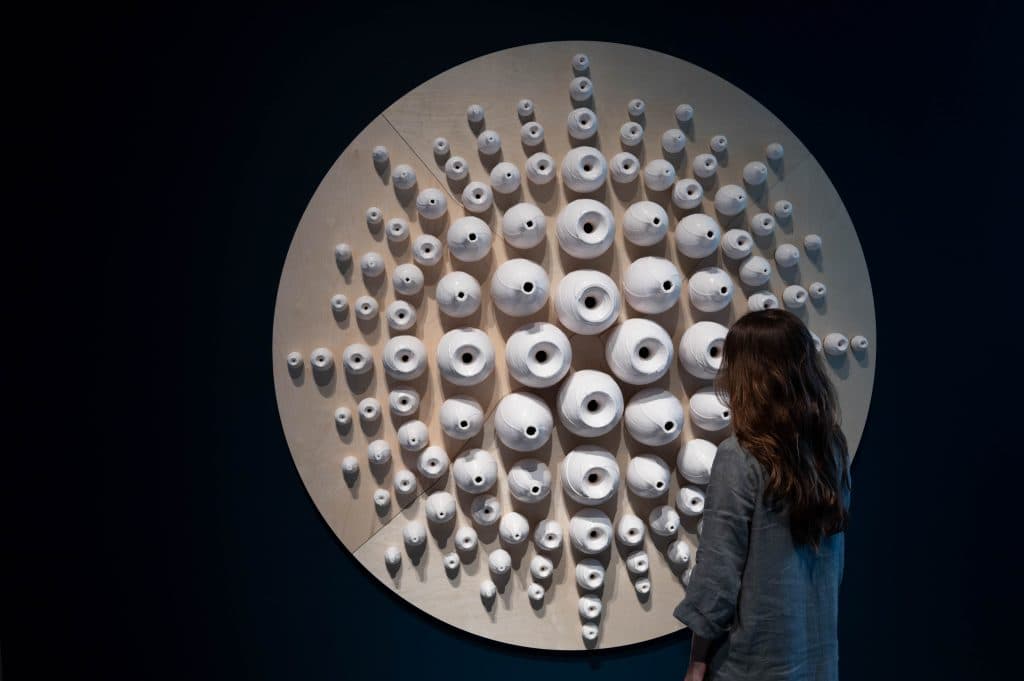
A series of robotically fabricated clay vessels exploring how ceramic geometry can be tuned for architectural acoustic performance.
Type
Research Installation
Material
Ceramic Clay
Fabrication
Robotic Clay Extrusion
Exhibition
Canadian Clay and Glass Gallery
Role
Collaborator
01
Project Overview
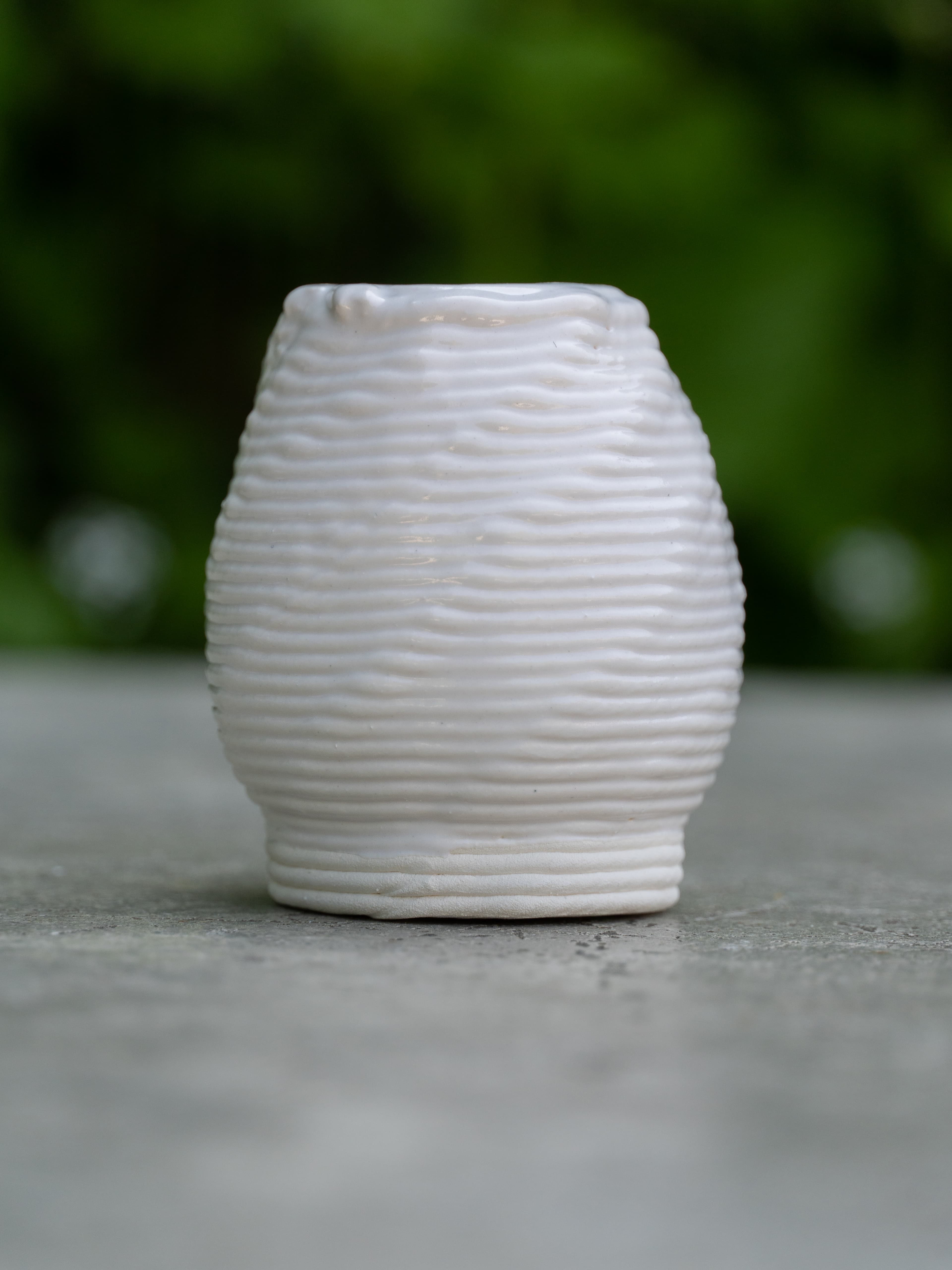
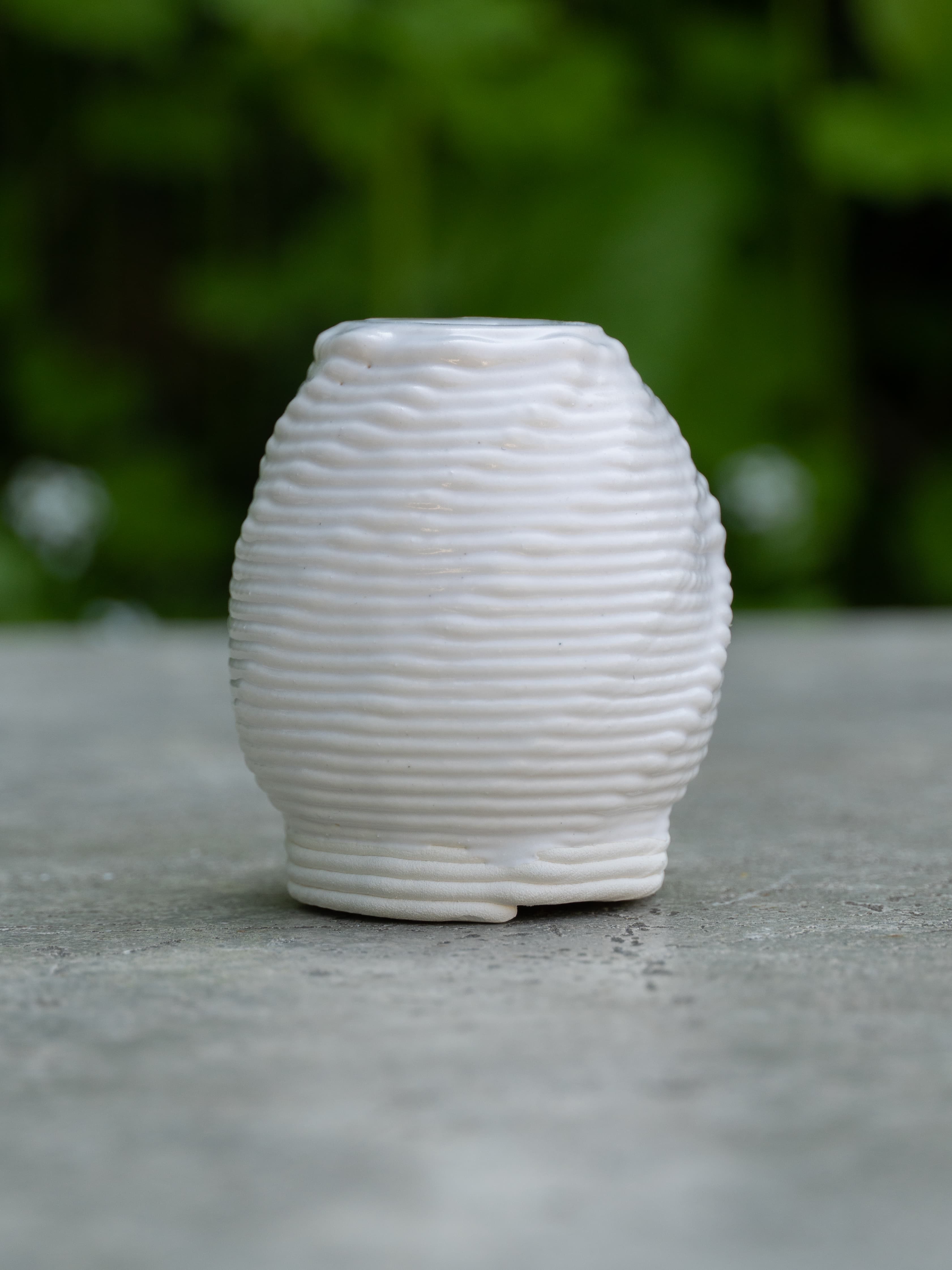
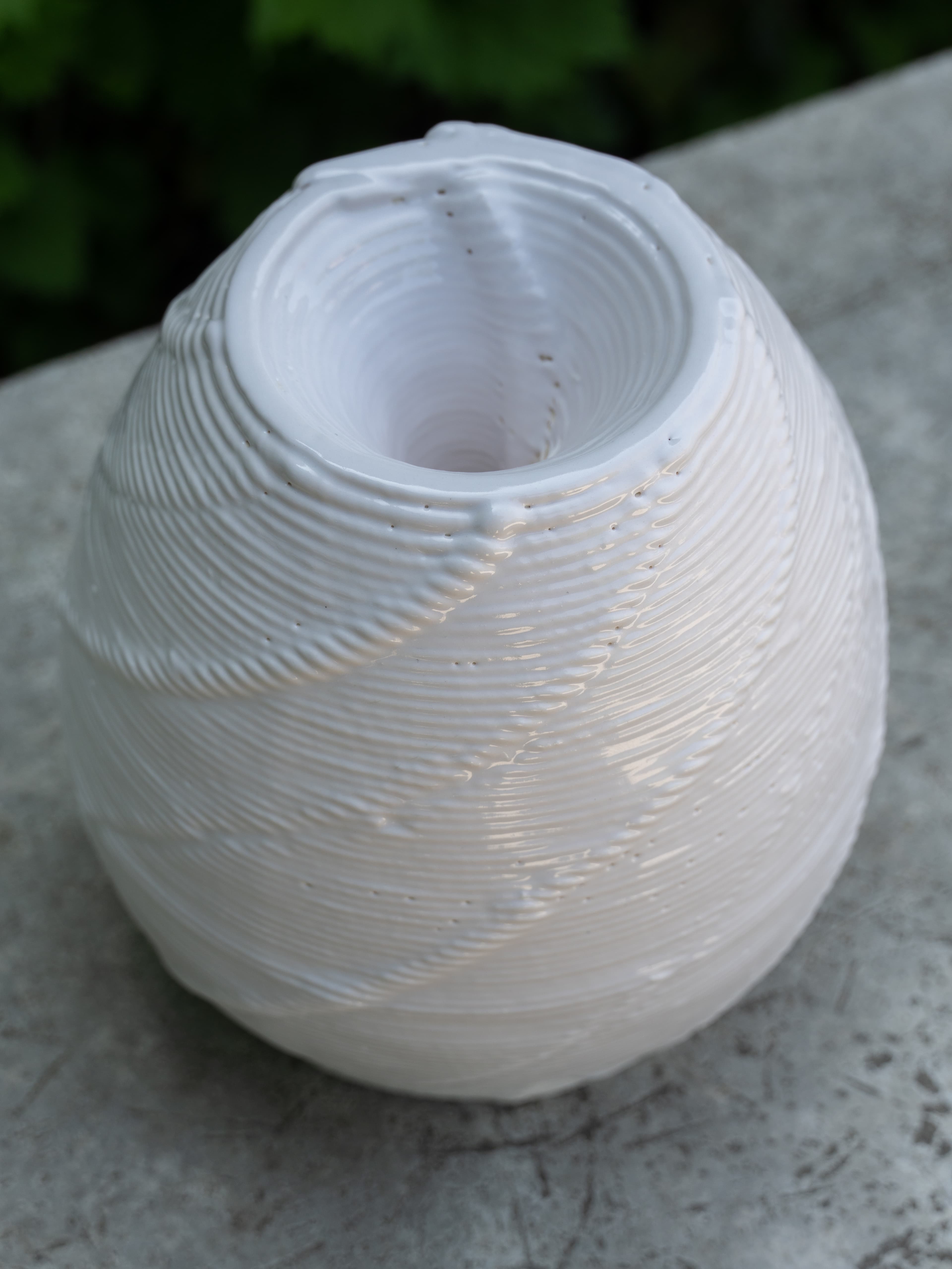
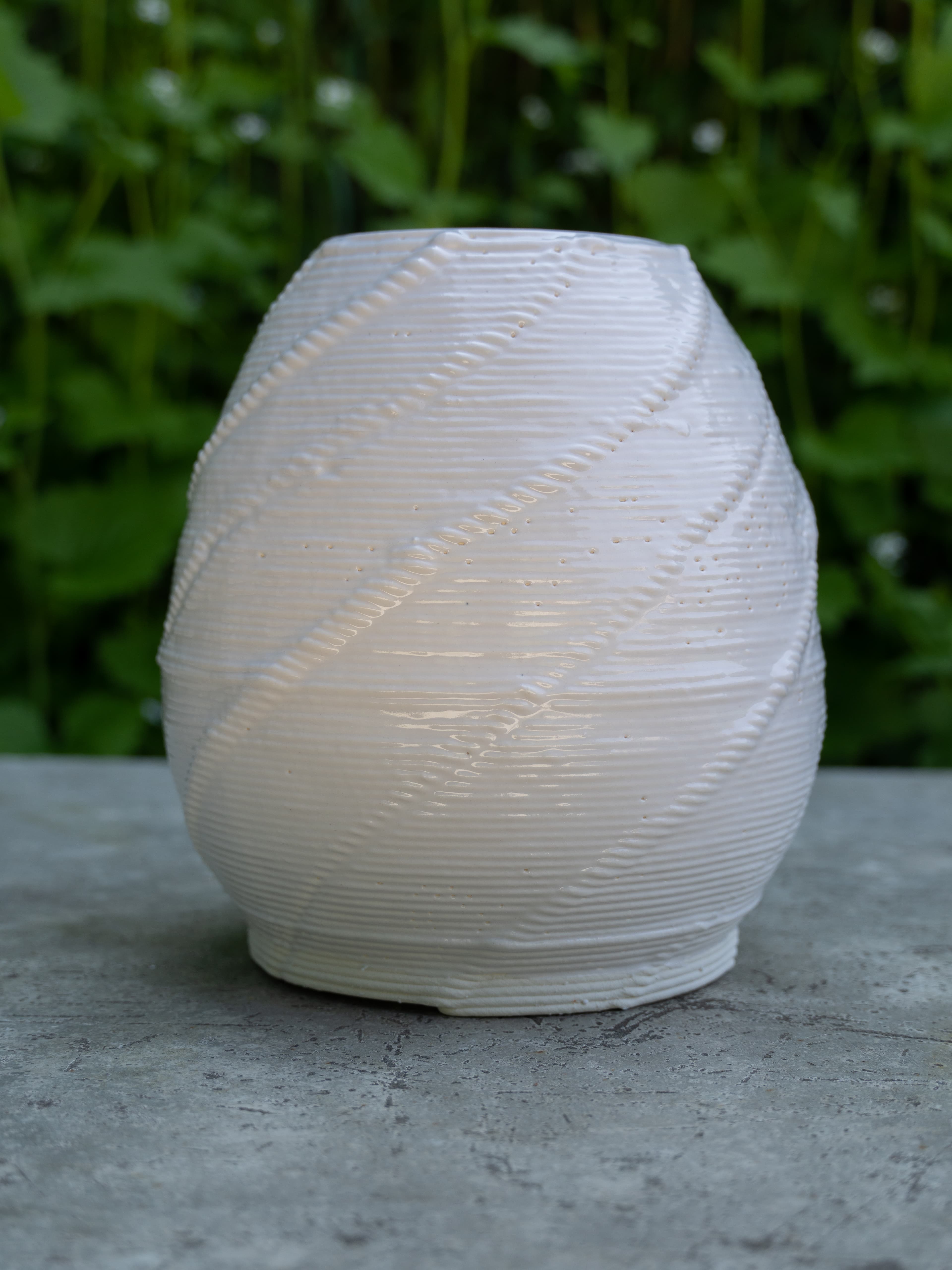
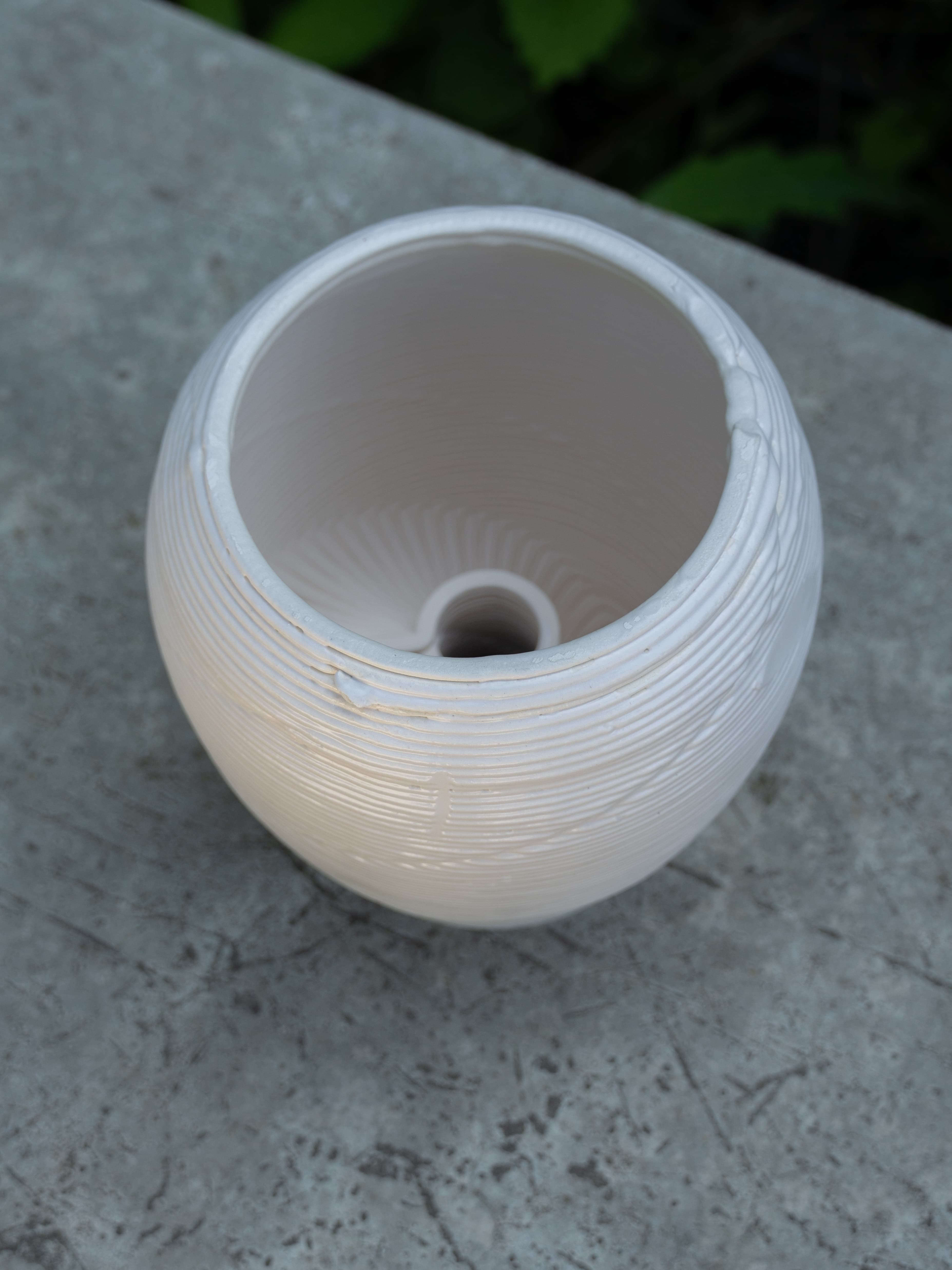
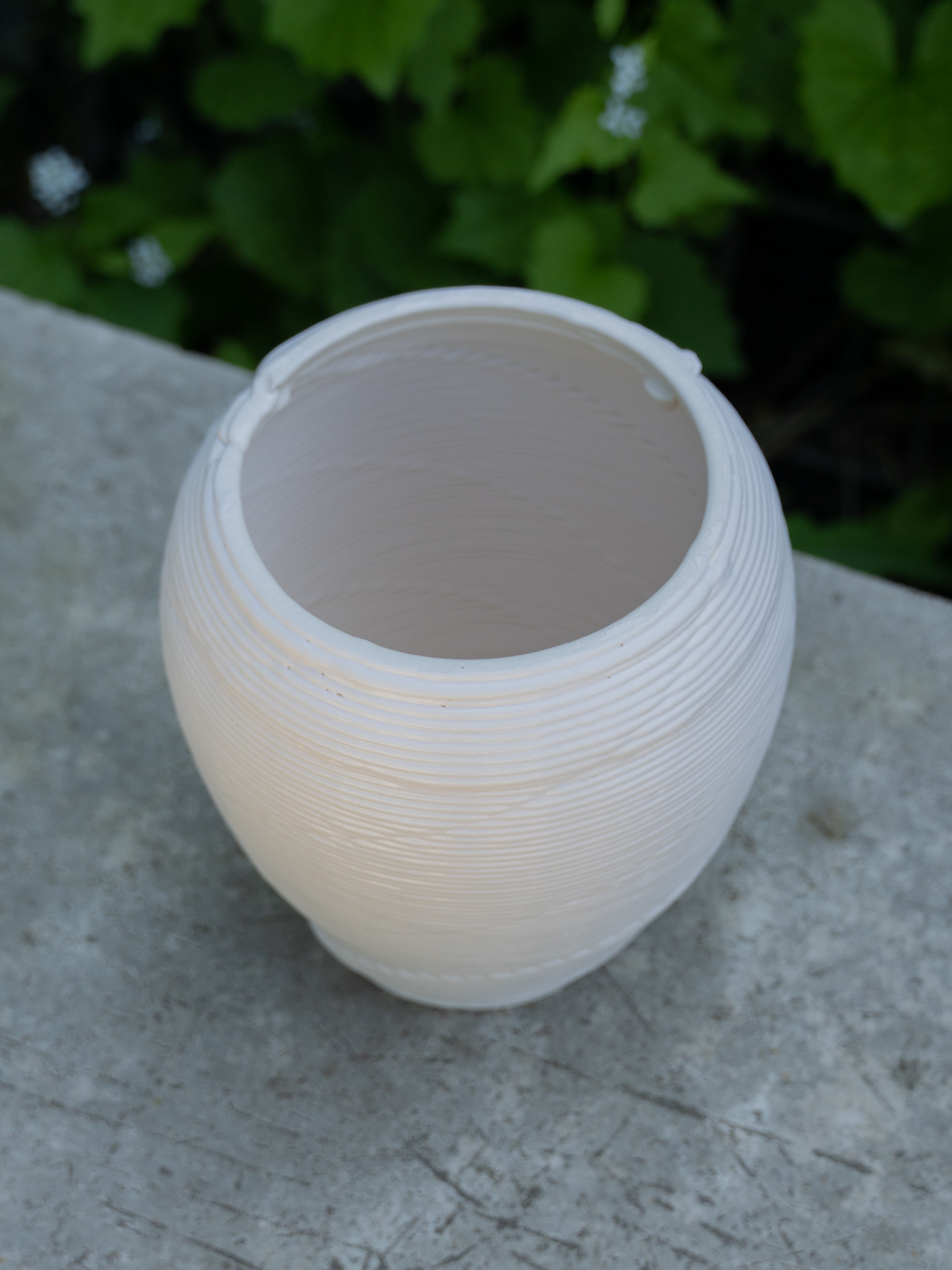
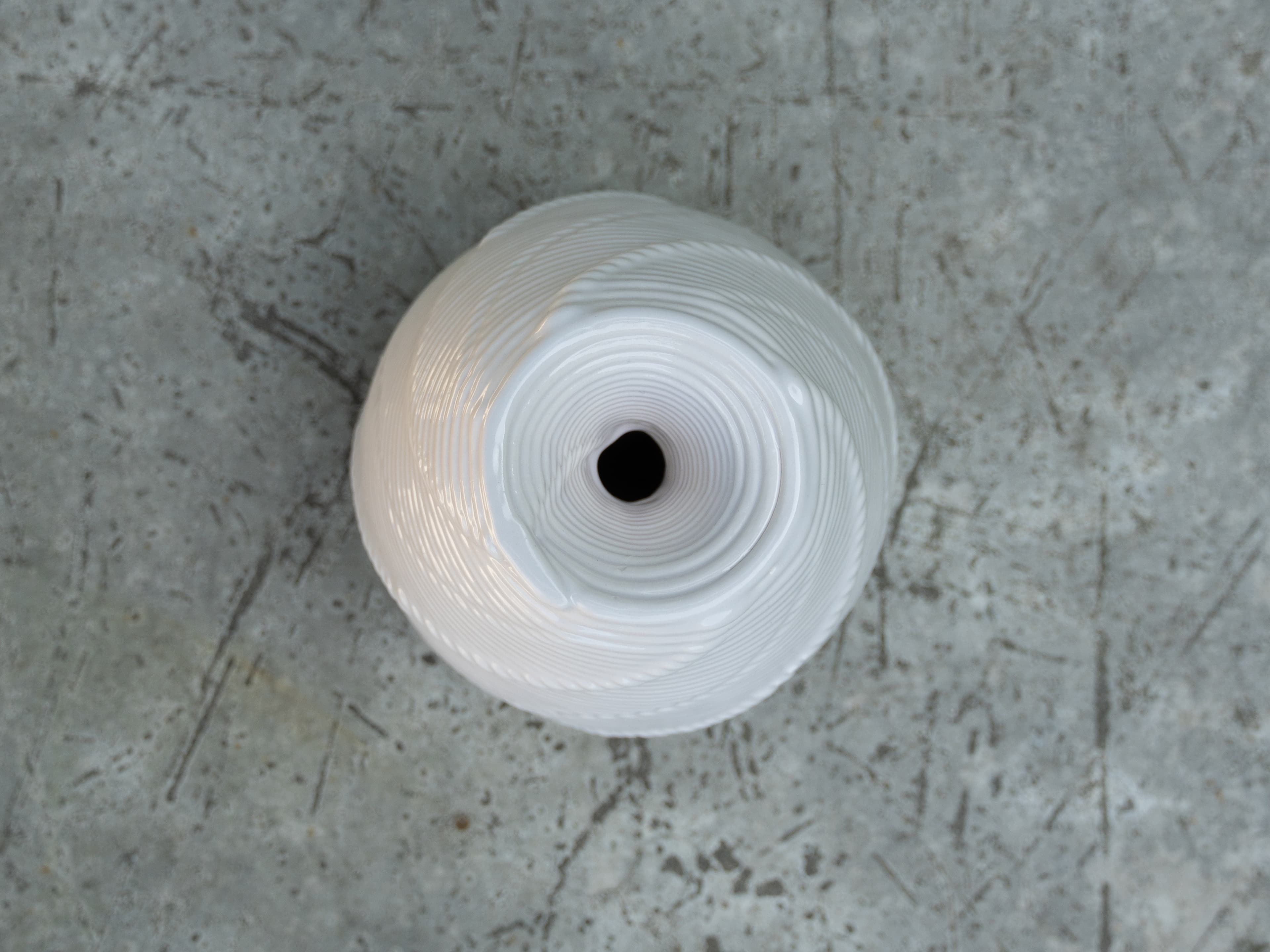
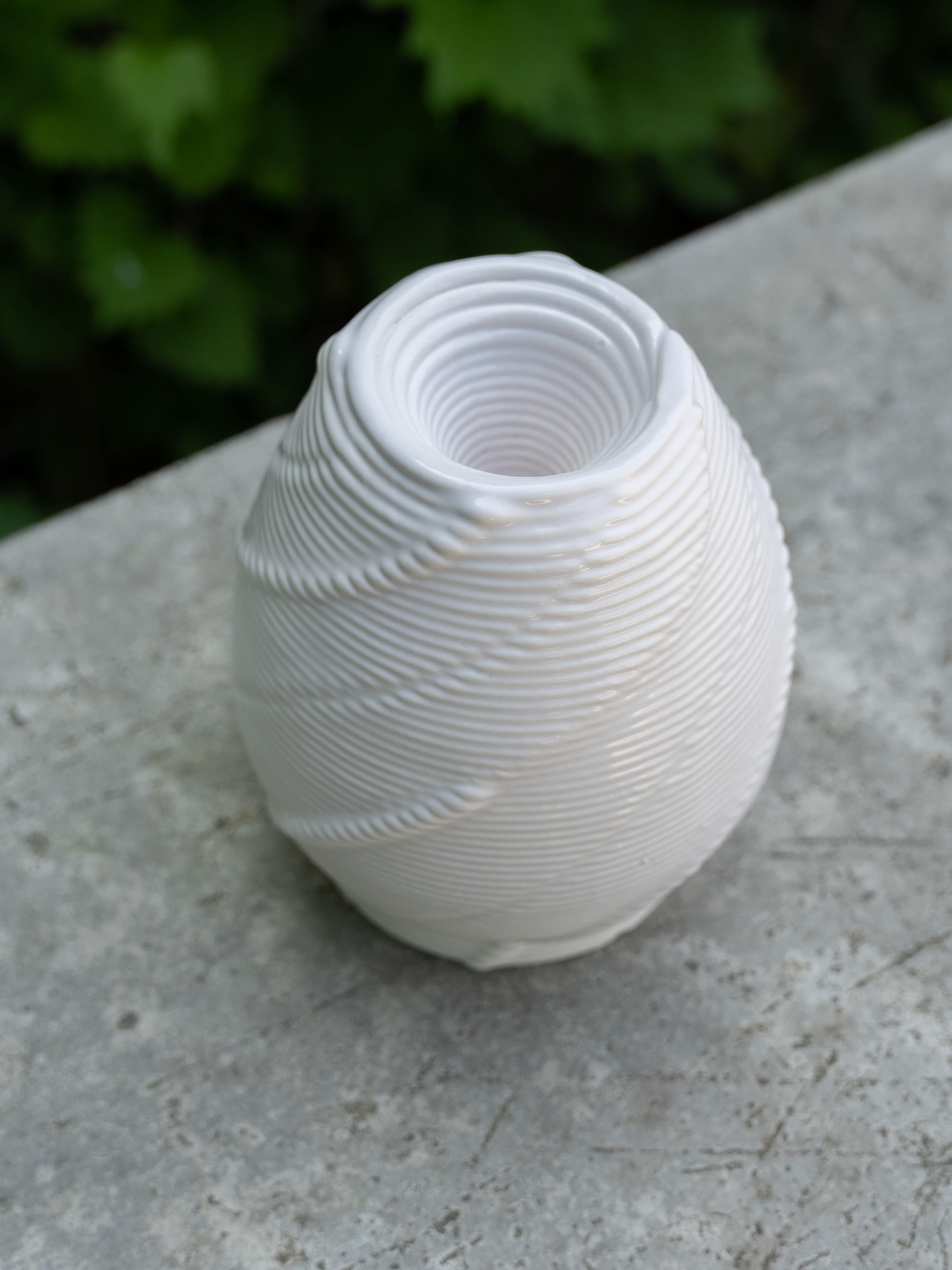
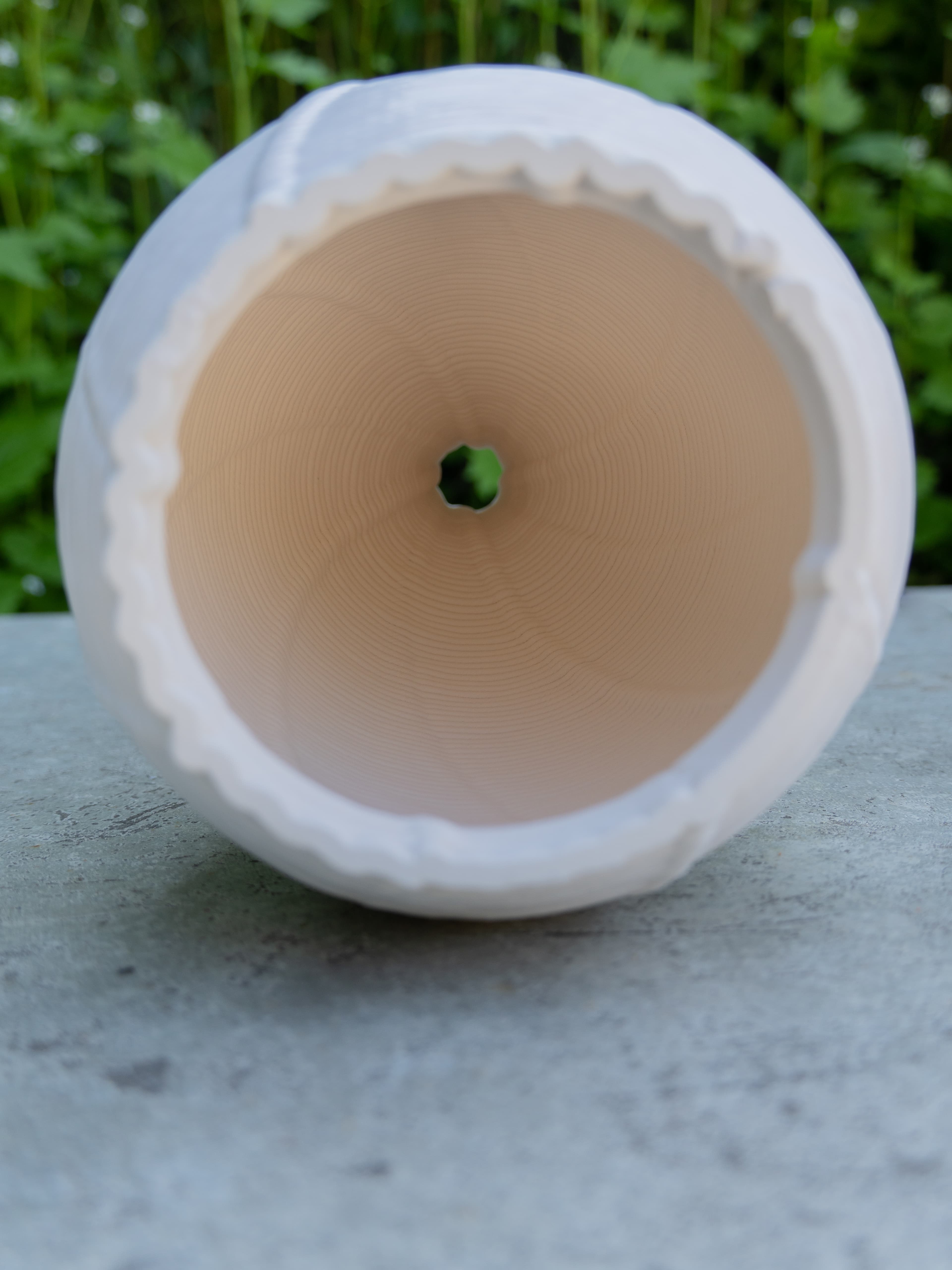
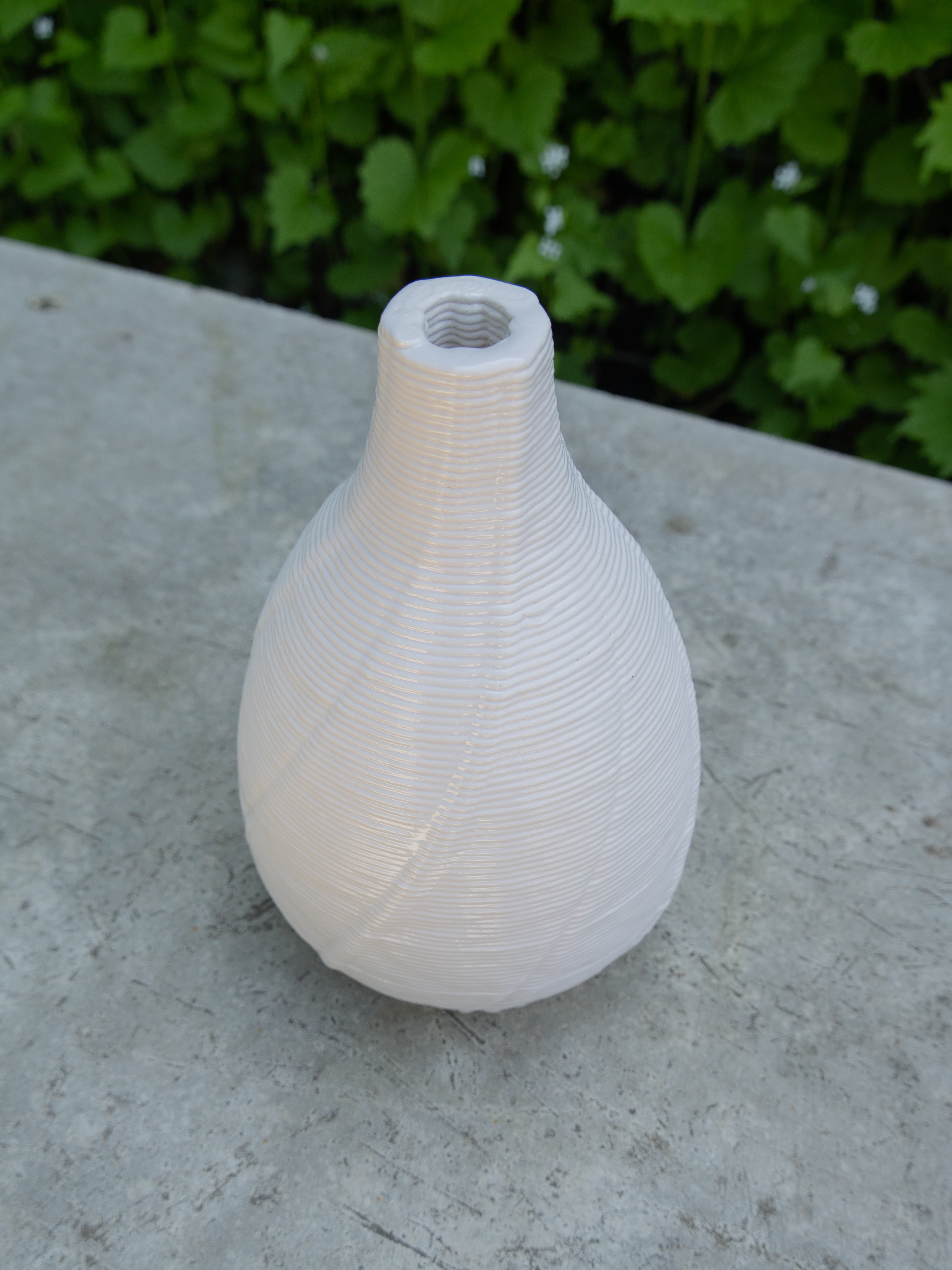
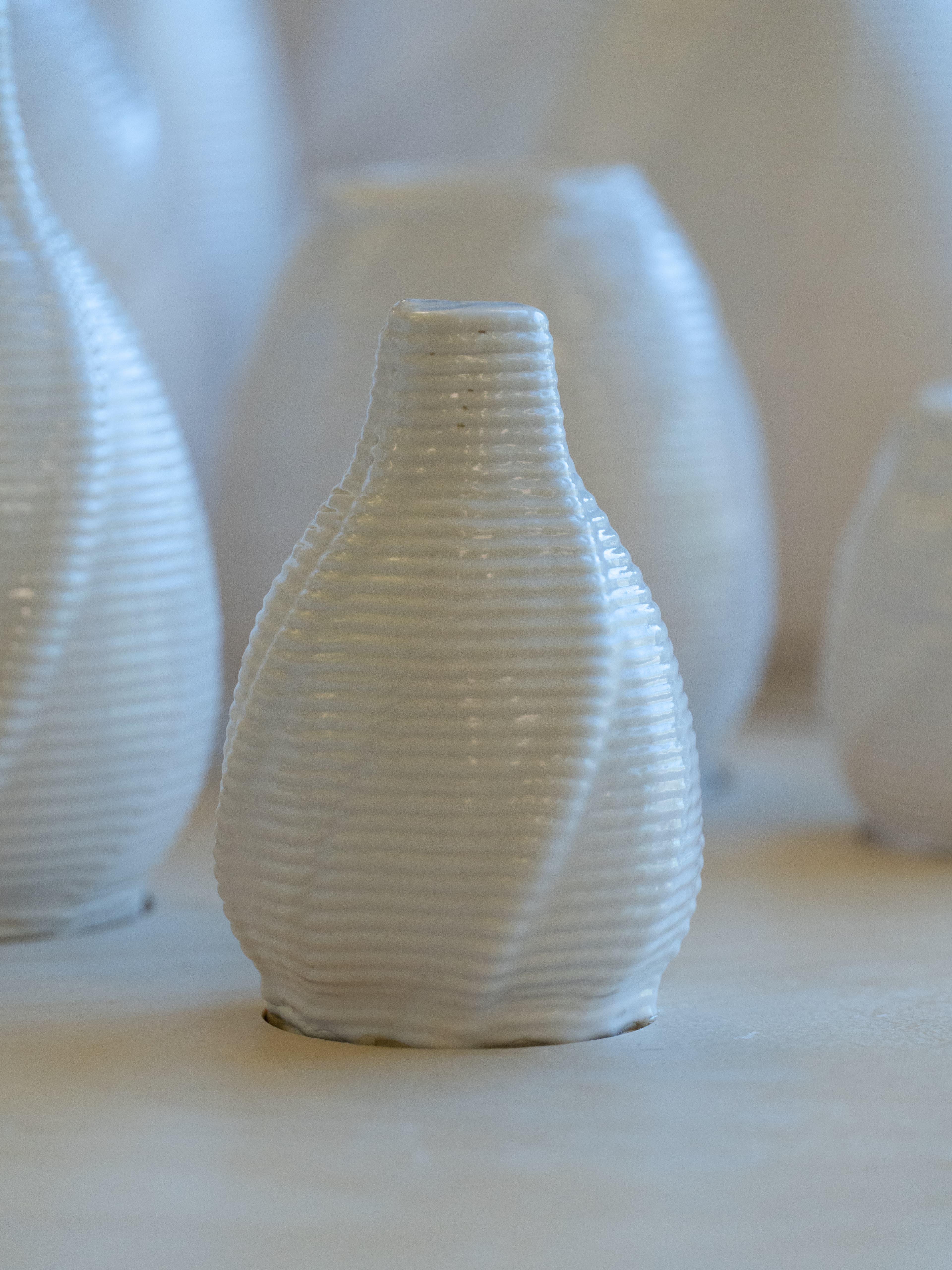
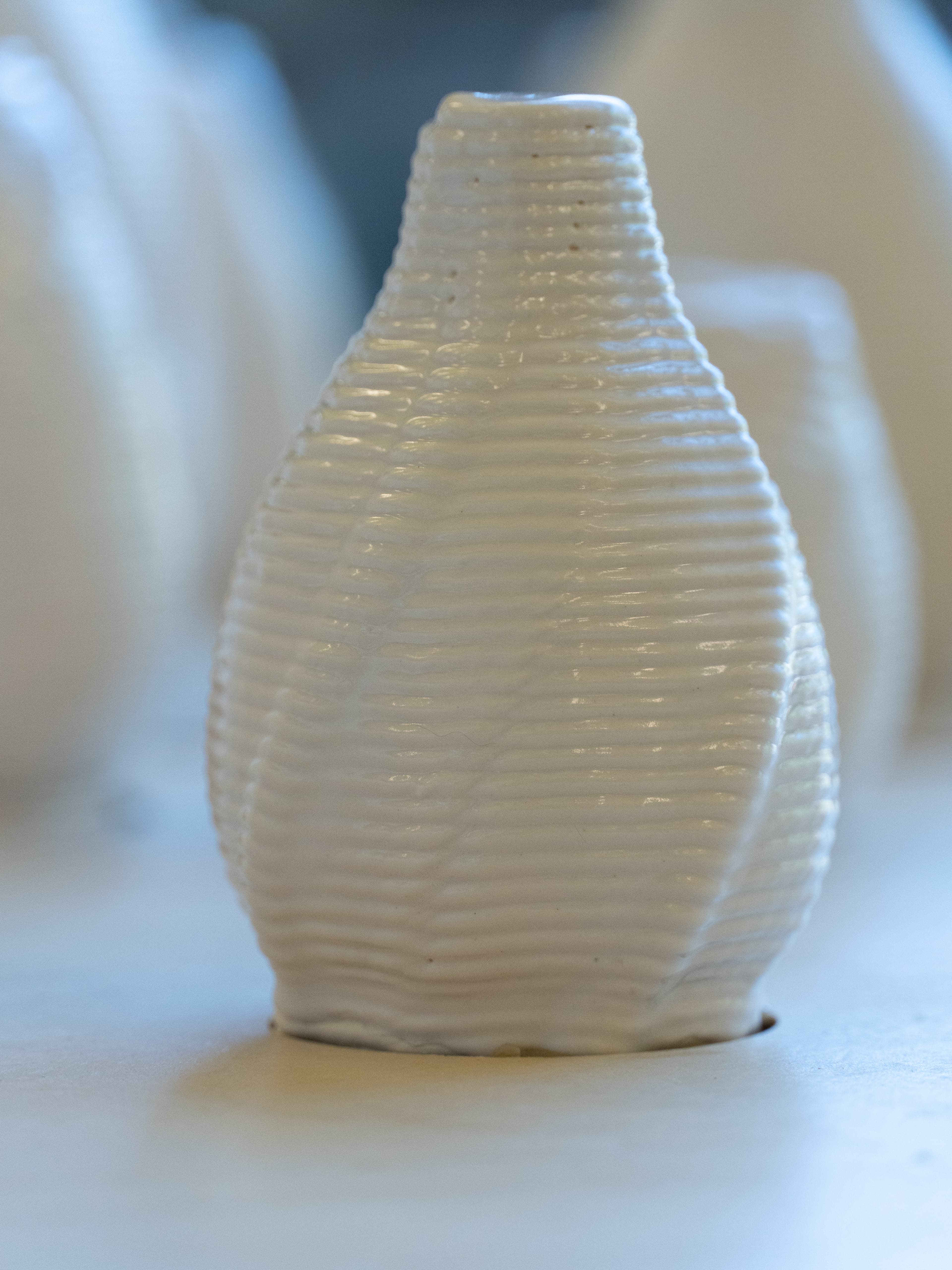
Resonance in Pottery investigates how ceramic vessels can function as architectural acoustic absorbers through the geometry of Helmholtz resonators.
The research connects acoustic simulation with robotic clay fabrication, allowing vase geometry to be digitally tuned in relation to specific resonant frequencies.
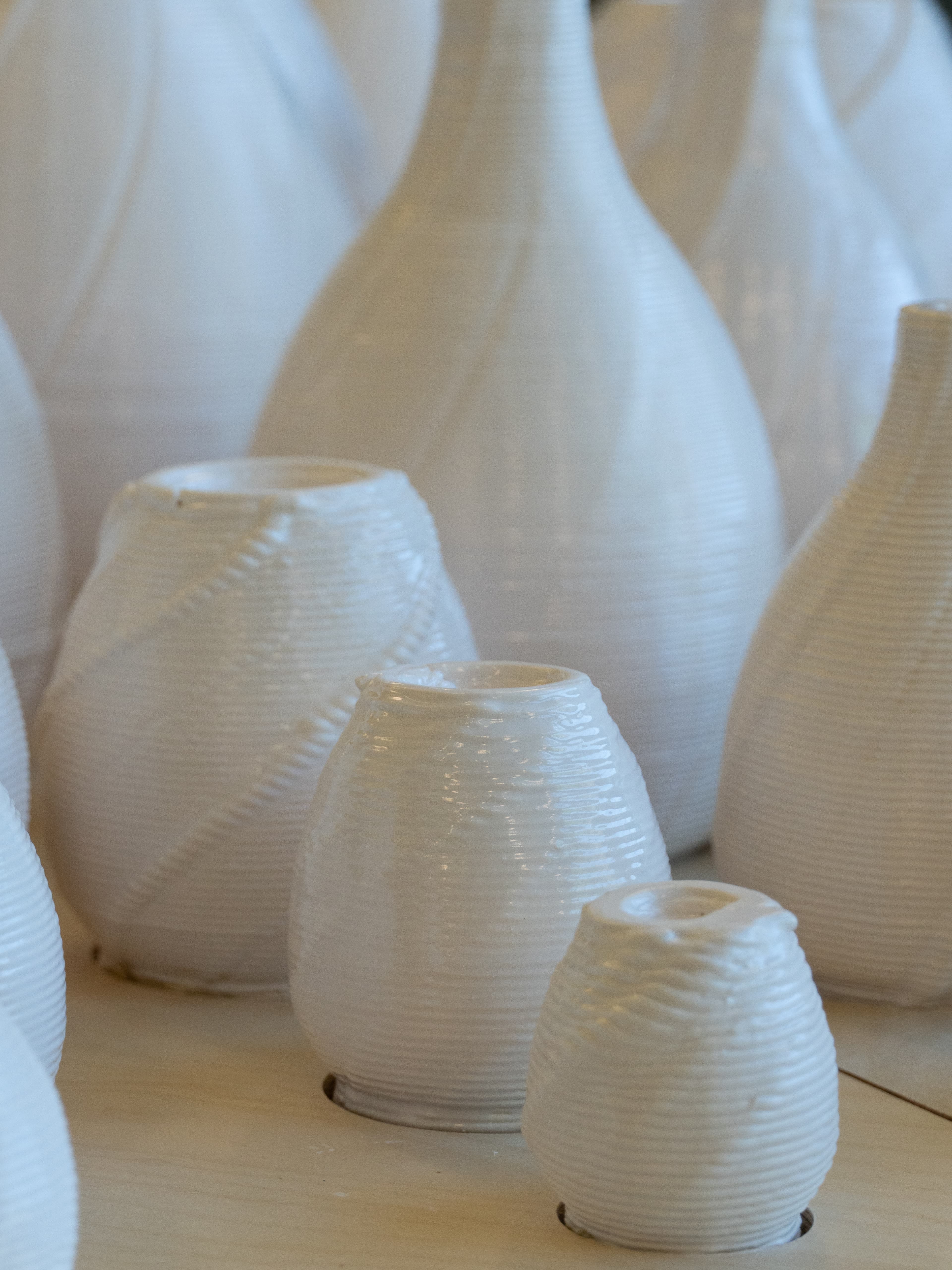
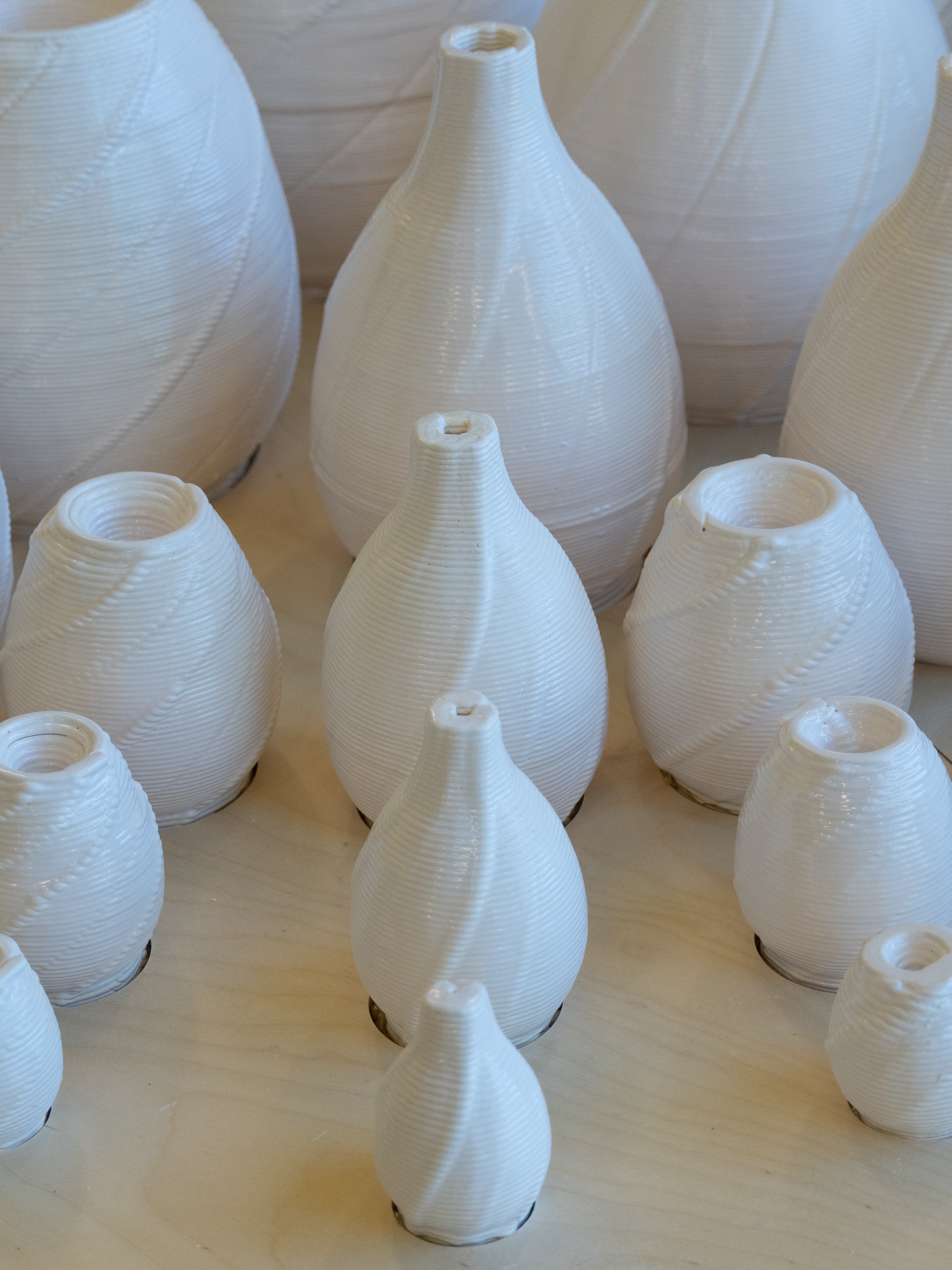
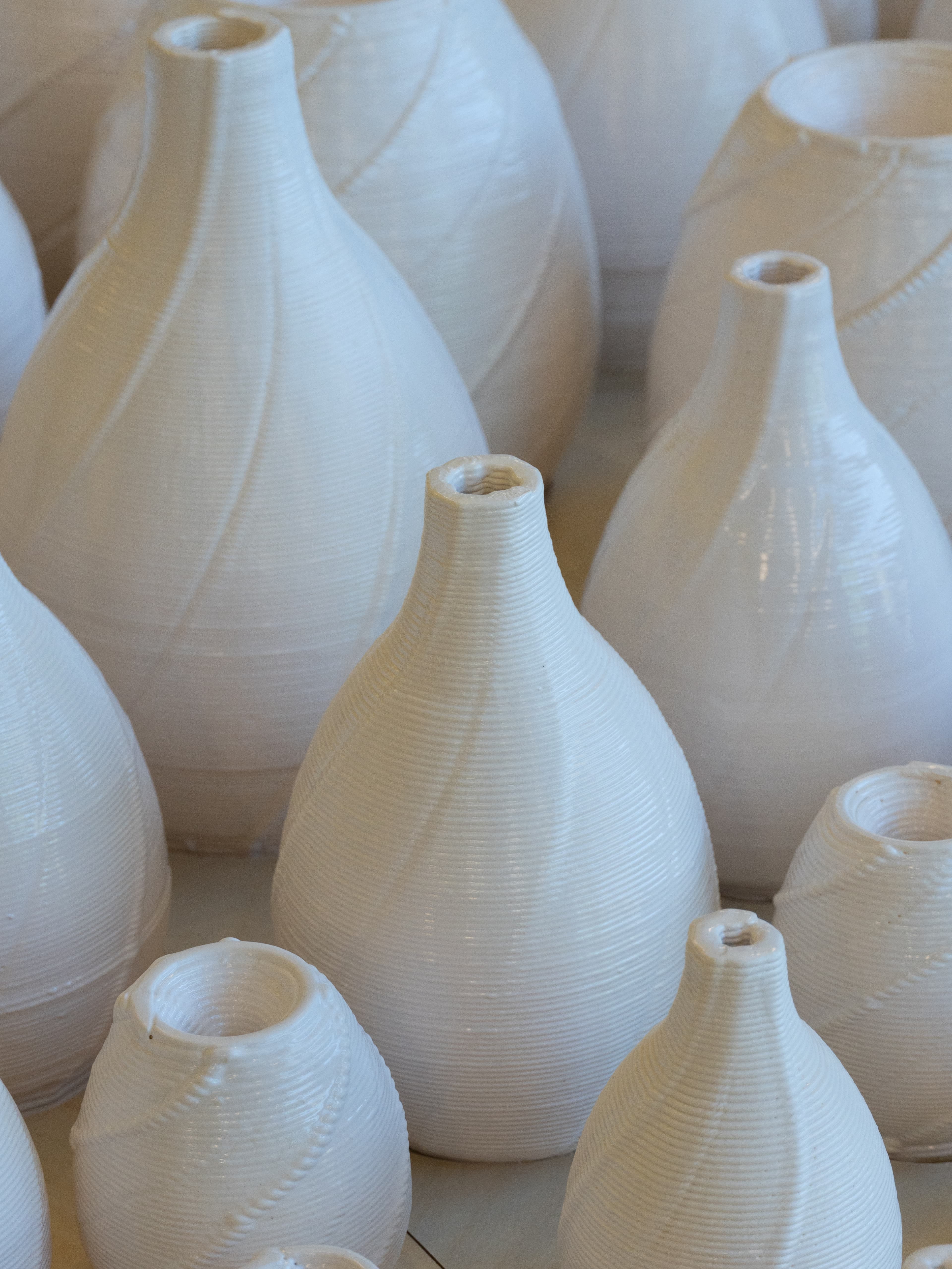
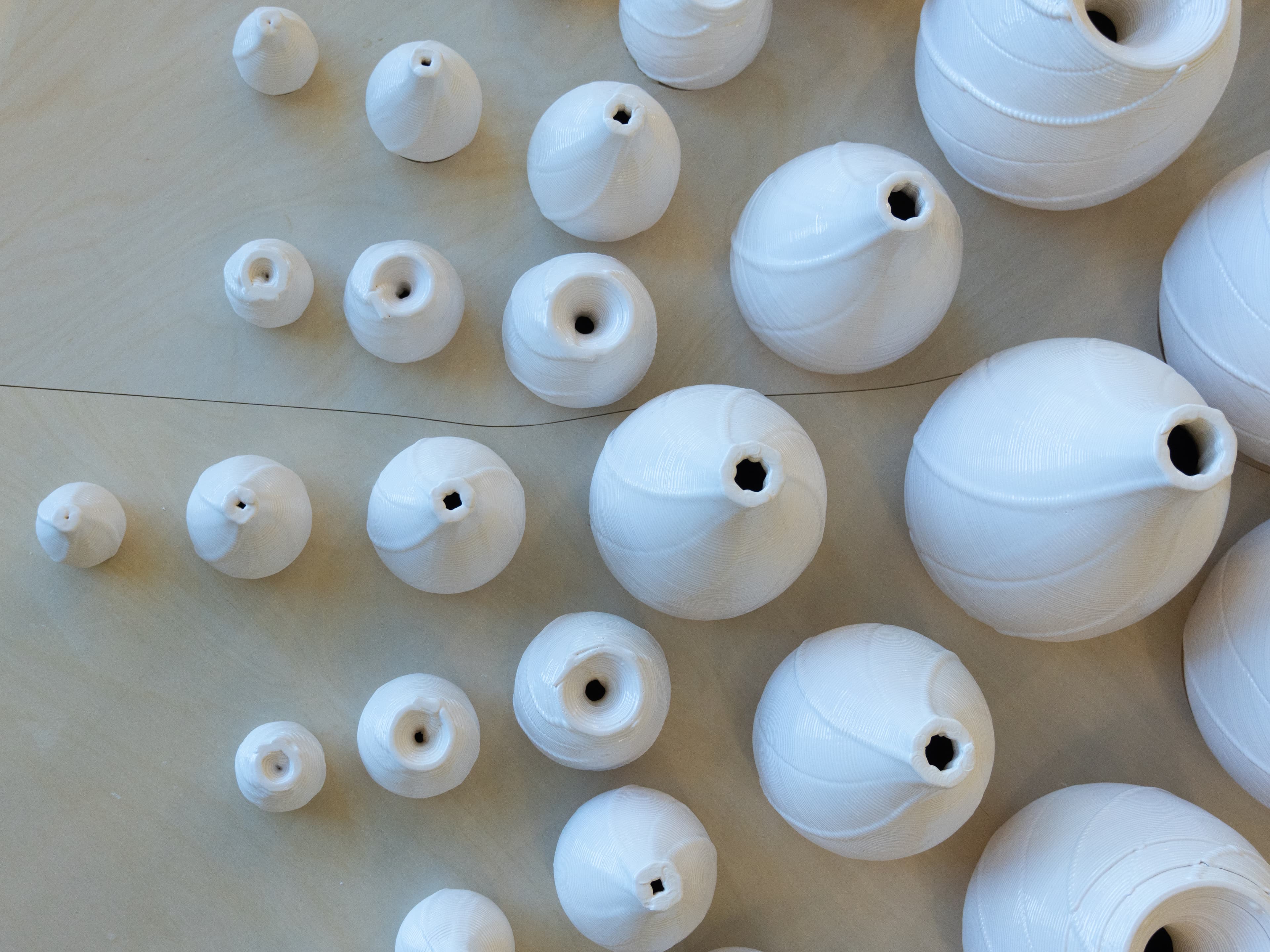
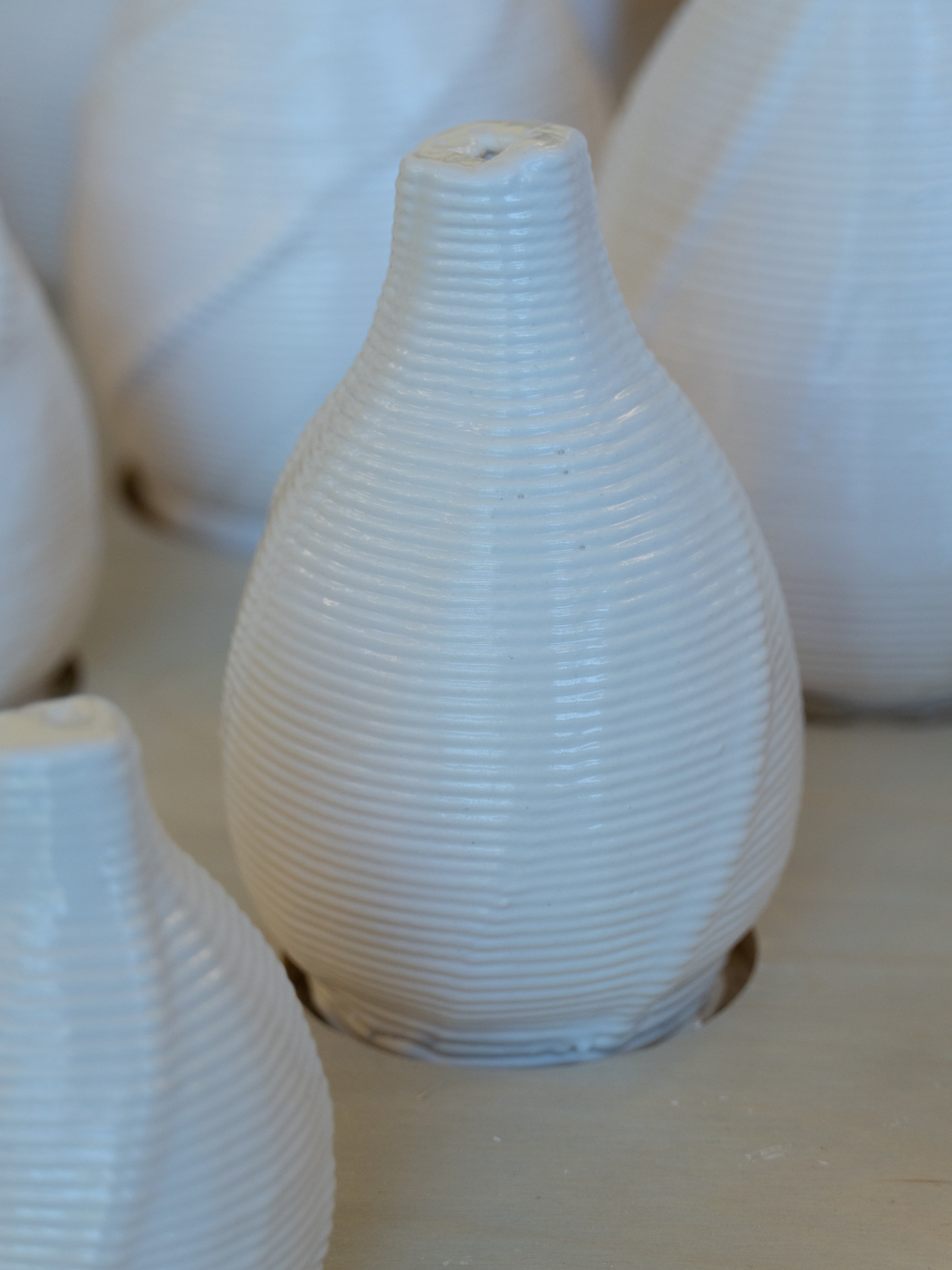
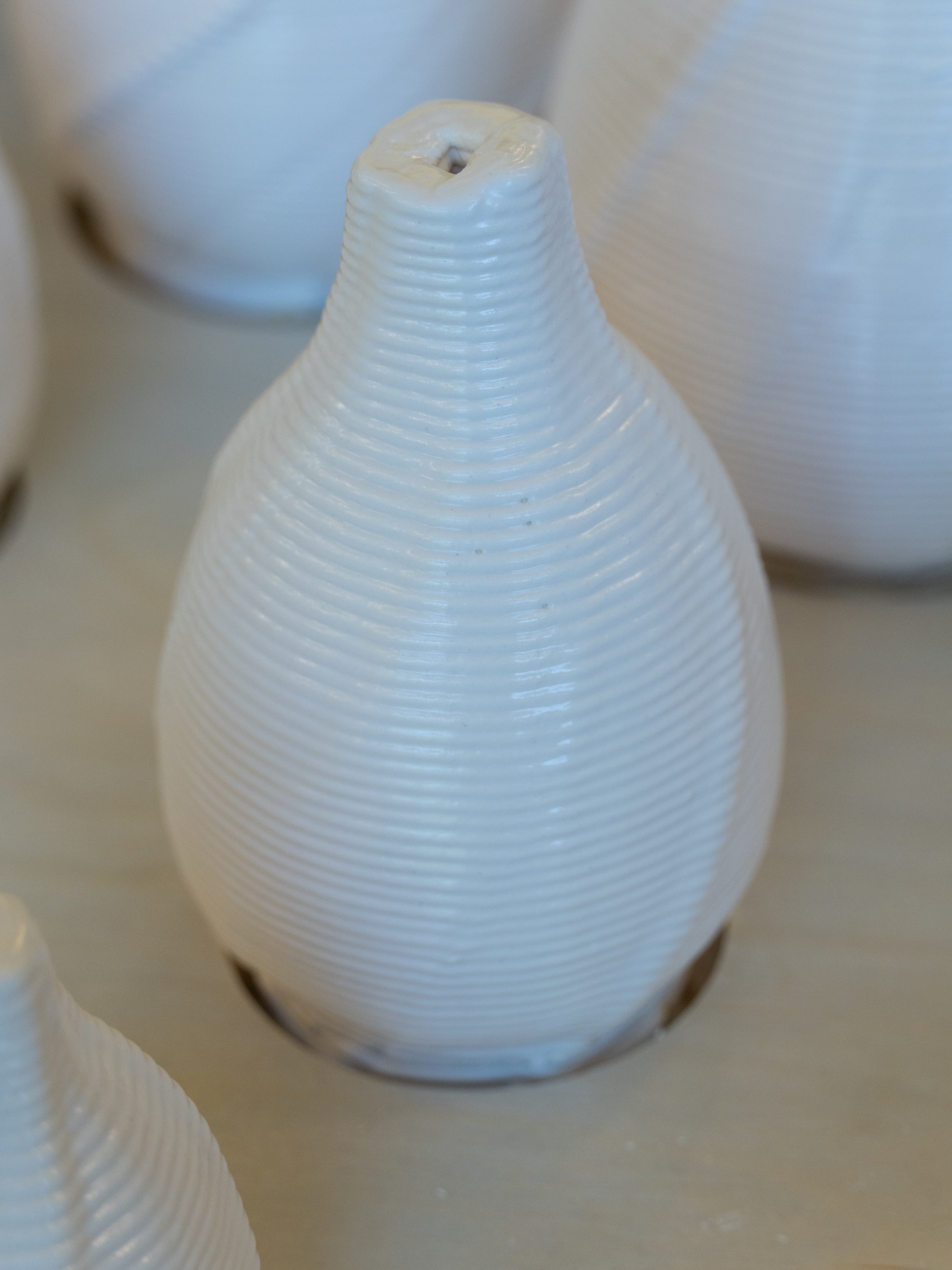
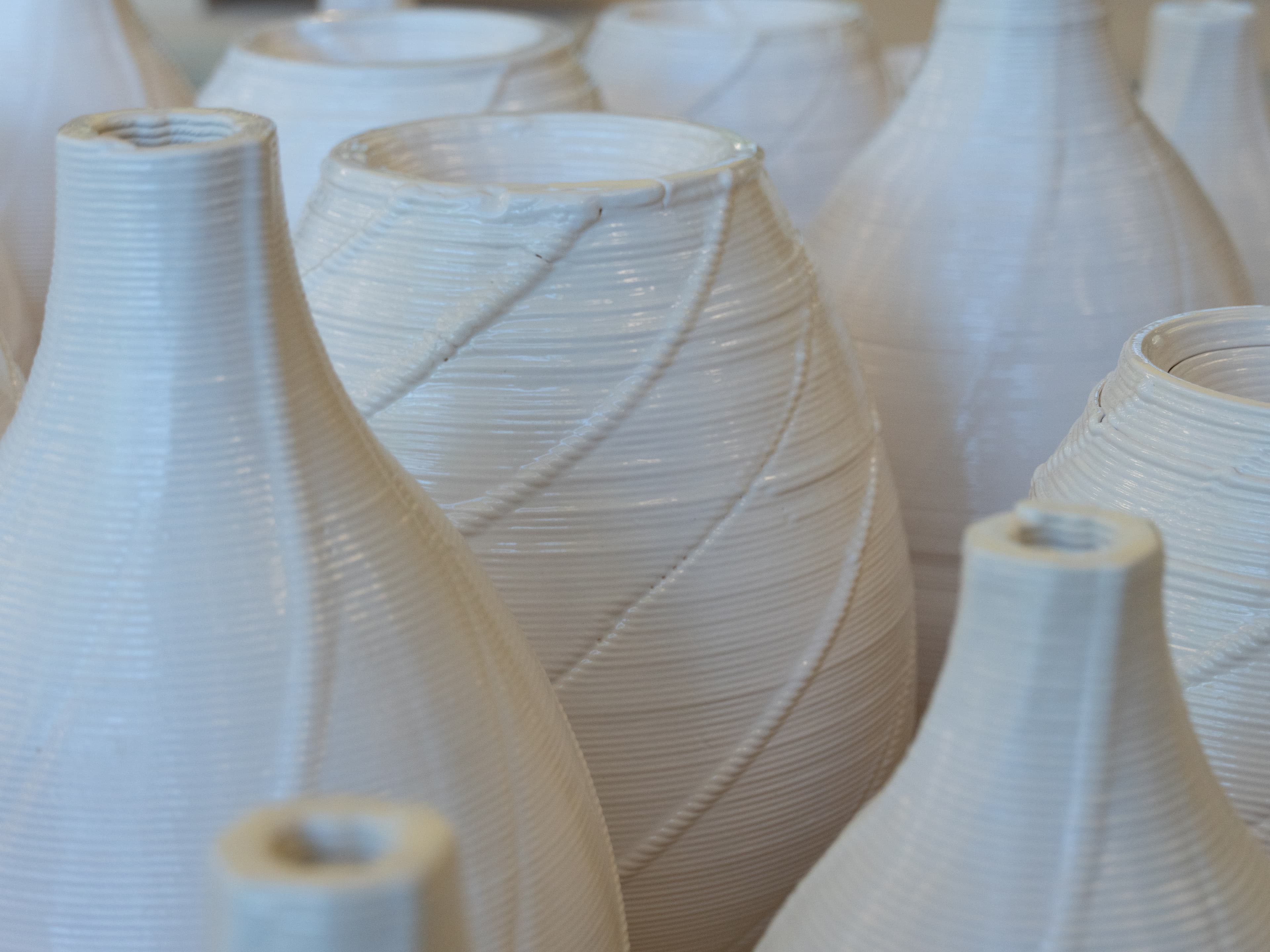
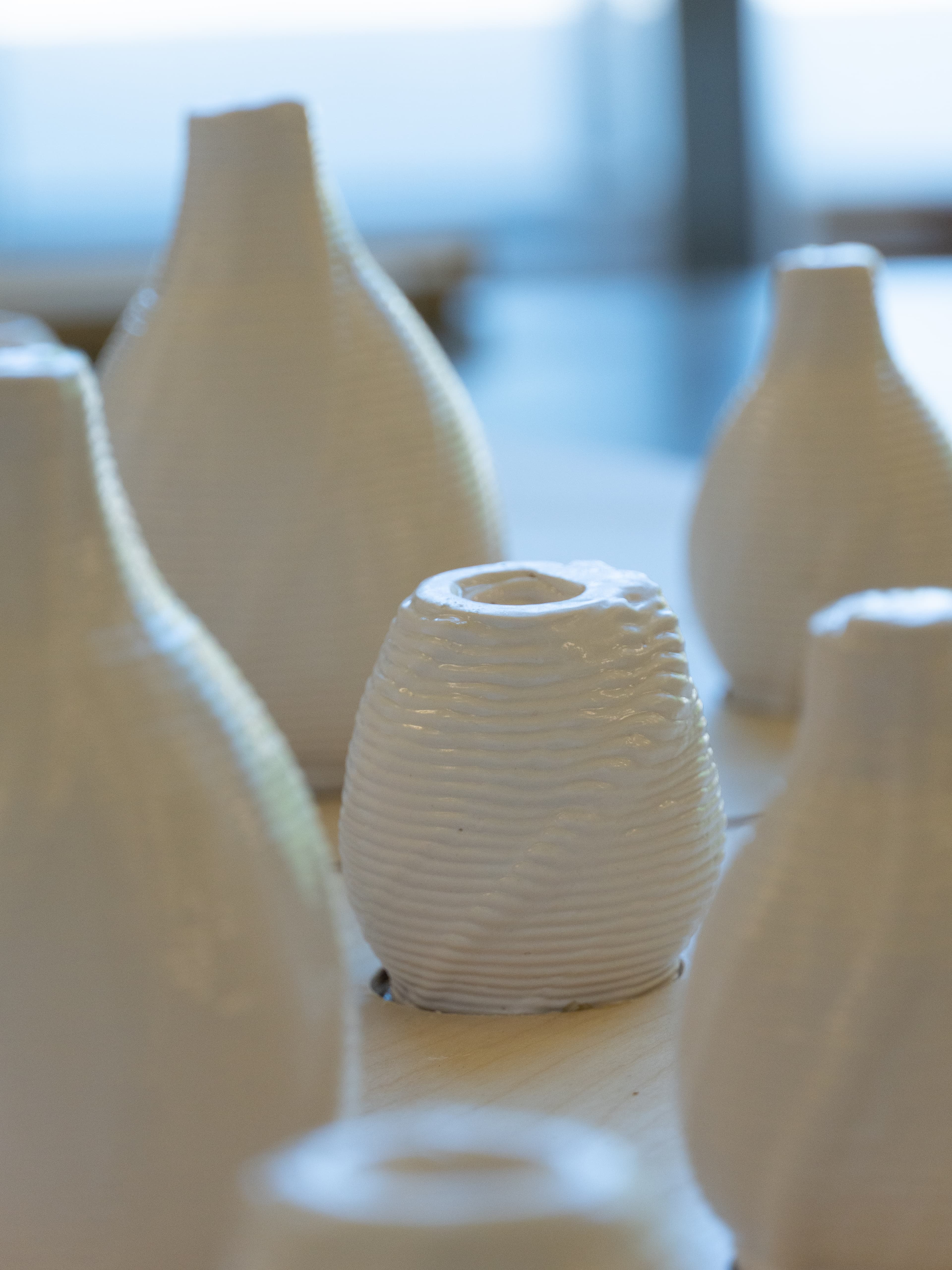
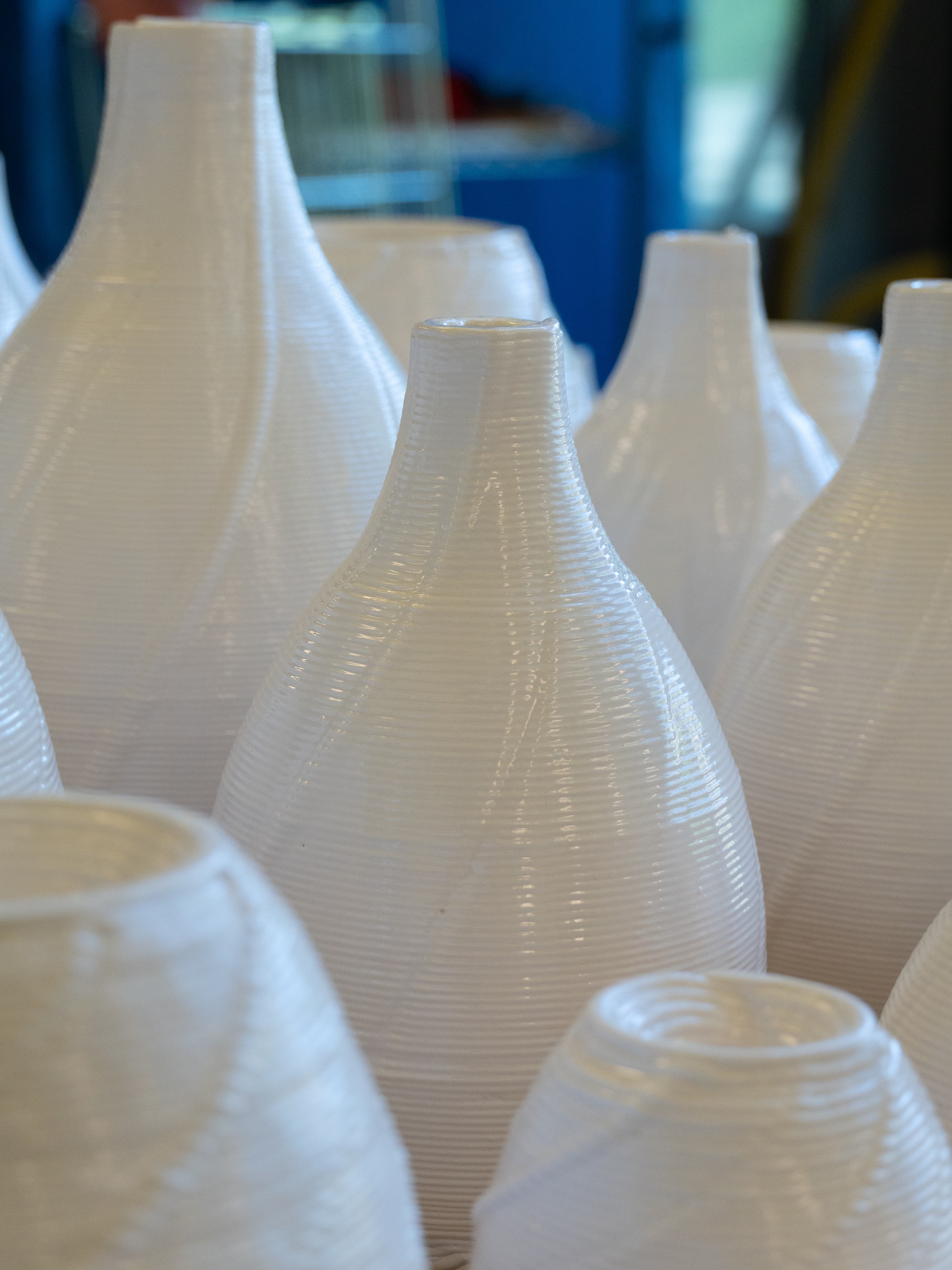
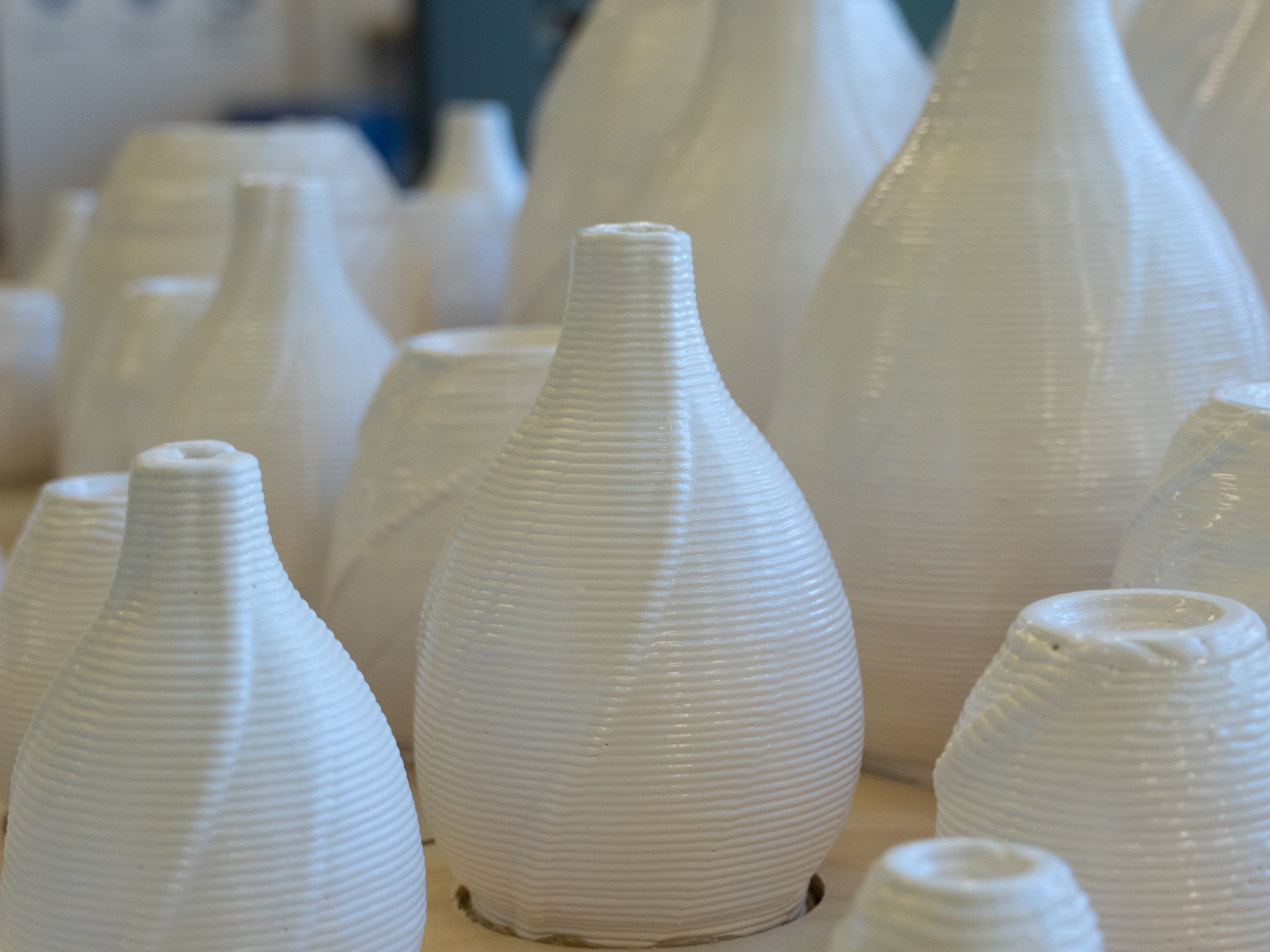
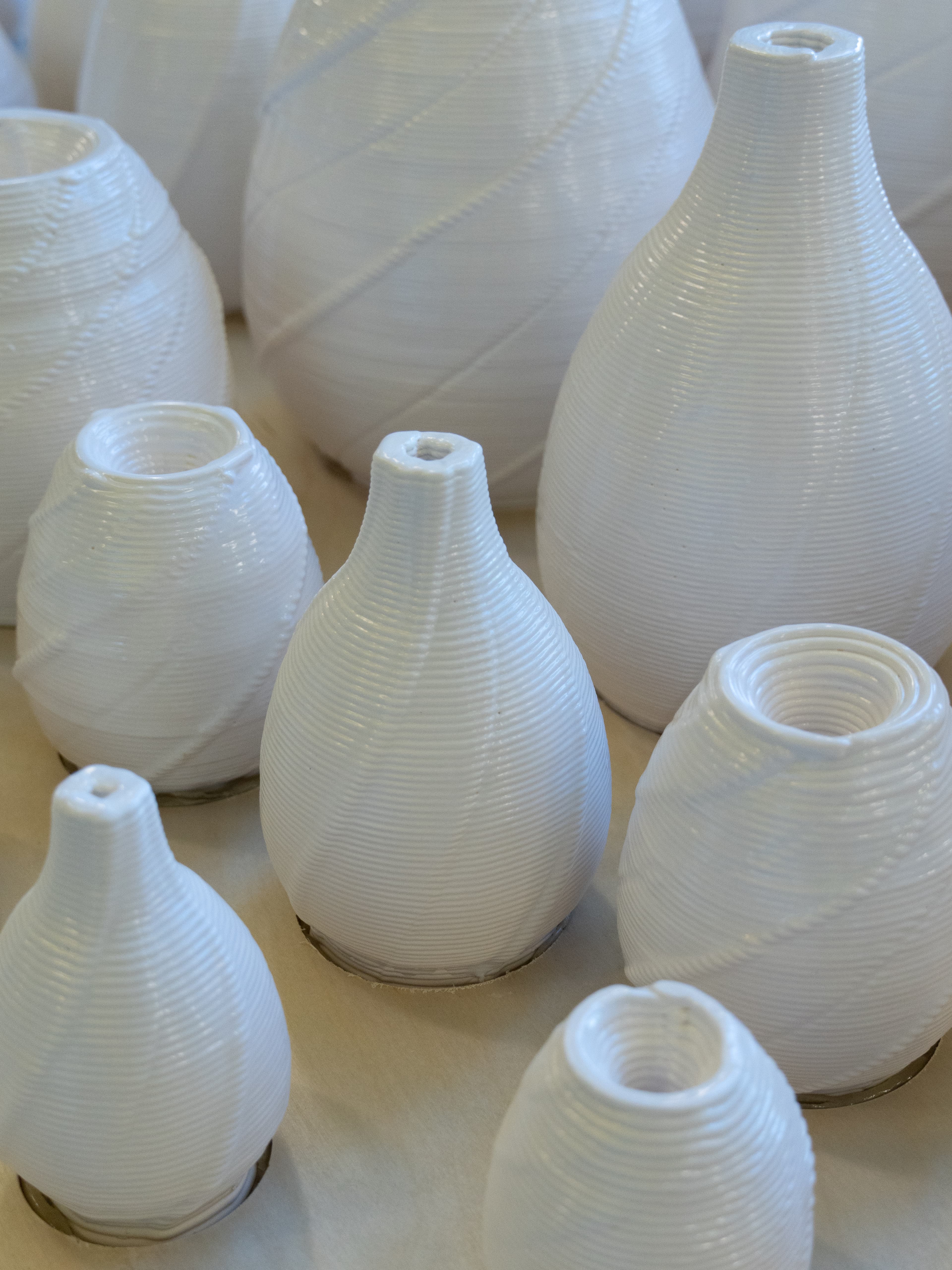
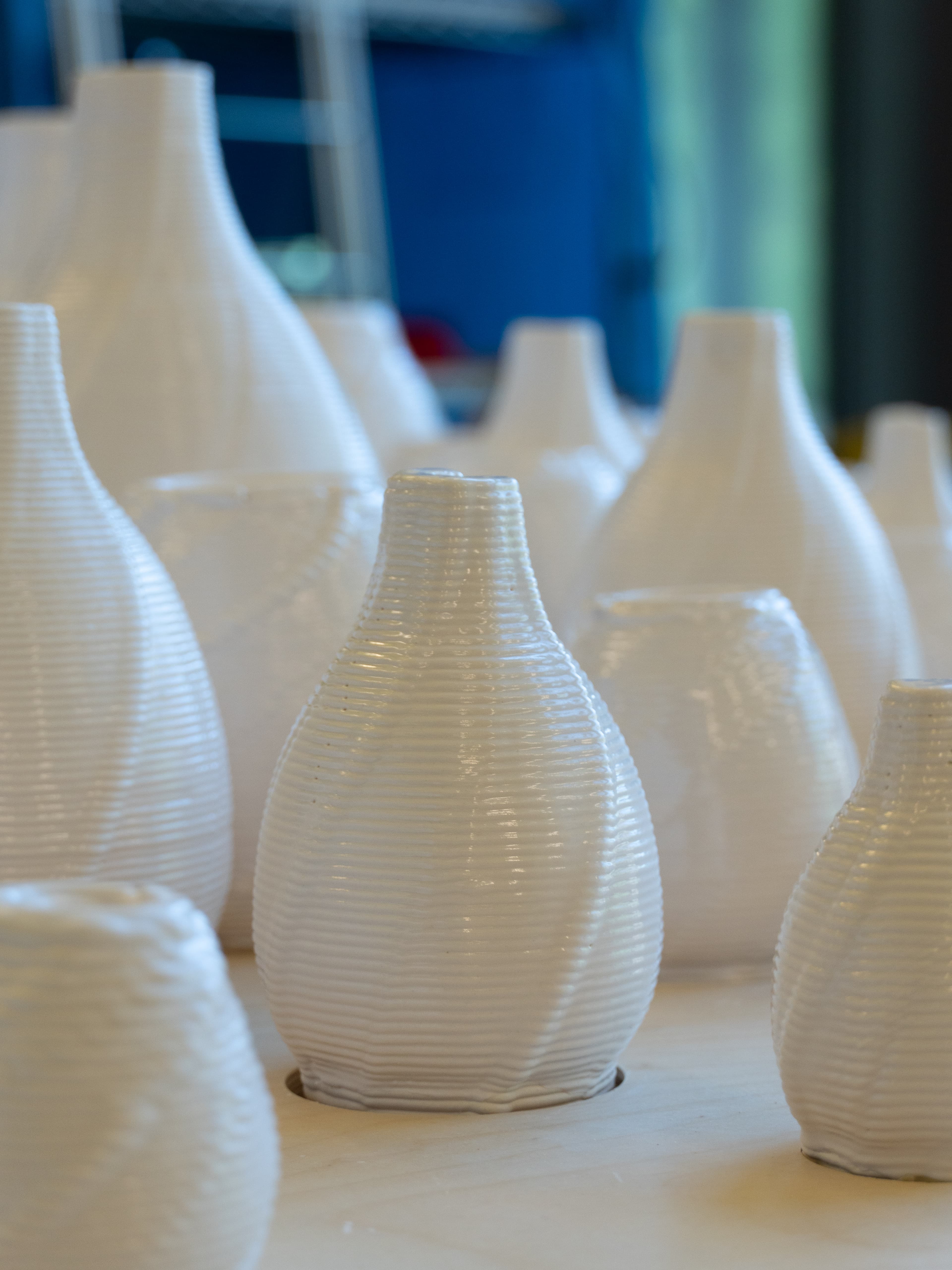
The installation presents three inverted-neck vase sizes tuned to approximately 325 Hz, 167 Hz, and 131 Hz, demonstrating how mass-customized ceramic components could contribute to architectural acoustic treatments.
02
My Role
Collaborator
I contributed as part of the project team supporting the development, production, and preparation of the robotically fabricated ceramic prototypes for the installation.
03
Robotic Fabrication
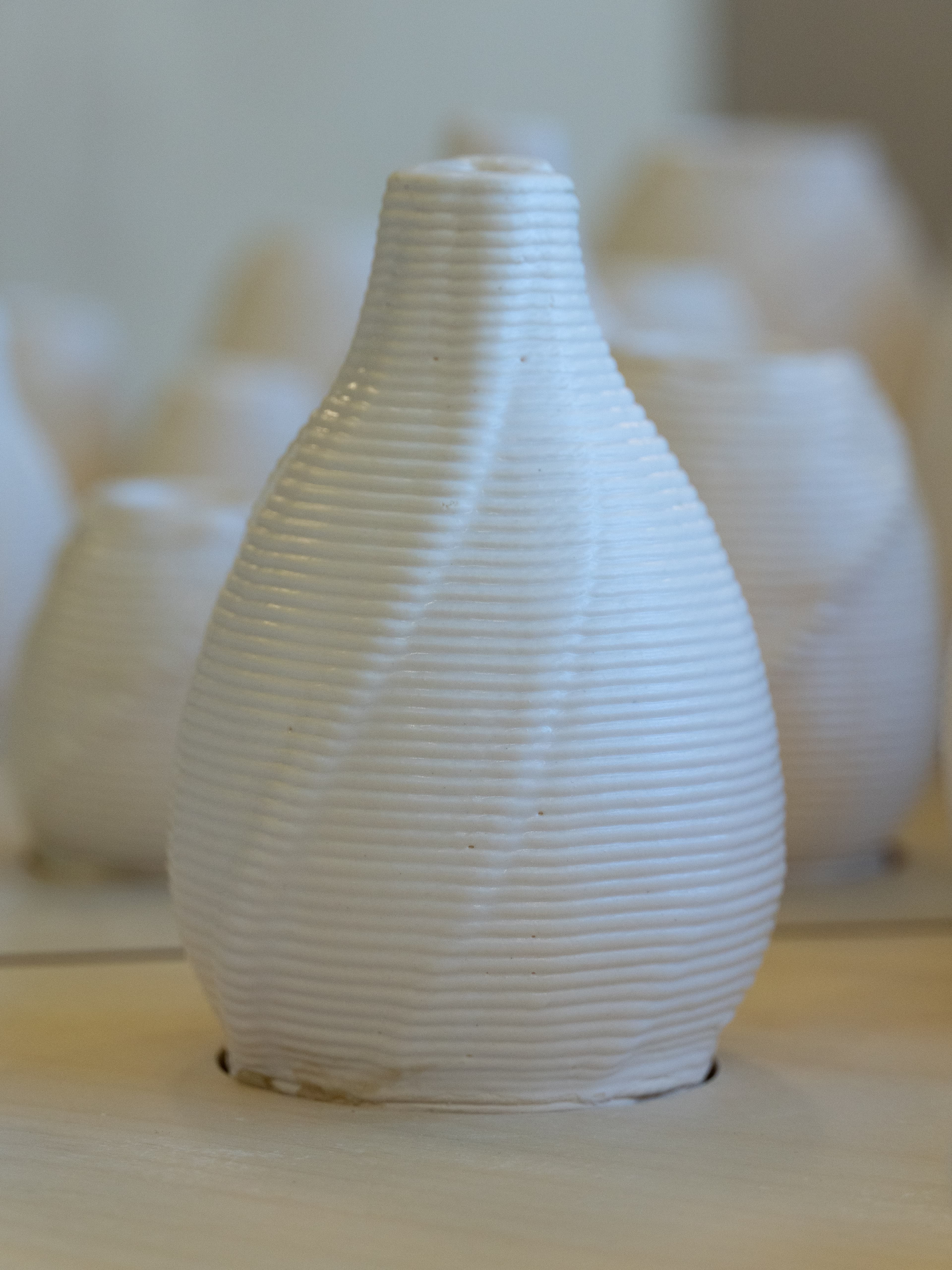
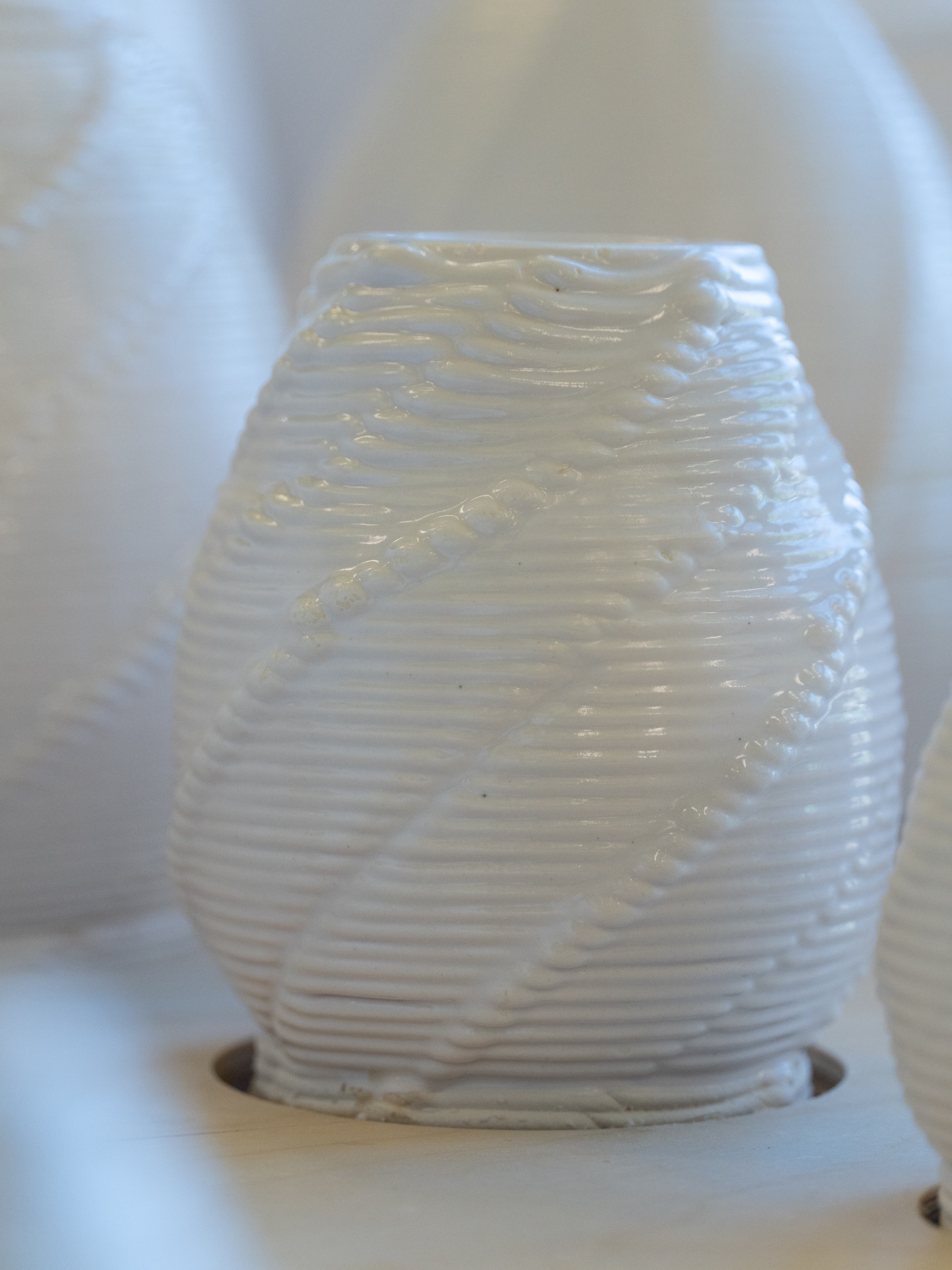
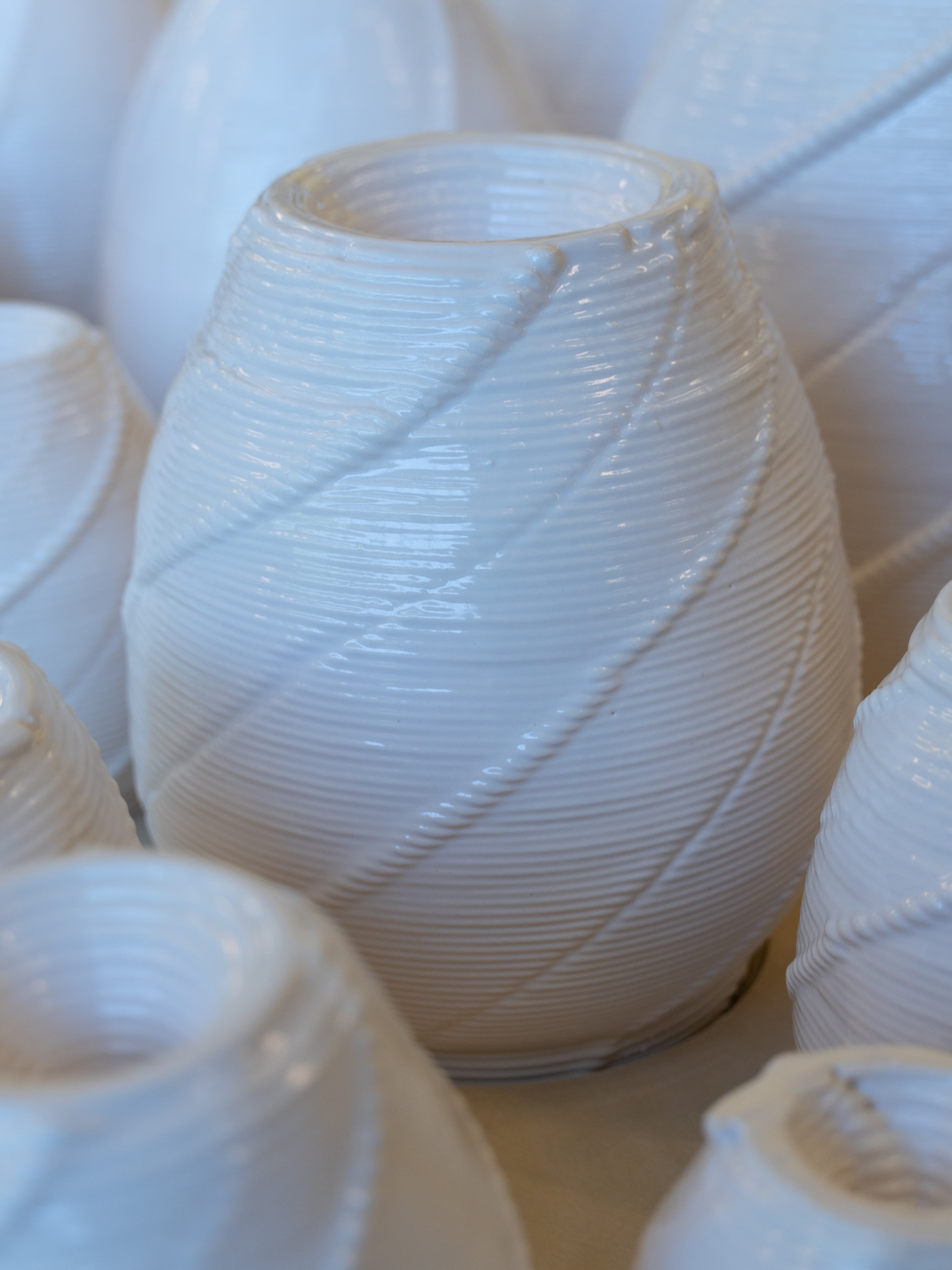
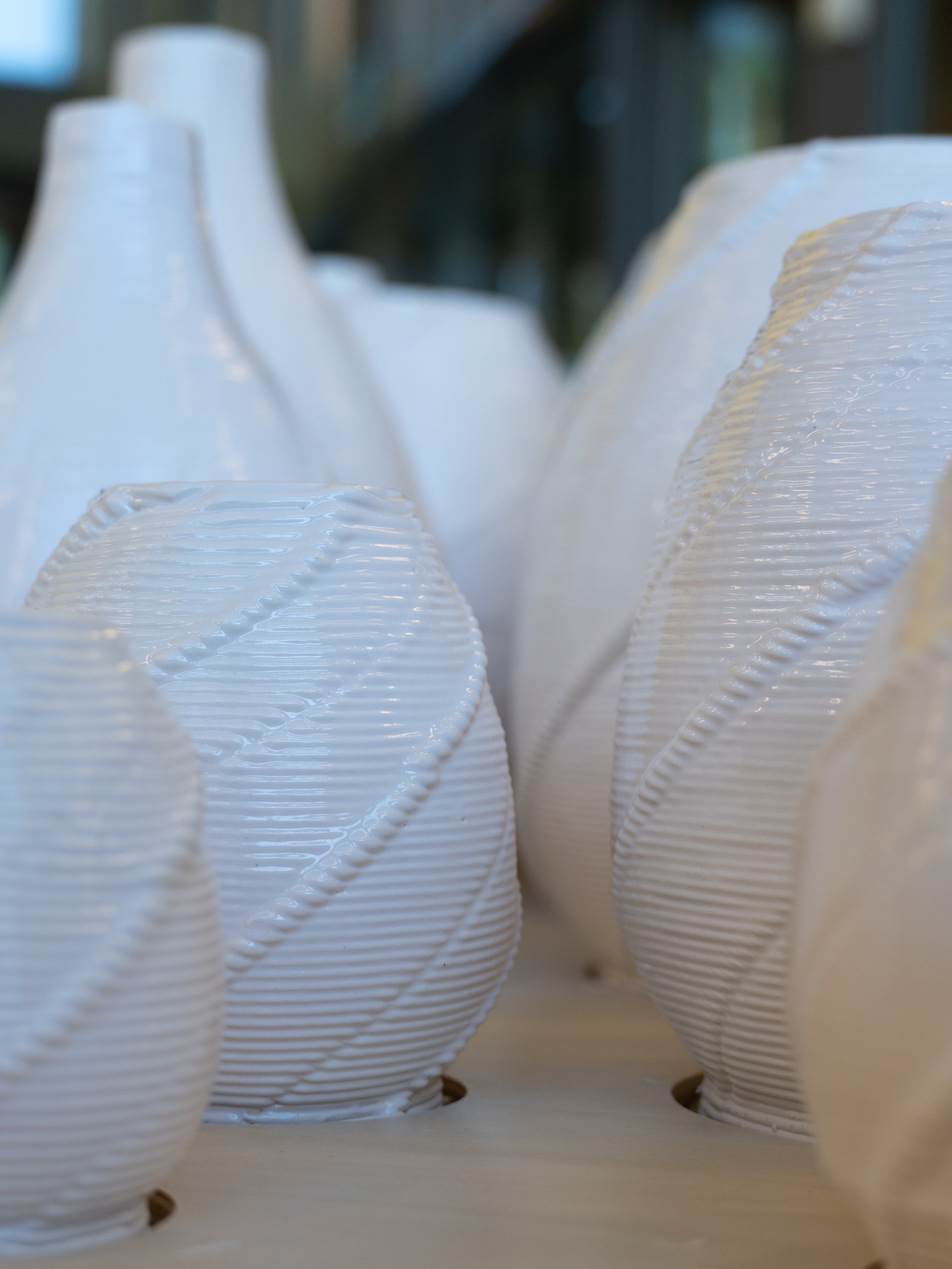
Robotic clay extrusion translated digital toolpaths directly into layered ceramic forms.
The fabrication workflow used an industrial robotic arm equipped with a clay extrusion system to build each vessel layer by layer.
Adjustments to geometry, extrusion, and toolpath behavior allowed the physical prototypes to respond to the acoustic parameters developed through the digital design process.
04
Credits
Lead Collaborators
Nicholas Hoban
Brady Peters
Client
The Canadian Clay and Glass Gallery
Collaborators
Nermine Hassanin
Elham Khatei
Ross Cocks
Yuuko Kosame Li-Han
Pablo Espinal Henao
Robin Yu Bin He
Paul Kozak
Rahul Sehijpaul
Liam Cassano
Funding
Natural Sciences and Engineering Research Council of Canada (NSERC)
Photography
6ix Films
05
Project Images
Acoustic vase prototypes and installation documentation.